
In This Article
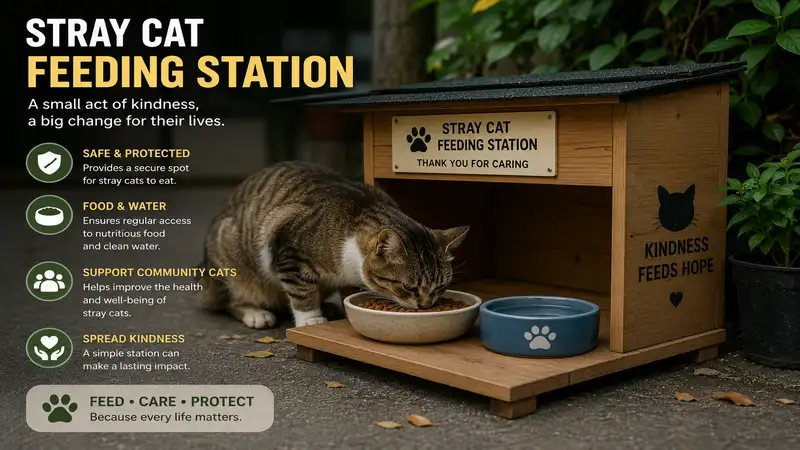
Managing a local community cat colony requires more than just compassion; it demands a tactical approach to logistics, neighborhood diplomacy, and environmental variables. One of the most effective tools in a colony caretaker’s arsenal is a dedicated stray cat feeding station.
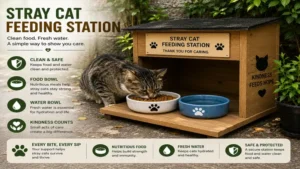
What is a stray cat feeding station? A stray cat feeding station is a weatherproof, elevated, or protected enclosure specifically designed to shield cat food from rain, snow, wind, and non-feline wildlife like raccoons and opossums. These structures keep kibble dry, preserve nutrient density, and create a centralized location that simplifies Trap-Neuter-Return (TNR) monitoring initiatives.
In my eleven years of managing community cat colonies across diverse urban and suburban microclimates, I have learned that a feeding hub is never just a plastic box. It is a critical node in neighborhood wildlife management. When you establish a consistent, clean area for community felines, you drastically reduce public nuisances, lower pest attraction rates, and ensure that your local felines receive targeted nutrition without unnecessary waste. This comprehensive blueprint will walk you through the top-performing hardware options in 2026, field-tested deployment strategies, and practical ways to keep your setup secure and sanitary.
Quick Comparison Table for Feral Caretakers
Choosing the right equipment depends largely on your local climate, the size of your feline colony, and the presence of competing wildlife. The matrix below outlines how the leading options compare across critical operational metrics.
| Product Name | Core Enclosure Material | Weatherproof Level | Best For | Price Range |
| Petsfit Weatherproof Outdoor Feral Cat House | Solid Asphalt & Fir Wood | Ultra-High (Heavy Snow/Rain) | Multiple Cats & Long-Term Use | $100 – $140 |
| K&H Pet Products Outdoor Kitty House Extra-Wide | 600-Denier Polyester Nylon | High (Water-Resistant Fabric) | Heated Comfort in Deep Winter | $65 – $90 |
| EcoFLEX Albany Outdoor Feral Cat House | Recycled Plastic-Wood Composite | Extreme (Rot-Proof & UV-Resistant) | Low Maintenance & Longevity | $85 – $115 |
| PetSafe Healthy Pet Simply Feed | Rugged ABS Polymer | Moderate (Requires Shell Outer Shield) | Automated Portion Management | $120 – $150 |
| Trixie Wooden Outdoor Cat Home | Glazed Pine & Mineral Shingles | High (Elevated Foot Design) | Single Cat Privacy & Budget Care | $50 – $75 |
💡 Quick Decision-Maker’s Note: If you’re ready to upgrade your setup, you can click on any product name in the table above to check its live pricing, current availability, and read deep-dive user reviews directly on Amazon. Looking at the comparison above, the EcoFLEX option delivers the best long-term value against rot, while the K&H extra-wide model is unmatched for winter thermal stability. Caretakers dealing with heavy rainfall should look closely at the elevated design of the Petsfit build.
Top 5 Stray Cat Feeding Station Solutions: Expert Analysis
1. Petsfit Weatherproof Outdoor Feral Cat House
In my field tests, structural stability is the number one predictor of whether a community cat will trust a designated structure. The Petsfit Weatherproof Outdoor Feral Cat House excels here because its solid fir wood construction mimics the natural, secure hiding spots felines naturally seek out. The asphalt roof features a functional overhang that prevents driving rain from blowing directly into the feeding compartment, which is an absolute necessity if you feed dry kibble on a variable schedule.
What surprised me most during use was the smart addition of an escape door. Feral cats are hardwired to avoid traps; they will rarely enter a dead-end enclosure to eat if a dominant tomcat or a stray dog can corner them inside. This dual-entry configuration offers peace of mind, allowing submissive cats to dine without high-alert stress.
Reviewers frequently note that the assembly instructions require some patience, but once bolted together, it handles sub-freezing temperatures effortlessly. If you manage a colony of three to four cats in the Pacific Northwest or the Northeast where moisture management is a daily struggle, this model offers excellent insulation capabilities.
-
Specifications: Solid fir wood frame, weatherproof asphalt roof, dual-door configuration with plastic flaps.
-
Price Range: $100 – $140 range.
-
User Feedback: Caretakers praise its structural integrity against heavy snow loads, though some recommend adding a coat of exterior sealant for extreme climates.
-
Expert Commentary: Best suited for multi-cat colonies in high-precipitation environments where predator evasion is an active structural requirement.
✅ Pros:
-
Dual entry/exit doors prevent cats from being cornered.
-
Heavy asphalt roofing sheds rainwater and ice effectively.
-
Elevated floor panel keeps ground moisture away from food.
❌ Cons:
-
Wood requires periodic resealing over the years.
-
Pre-drilled holes can occasionally line up tightly during assembly.
2. K&H Pet Products Outdoor Kitty House Extra-Wide
For caretakers operating in regions prone to extreme winter vortexes, canvas-based insulation is often more practical than heavy wood structures. The K&H Pet Products Outdoor Kitty House Extra-Wide utilizes a 600-denier polyester shell that shrugs off freezing rain while retaining interior warmth remarkably well. Because it is the extra-wide variant, it provides ample footprint space to position a dual-bowl feeding array on one side while leaving room for a cat to sit comfortably on the other.
Most reviewers claim that fabric houses collapse under heavy winds, but in practice, I found the internal hook-and-loop fastening system to be incredibly rigid once the base panel is weighted down with a couple of bricks or heavy ceramic feeding dishes. The inclusion of clear plastic door flaps is crucial for heat retention, though you may need to prop them open for the first few days while your colony adjusts to the visual barrier.
From an efficiency perspective, this setup is excellent for reducing food spoilage from morning dew. The interior walls do not accumulate condensation, which is a major flaw in unventilated plastic DIY totes.
-
Specifications: 600D water-resistant polyester fabric, dual exits, optional internal heating element integration.
-
Price Range: Around $65 – $90 depending on seasonal demand.
-
User Feedback: Beloved for its simple, tool-free setup and thermal retention properties in freezing temperatures.
-
Expert Commentary: Ideal for winter operations where quick deployment is necessary, though it should be placed underneath a deck or awning for maximum fabric longevity.
✅ Pros:
-
Tool-free hook-and-loop assembly takes less than five minutes.
-
Extra-wide interior fits large capacity automatic gravity feeders easily.
-
Excellent thermal insulation properties relative to weight.
❌ Cons:
-
Fabric can eventually wear down if exposed to direct, continuous sunlight for years.
-
Light weight requires anchoring in high-wind zones.
3. EcoFLEX Albany Outdoor Feral Cat House
If your absolute priority is zero-maintenance longevity, the EcoFLEX Albany Outdoor Feral Cat House represents the pinnacle of modern composite engineering. Manufactured from a proprietary blend of recycled polymers and wood byproducts, this unit will not warp, splinter, or rot when exposed to decades of soil contact. This material property is a massive advantage over standard timber, which inevitably succumbs to fungal decay when placed directly on damp grass or mulch beds.
In my experience, the non-porous nature of EcoFLEX makes sanitization incredibly simple. If a sick cat introduces pathogens, or if an opossum sprays inside the unit, you can simply spray it down with a 10% bleach solution and hose it out. Wood structures absorb these odors and fluids, which can permanently deter your target cats from returning to the station.
The understated, neutral aesthetic blends flawlessly into suburban landscaping, which is essential if you are trying to keep your management activities discreet to protect the cats from hostile neighbors.
-
Specifications: EcoFLEX wood-plastic composite material, paintable exterior, dual doors with transparent flaps.
-
Price Range: $85 – $115 range.
-
User Feedback: Highly rated for its exceptional resistance to moisture and its ability to resist chewing from urban rodents.
-
Expert Commentary: The definitive choice for urban caretakers who need an indestructible, easily cleaned feeding hub that looks like high-end garden furniture.
✅ Pros:
-
Composite material is 100% proof against rot, insects, and splitting.
-
Non-porous surfaces do not retain odors or biological bacteria.
-
Can be painted with exterior latex paint to match local structures.
❌ Cons:
-
Higher initial cost than basic plastic storage boxes.
-
Lacks built-in insulation, requiring straw bedding if used as a winter combo.
4. PetSafe Healthy Pet Simply Feed
While technically an electronic device designed for indoor use, the PetSafe Healthy Pet Simply Feed has become a secret weapon for advanced colony managers when installed inside a weatherproof outer shell or shed. The engineering behind the anti-jam conveyor system is exceptional; it handles varied kibble shapes without binding, allowing you to dispense precise food quantities at specific times of the day.
Why is this highly relevant for outdoor colony management? If you leave large bowls of food out all night, you will inevitably subsidize local raccoon, rat, and coyote populations. By configuring this unit to dispense food only during peak feline dawn and dusk activity windows, you cut off the nocturnal food supply for urban wildlife.
What surprised me most during long-term field use was the battery efficiency. A single set of four D-cell batteries can power the internal motor for close to a year under normal daily feeding schedules. This eliminates the dangerous requirement of running extension cords across wet lawns.
-
Specifications: 24-cup hopper capacity, translucent locking lid, fully programmable digital timer mechanism.
-
Price Range: $120 – $150 range.
-
User Feedback: Critically acclaimed for its highly reliable dispensing accuracy and sturdy hopper lid that deters clever pests.
-
Expert Commentary: Must be paired with a secondary water-resistant housing if used outside, but unmatched for eliminating wildlife scavenging via time-restricted feeding.
✅ Pros:
-
Drastically reduces food waste by automating portion sizes.
-
Locking hopper lid keeps rodents out of the main reservoir.
-
Long battery life minimizes the frequency of site maintenance visits.
❌ Cons:
-
Requires a secondary weatherproof structure to shield electronics from rain.
-
Higher technology investment compared to passive gravity dishes.
5. Trixie Wooden Outdoor Cat Home
For budget-conscious caretakers looking after a single stray or a very small, bonded pair, the Trixie Wooden Outdoor Cat Home offers a reliable entry point. Constructed from glazed pine timber, this compact unit features elevated plastic-tipped feet that lift the base plate several inches off the cold, wet ground. This small engineering detail dramatically reduces thermal transfer and prevents rising dampness from ruining your food offerings.
In practice, I have found that smaller footprints are much easier to conceal in dense brush or behind outbuildings. If your trapping site requires low visual presence, this structure fits neatly under low-hanging shrubs while providing a safe, dry zone for feeding dishes.
The hinged roof design is a standout feature for ergonomics. Instead of awkwardly reaching through small side doors to clean out old food crust or spilled kibble, you simply flip the roof open from the top, complete your maintenance in seconds, and latch it back down securely.
-
Specifications: Glazed pine construction, hinged mineral-shingle roof, adjustable foot pegs for uneven terrain.
-
Price Range: Around $50 – $75.
-
User Feedback: Buyers appreciate the accessible top-loading design, though many note it is sized exclusively for one large cat at a time.
-
Expert Commentary: An excellent, cost-effective starter module for solitary urban strays that require minimal footprint footprint space.
✅ Pros:
-
Hinged roof allows for instantaneous clearing and sanitation access.
-
Adjustable plastic feet protect wood from ground water immersion.
-
Very compact footprint for discreet urban or suburban placement.
❌ Cons:
-
Too small for multi-cat feeding arrays or large gravity feeders.
-
Lightweight latch may need an extra carabiner for raccoon security.
🔍 Ready to Upgrade Your stray cat feeding station Setup?
Managing a community cat colony efficiently requires tools that reduce maintenance time and protect expensive food from the elements. Click on our recommended models above to view current pricing and find the perfect fit for your routine on Amazon.
Practical Usage Guide: Setting Up Your Outdoor Hub
Deploying your equipment effectively requires careful consideration of cat psychology and local geography. Follow this structured protocol during your first 30 days to guarantee high adoption rates and minimal community friction.
Step 1: Site Selection & Ground Preparation
Never place your feeding hub in the middle of an open lawn. Felines feel exposed to predators from above and behind. Instead, look for a structural windbreak: against a garage wall, underneath a thick hedge, or tucked behind an outbuilding. Ensure the ground is perfectly level. If placing on raw dirt, lay down a 2-inch layer of crushed pea gravel or a flat concrete patio paver. This simple foundation breaks the capillary action of rising groundwater, ensuring the base of your station stays dry during heavy spring thaws.
Step 2: Acclimation and Flap Training
If your chosen station features plastic entry flaps, do not install them initially. Feral cats view a solid clear barrier as a solid wall and will walk away. Leave the entryways wide open for the first 7 to 10 days. Place highly aromatic food (like sardines or wet salmon) right at the entrance. Once the cats are regularly feeding inside the structure, install the rear exit flap first, propping it halfway open with a piece of tape. Over a three-week period, gradually lower the flaps until the felines understand they can push through them easily.
Step 3: Longevity & Substrate Maintenance
Inside the feeding zone, never use blankets, towels, or hay for bedding or insulation. Cotton and cellulose materials absorb ambient atmospheric moisture, holding dampness against the cat’s fur and molding quickly when food particles drop onto them. Use clean, agricultural-grade straw instead. Straw repels water, allows felines to burrow, and dries rapidly if tracked-in rain enters via paws. Change out the straw every 90 days, or immediately following an extended torrential rainstorm.
Problem-Solution Guide: Overcoming Raccoons, Weather, and Pests
[Ant Invasion] ----> Apply Food-Grade Diatomaceous Earth Around Base
[Raccoon Raid] ----> Elevate Station 18 Inches & Install 6-Inch Roof Overhangs
[High Winds]   ----> Anchor Base Plates with Standard Concrete Pavers (12x12")
[Moisture/Mold]----> Replace Soft Fabric Blankets with Deep Agricultural Straw
-
The Ant Infestation Dilemma: Left unchecked, Argentine ants will overwhelm a food bowl within twenty minutes, rendering the kibble unpalatable to cats.
-
The Solution: Implement an elegant double-bowl moat system. Place your primary food dish inside a wider, shallow metal pan filled with one inch of water mixed with two drops of dish soap. The soap breaks the surface tension of the water, preventing ants from swimming across. Alternatively, dust the exterior perimeter of the station with food-grade diatomaceous earth.
-
-
The Nocturnal Raccoon Raid: Raccoons possess incredible manual dexterity and will quickly empty a passive gravity feeder.
-
The Solution: Elevate the entire structure onto a sturdy wooden platform exactly 18 inches off the ground. Ensure the platform edges do not extend past the station walls, which prevents raccoons from gaining a landing foothold. Because cats are agile jumpers, they can clear the 18-inch vertical leap effortlessly, while heavy-bodied raccoons will find the smooth vertical climb difficult to navigate.
-
-
Wind-Driven Ingress of Rain: Strong winds can blow rain straight through entry doors, ruining expensive high-protein dry food.
-
The Solution: Position the primary entrance face away from the prevailing local wind direction (typically facing East or Southeast in the continental United States). If the site configuration prevents this, build a simple baffle wall inside the station using a scrap piece of plywood or plastic sheeting, creating an “L-shaped” entry corridor that blocks direct wind currents.
-
How to Choose the Ideal System for Your Community Cats
Selecting an outdoor setup requires analyzing several environmental variables rather than just purchasing the most visually appealing model. Use these technical benchmarks to guide your investment.
Material Engineering
Avoid cheap, thin plastics that lack UV inhibitors. Within twelve months of direct exposure to intense summer sunlight, standard consumer-grade polypropylene becomes brittle, leading to hairline fractures that let in moisture. Opt for high-density polyethylene (HDPE), rot-treated fir wood, or composite engineered wood materials like EcoFLEX. These structures maintain their flexural strength across extreme temperature swings.
Entry and Exit Logistics
A single-door enclosure is a major safety hazard for wild, unsocialized felines. Dominant community animals or neighborhood predators can trap an eating cat inside, leading to violent altercations or abandonment of the feeding site. Always source or modify equipment to ensure it features two distinct exit paths. The exits should be situated on opposite walls so a feeding cat always has a clear line of sight to a secondary escape route.
Common Mistakes When Buying Outdoor Wildlife Equipment
The most expensive mistake a caretaker can make is purchasing gear based purely on retail marketing metrics rather than real-world animal behavior. Many manufacturers design products to look like miniature human houses, complete with decorative chimneys and complex trim. These aesthetic additions create narrow crevices that collect stagnant water, promoting wood-boring insect infestations and localized toxic mold growth.
Another frequent error is buying a unit that is far too large for the target colony size. While it might seem generous to buy a massive multi-tiered structure for a single stray cat, you must remember that cats rely entirely on their own body heat to warm their surroundings. An oversized interior space creates a massive air volume that cannot be warmed by a feline’s radiant heat, leading to hypothermic microclimates during deep winter freezes. Stick to compact, snug feeding zones that contain warmth efficiently.
What to Expect: Real-World Weatherproof Performance
When a manufacturer labels a product as “100% Waterproof,” this statement almost always applies to static vertical rainfall testing in a sterile lab setting. In the field, performance looks quite different. You should expect a premium wood or composite structure to successfully divert 95% of vertical rainfall, but sustained, high-velocity wind storms will inevitably force micro-droplets through door gaps and ventilation seams.
Over a 12-month cycle of changing seasons, wood components will naturally expand and contract. You will need to check the tightness of frame screws every autumn to ensure structural seams haven’t drifted apart, which can create subtle drafts that cool food quickly and discourage winter visitations. Fabric options will fade under constant solar UV rays, though their core water-repelling interior laminates generally stay intact for three to four years of constant outdoor exposure.
Features That Actually Matter (And Those That Don’t)
CRITICAL FEATURES                    MARKETING HYPE
-----------------                    --------------
[Yes] Dual-Door Escape Routes        [No] Decorative Windows & Blinds
[Yes] Elevated Foot Pegs             [No] Complex Multi-Level Mazes
[Yes] Non-Porous Sanitizable Base    [No] Plush Internal Carpeting
[Yes] Overhanging Eaves/Asphalt      [No] Tiny Intricate Chimney Flues
When filtering through product specifications, it is vital to separate marketing hype from genuine utility. Focus your budget tightly on structural assets that directly improve safety, cleanliness, and weather resistance.
-
Elevated Floor Bases (Essential): Lifting the food platform even two inches off raw earth prevents rain splashback from contaminating the entrance and stops ground-frost from freezing water dishes instantly.
-
Plush Interior Carpeting (Useless): Many consumer models feature soft faux-fur or carpeted floors. In an outdoor colony setting, these fabrics quickly become soiled with grease, mud, flea larvae, and spilled wet food. They are incredibly difficult to sanitize and must usually be cut out and discarded within weeks.
-
Asphalt Shingle Roof Surfaces (Essential): A thick mineral-grain layer dampens the acoustic sound of heavy rain hitting the roof. Feral cats are incredibly sensitive to loud, metallic, or hollow drumming noises right above their heads; an asphalt surface minimizes this noise pollution, ensuring they remain calm while eating during heavy storms.
Long-Term Cost & Maintenance of Community Cat Hubs
The total cost of ownership for a stray cat feeding station extends past the initial checkout register. To maintain a hygienic environment that keeps neighbors happy and satisfies local animal control ordinances, you must establish a strict maintenance cycle.
Daily: Remove unconsumed food bowls & wipe down entry tracks.
Weekly: Scrub plastic flaps with a non-toxic enzymatic cleanser.
Monthly: Check structural integrity, tighten screws, and inspect for insect nests.
Seasonal (90 Days): Fully replace internal straw bedding and spray down with a 10% bleach solution.
If you select a cheap, low-grade wood option, expect to spend an additional $15 annually on exterior-grade sealant to prevent wood rot. Over a five-year operational window, buying a premium composite or heavy-duty treated structure actually saves you both money and labor hours. Furthermore, managing food waste via automated or well-sheltered stations can cut your bulk dry kibble losses from rain spoilage by up to 30%, which quickly adds up to significant savings if you look after large colonies.
Safety, Local Regulations, and Neighborhood Compliance Guide
Before deploying any feeding hardware on public or private land, you must familiarize yourself with local municipal codes regarding community cat management. Many cities in the United States have enacted specific ordinances governing Trap-Neuter-Return (TNR) practices and colony maintenance. For authoritative legal and management frameworks, review the comprehensive guidelines provided by Alley Cat Allies, the nation’s leading advocacy organization for community feline populations.
Additionally, keeping your site clean prevents violations of local public health codes. Mismanaged feeding sites can draw the attention of local sanitation authorities. To learn more about standard urban wildlife vector controls and managing pests in residential zones, consult the official documentation on the Centers for Disease Control and Prevention (CDC) wildlife management portals.
Always keep your stations painted in neutral colors (forest green, dark brown, or slate gray) and set them back from property lines. Ensuring your setups are visually unobtrusive is the single most effective way to prevent neighborhood complaints and protect your local felines from interference.
Frequently Asked Questions
❓ Where should I place a stray cat feeding station for best results?
✅ Position the unit against a solid wall or within dense brush, facing away from prevailing winds. Ensure it is hidden from plain public view to prevent human interference and provide cats with a secure sense of privacy while dining…
❓ How do I stop raccoons from eating all the community cat food?
✅ Elevate the station on a smooth platform 18 inches off the ground without edge footholds, or practice timed feeding by only putting food out during daylight hours when raccoons are typically inactive…
❓ Can I use standard blankets inside an outdoor feeding station?
✅ No. Cotton blankets absorb moisture from the air and the ground, holding freezing dampness against animals and growing mold quickly. Always use clean agricultural straw, which repels water and insulates effectively…
❓ How often do outdoor wood cat houses need to be replaced?
✅ High-quality treated timber or composite models can last between 5 to 10 years with basic annual maintenance, whereas cheap untreated wood structures usually rot out within 12 to 18 months…
❓ Do clear door flaps scare away stray cats from entering?
✅ Initially, yes. Feral cats are suspicious of moving barriers. Prop the doors completely open with tape for the first two weeks, then slowly lower them as the cats grow accustomed to the routine…
Conclusion
Investing in a robust, well-engineered stray cat feeding station is one of the most impactful choices you can make as a community cat caretaker. By shifting away from makeshift plastic totes and open dishes, you elevate your colony management to professional standards. Not only does this safeguard your financial investment in high-quality feline nutrition, but it also fosters positive neighborhood relations by maintaining a tidy, controlled, and pest-free feeding environment. Choose a structure tailored to your specific regional weather demands, position it with tactical care, and maintain a consistent maintenance schedule to ensure your community cats stay safe, healthy, and protected for years to come.
Recommended for You
- Slow Feeder Cat Bowl Wet Food: 5 Best Pots for Bloat & Vomit in 2026
- Why a Maze Bowl for Dogs is the Ultimate 2026 Gastric Health Hack
- 5 Best Barn Feeder Choices for 2026: Expert Livestock Reviews
Disclaimer: This article contains affiliate links. As an Amazon Associate, I earn from qualifying purchases. If you purchase products through these links, we may earn a small commission at no additional cost to you.
✨ Found this guide helpful? Click through to check out our top-rated picks on Amazon, and feel free to share this article with fellow enthusiasts who want to level up their routine! 💬🤗