
In This Article
As an Amazon Associate I earn from qualifying purchases. Links in this article may be affiliate links. How we choose gear
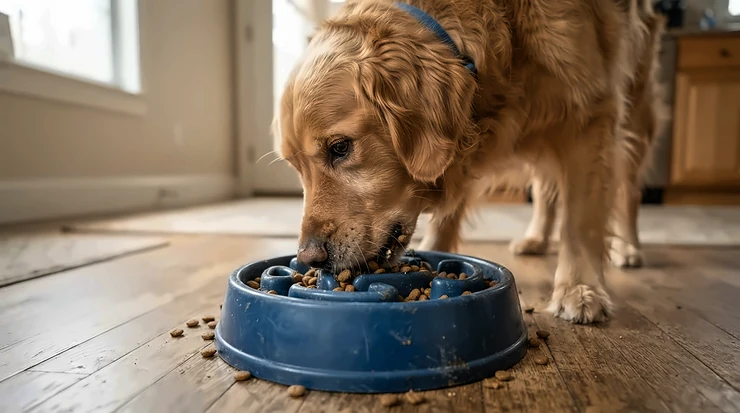
A Whole Dog Journal reviewer timed one dog at two minutes for a meal in a regular bowl and just over ten minutes in the large Fun Feeder, the ridged slo bowl from Outward Hound, according to the maker’s repost of that test. That eight-minute gap is the entire pitch for the category. It also explains why picking a slo bowl in 2027 comes down to matching the maze to the muzzle: channels that stall a gulping Labrador can leave a pug hungry and frustrated.
Maker size charts, owner reviews on retailer pages, and testing roundups from Vetstreet, Petful and Rover supply the capacities, materials and complaints compared below, while the American Kennel Club frames the health side. Vetstreet, Petful and Rover each name the Outward Hound Fun Feeder their best overall pick. Chewers do better with stainless steel or ceramic, and flat-faced dogs need a shallow, tilted design rather than a deep maze.
Why slo acai bowls and a slo poke bowl show up in the same search
SLO is local shorthand for San Luis Obispo, California, and that city’s juice bars and campus dining halls explain the odd results. A search for slo acai bowls brings up New Times SLO features and Uber Eats listings for açaí cafés there, and a slo poke bowl query lands on the same food scene, including dessert poke bowls on the Cal Poly dining menu. The dog-feeder meaning comes from a product name, because Outward Hound spells its slow feeder Slo-Bowl.
This guide covers the pet version. Anyone hungry for lunch should add the city name to the search.
Maze depth, snout shape and material: what separates these slow feeders
The American Kennel Club ties fast eating to bloat risk, noting that fast eaters carry about five times the risk of slow eaters, and it lists slow feeder bowls with fingers or center posts among the physical ways to slow a dog down. The same page adds that anxiety around other dogs at mealtime is a separate risk factor a bowl will not fix. Whether a bowl changes risk for a particular dog, especially a deep-chested one, is a question for a vet.
Four traits decide which bowl fits:
- Maze difficulty. Vetstreet warns that the Outward Hound pattern may be too challenging for some breeds, while Whole Dog Journal’s reviewer found the large pattern useful for a dog that needs slowing a lot.
- Snout shape. Vetstreet notes that many slow bowls have reservoirs too deep for flat-faced breeds.
- Material. Plastic can scratch or be chewed, stainless steel resists odor, and ceramic adds weight but can chip.
- Grip and weight. Rubber bases keep light bowls in place, and an unpadded steel bowl can wander across the floor.
The six picks below cover each trade-off once: a default maze, a big-dog bowl, a budget maze, a stainless option, a ceramic option and a flat-face design.
Material, capacity and maze challenge across the six picks
| Model | Material | Capacity | Maze challenge | Main trade-off |
|---|---|---|---|---|
| Outward Hound Fun Feeder Slo Bowl | Food-safe plastic | ¾, 2 or 4 cups | Varies by pattern | Chewing; channels slow to scrub |
| Neater Pet Brands Neater Slow Feeder 6-Cup | Plastic | 2.5 or 6 cups | Pocket maze | Peaks may irritate chins |
| JW Pet Skid Stop Slow Feed Bowl | Plastic, rubbery base | 1 or 6 cups | Described differently by sources | Grip decent, not top tier |
| OurPets Durapet Slow-Feed Stainless Steel Bowl | Stainless steel | 3 cups (small) | Mild | Weak against extreme gulpers |
| LE TAUCI Ceramic Slow Feeder Dog Bowl | Glazed ceramic | 1.5 cups at 8 inches | Owner reviews split | Chips, cracks, runs small |
| Leash Boss Flat Face Feeder | Plastic, rubber grips | 1.5 cups (listing) | Gentle | Spills; may slow too little |
Capacity and challenge are separate choices. The six-cup bowls give large dogs room for a full meal, while Petful calls the maze on the stainless Durapet milder, so an easy-to-clean metal bowl pairs with a dog that needs only a slight slowdown. Spotted a maze that suits your dog? Take a closer look at its listing on Amazon.com.
The bowls: one default maze and five ways around its weak spots
A search for slo bowl outward hound lands on the Fun Feeder line, so it leads the list.
1. Outward Hound Fun Feeder Slo Bowl — the default maze in three sizes
Three independent roundups agree on this one. Vetstreet, Petful and Rover each name it their best overall slow feeder, and Rover puts its Amazon footprint at over a million sold and 100,000 reviews. The maker claims eating up to 10 times slower, a figure testers land below. Whole Dog Journal’s reviewer measured a dog going from 2:00 in a regular bowl to 10:15 with the large Purple Flower pattern, where the widest channel is about an inch and the dog has to use its tongue like a spoon. Petful’s tester stretched a 15-second meal to three to five minutes for a medium dog. Both are single-dog tests, so they read as ranges, not promises.
Sizes run from ¾ cup through 2 cups to 4 cups, per Rover, and the large bowl measures about 11.75 inches across and 2 inches deep in the Whole Dog Journal test. Retail listings give slightly different dimensions by color and pattern, and they disagree on material too: Chewy names ABS plastic while Tractor Supply says polypropylene, so the maker’s description of food-safe, BPA-, PVC- and phthalate-free plastic is the safer reference. Match the exact size and pattern on the listing before ordering. Small sizes sit under about $12 at Chewy and Tractor Supply, and the large runs roughly $12 to $18 on Upco and Pet Supermarket pages.
Daily use shows the weak spots. Whole Dog Journal’s reviewer found the narrow channels hard to wash by hand and noted there is no bowl-like area for mixing in supplements. Petful warns that plastic can scratch over years of heavy chewing and that dogs who try to eat the bowl need supervision, and two Chewy reviewers (one in 2024, one in 2025) report dogs chewing through theirs. Flat-faced dogs split the sources: Rover lists the line as a good fit, Petful says tighter patterns can frustrate them, and a Kohl’s listing says the maker also sells a slow bowl for flat-faced breeds.
Pros:
- Three capacities from ¾ to 4 cups
- Top-rack dishwasher safe, per Chewy’s listing
- Non-slip base; handles wet or dry food
Cons:
- Plastic can be chewed or scratched
- Narrow channels are slow to wash by hand
- Some dogs flip it, per Vetstreet
2. Neater Pet Brands Neater Slow Feeder 6-Cup — six cups for big appetites
Six cups of kibble need somewhere to go, and this feeder gives them 25 pockets by Vetstreet’s count, on a body about 15.5 inches long according to Walmart’s listing. Vetstreet names it the pick for large dogs and the only USA-made slow bowl in its roundup, and a Scheels listing also says made in USA. The raised setup adds height in steps: about 5 inches with the base and over 7 with leg extensions, per Vetstreet.
Vetstreet’s roundup says the pocket design is meant to challenge a dog without causing frustration, and it is dishwasher safe. A seller page says the wide cups suit flat-faced dogs, while a rescue-dog roundup warns that most slow feeders do not, so a short-nosed dog is better served by the tilted Leash Boss below. One Chewy reviewer with an older, arthritic dog says the raised version stopped his legs from splaying at mealtime. It is a single report, but it points to a reason to pay for the height adjustment.
Walmart and Scheels pages show the 6-cup size between about $22 and $40, which suggests the version listed matters. The peaks that do the slowing are also what Vetstreet says can irritate some dogs’ chins, and the rubber foot pads may come off.
3. JW Pet Skid Stop Slow Feed Bowl — a cheap spiral-and-ridge maze
Budget buyers get a real maze here. Petful names it the best value maze at around $12, and Chewy shows the 6-cup size in the mid-teens, so the realistic range is $12 to $16. Petful’s tester turned a fast medium dog’s meal into about four minutes with dry food; wet food works with more mess. A Yahoo Lifestyle piece on a sale-priced JW bowl carries a buyer’s headline quote, “He actually chews now.”
The sizes are a 1-cup bowl 8.5 inches across and a 6-cup bowl 13.25 inches across and 4 inches tall, per Chewy and retailer spec lines. A PetWants listing describes a polypropylene ABS body with a thermoplastic-rubber base, no BPA, and dishwasher-safe care. Sources describe the maze differently: K9 of Mine called it the simplest bowl on its list, four ridges pointing in like a hollow plus sign, while Petful describes a spiral-and-ridge pattern with real difficulty, so version and size may differ between listings.
Petful rates the grip as decent but not best-in-class and suggests a feeding mat on slick floors, and it says the bowl is not for flat-faced dogs. Chewy shows 4.2 out of 5 across 1,465 ratings on the 1-cup size.
4. OurPets Durapet Slow-Feed Stainless Steel Bowl — stainless steel with a milder maze
This is the gentle option of the six, and Petful says as much: the maze is milder, and extreme gulpers can outpace it. What it offers in exchange is surface quality. Petful calls stainless steel the most hygienic surface in its roundup, with no odor retention and long durability, and suggests it for dogs with sensitivity to plastic. The bonded rubber base ring keeps the bowl steady on tile and hardwood.
The reviewed small size holds 3 cups and costs around $20, per Petful. The rubber ring is worth checking on any steel bowl, because Vetstreet’s stainless Neater pick has no skid pad and can walk across the floor. Petful lists the Durapet as dishwasher safe but not microwave safe.
5. LE TAUCI Ceramic Slow Feeder Dog Bowl — heavy ceramic for bowl-flippers
Weight is the selling point and the weakness. Rover lists the 8-inch and 9.5-inch sizes at about 3.2 pounds and calls it hard to chew through and hard to tip, and Vetstreet, which names it the best ceramic pick, says the heft keeps energetic eaters from moving it. Vetstreet adds a smooth surface, a non-slip base and dishwasher-safe care, but flags that it is breakable and may not fit small-breed dogs. Kinship lists three sizes with groove depths from 1.4 to 2.1 inches.
Owner reports on a retail listing add a care warning. One buyer says a set cracked shortly after its first dishwasher cycle and now hand washes, another calls the product information on care conflicting, and a third replaced a chewed plastic feeder with the ceramic one. Listings advertise dishwasher and microwave safety, so the cracking reports amount to a split between the label and some buyers’ experience, with only a handful of reports behind it. The 8-inch version is listed at 1.5 cups. Check the current price on Amazon.com.
Kinship’s reviewers conclude that ceramic can chip or crack if handled carelessly.
6. Leash Boss Flat Face Feeder — a tilted, shallow design for short snouts
Deep mazes are the usual reason a short-nosed dog quits a slow feeder, and Vetstreet picked this tilted bowl because many slow bowls have reservoirs too deep for flat faces. Its shallow pockets and gentle incline work with wet or dry food, and it is dishwasher safe. A retail listing names French bulldogs, pugs, Boston terriers, Pekingese, English bulldogs, shih tzus and boxers as target breeds, and the model is listed at 1.5 cups, with Chewy selling small/medium and large versions.
Owners of a French bulldog and a pug puppy on Chewy, and of an English bulldog puppy on Walmart, report that the bowl slowed their dogs and did not hinder eating, which makes three consistent reports from short-snouted breeds. Warranty terms conflict: Vetstreet cites five years while a retail listing mentions one year, so read the terms on the page you buy from. Chewy and Walmart listings put it between roughly $15 and $23.
Pros:
- Shallow pockets and a gentle incline suit short snouts, per Vetstreet
- Works with wet or dry food and is dishwasher safe
Cons:
- Energetic eaters can spill food outside the feeder
- The rubber grips can slip off
- Some owners say it slows eating too little
Cleaning, chewing and flipping: where daily use exposes the weak spots
Whole Dog Journal’s bowl guide recommends washing after every meal and warns that bowls with tiny compartments are hard to clean, which is why a dishwasher-safe listing matters for a slo bowl. A Chewy Canada reviewer who had used several Outward Hound patterns reported stuck food with only one of them, a reminder that pattern, not just brand, decides the scrubbing. That fits the Whole Dog Journal reviewer’s hand-washing complaint about the large pattern.
Chewing is the failure that ends a bowl’s life. Petful flags scratching and supervision for plastic, two Chewy reviewers describe throwing away chewed bowls, and Rover steers destroyers of plastic toward ceramic and heavy chewers toward stainless steel. Flipping is a separate habit: Vetstreet says some dogs flip the Outward Hound bowl, ceramic weight keeps the LE TAUCI put, and the Leash Boss grips can slip off. Petful’s tip for a light bowl on a slick floor is a rubber mat underneath.
Slo bowl fun feeder sizes: matching ¾, 2 and 4 cups to your dog
Rover lists the slo bowl fun feeder range as small at ¾ cup, medium at 2 cups and large at 4 cups, and Rover’s roundup calls the line suitable for large, small and flat-faced dogs. In the Whole Dog Journal test the mini measured about 8.5 inches across and held 2 cups, while the large measured about 11.75 inches across and held 4 cups.
For slo bowl outward hound buyers, the stated capacity is a ceiling and the meal size is the target. Sample calculation: a dog fed 3 cups of kibble a day in two meals eats 1.5 cups per sitting. That fits the 2-cup bowl with headroom, while the 4-cup would spread the same food thinly across a larger maze. Too much bowl for a small meal has a cost: a Chewy Canada reviewer feeding a third to half a scoop said the smallest bowl added only a minute or two. In a hypothetical home with a small terrier and a retriever, two sizes serve better than one.
Cheaper ways to slow a meal before buying a bowl
The American Kennel Club suggests setting a smaller dish upside down inside a larger one so the food sits in the gap, spreading kibble across a cookie sheet or muffin pan, or using a food puzzle. Vetstreet’s pick for inserts is the Omega Paw Portion Pacer, a stainless ball about 3.5 inches across that sits in most bowls, though it can be noisy in a metal bowl and may frustrate or frighten some dogs. A dog that still gulps through those workarounds makes the case for a maze bowl.
Straight answers on speed, sizes, chewers and short snouts
How much slower does a slow feeder make a dog eat?
Which slo bowl fun feeder size suits a medium dog?
Can a flat-faced dog use a maze-style slow feeder?
Will a slow feeder stop a dog from chewing the bowl?
Are slow feeder bowls dishwasher safe?
Matching the maze to your dog
For most households, the Outward Hound Fun Feeder remains the sensible first slo bowl: three roundups rank it first, it comes in three sizes, and its mazes range from gentle to demanding. Move to stainless steel or ceramic once a dog starts chewing or flipping plastic, choose the tilted Leash Boss design for a short snout, and reserve the six-cup Neater and JW Pet bowls for large appetites. Whatever the pick, a bowl only helps if the dog can reach the food, so watch the first few meals for frustration, spilled kibble or chewing. Found the maze that fits your dog? Take a closer look at its Amazon.com listing and compare the capacity against one real serving.
Recommended for You
- Maze Bowl Guide 2026: 7 Best Picks That Actually Slow Gulpers
- Why a Maze Bowl for Dogs is the Ultimate 2026 Gastric Health Hack
- 5 Best Slow Eating Dog Bowl Stainless Models (2026)
A maze only works if your dog can reach the food, so match the pattern to the snout before you order.