
In This Article
As an Amazon Associate I earn from qualifying purchases. Links in this article may be affiliate links. How we choose gear
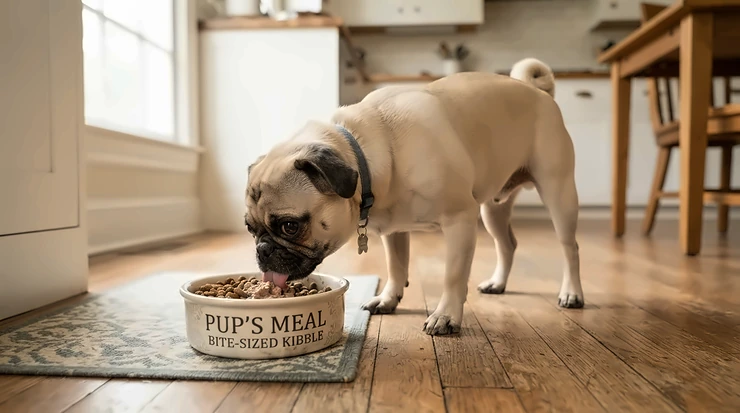
A frenchie food bowl that does not fit a flat face costs more than the purchase price. Kibble gets chased around the rim and onto the floor, food lodges in the folds around the muzzle, and the wipe-down afterward becomes part of every meal. The findings below draw on maker spec listings, a veterinary-reviewed explainer on raised feeders, specialist-press roundups and buyer reviews on retailer pages, and those sources agree on depth, tilt and stability far more than they agree on height. For 2027 shopping, the right frenchie food bowl comes down to a method you can follow before spending anything, then a short list of bowls that match each fix.
What food bowl is best for French Bulldog faces? Wide, shallow, and slightly tilted
Three features decide it: shallow depth, a gentle tilt, and a base that stays put. Dr. Gary Richter, a veterinarian quoted by Bustle, says that for flat-faced dogs “a shallow bowl or plate might be a little easier and more comfortable.” The reasoning is simple geometry: a short snout has less reach, so the food needs to sit close and low in the dish.
Tilt solves a second problem. Chewy’s French Bulldog bowl guide says brachycephalic breeds often do best with bowls that are rounded and tilted so food collects in one easy-to-reach place. Instead of scattering toward the rim, kibble slides to the low point where the mouth already is.
The evidence favors a shallow, tilted stainless dish with a grippy base for a Frenchie that eats at a normal pace, which is the profile of the Enhanced Pet Bowl Stainless Steel Bowl for Flat-Faced Dogs covered below. A dog that gulps does better with shallow compartments, as in the Leashboss Flat Face Feeder. Extra height is optional, and the sections on the bloat research and stands explain why it needs a reason.
Do Frenchies need special food bowls, or will any dish work?
Nothing in the sources makes a special bowl mandatory, and a healthy dog can eat from an ordinary dish. The trouble is shape. The Vet Desk’s roundup of bowls for flat-faced dogs notes that a short nose can get pushed into the food when the dog bends to eat, and it names deep, upright bowls as the design to avoid. Bustle adds a wrinkle of its own: many slow-feed bowls run too deep for flat-faced breeds, so “slows eating” and “suits a Frenchie” are two separate checks.
Chewy’s Frenchie guide also says a slightly raised bowl may make eating more comfortable, because the breed sometimes has trouble bending down or breathing while stooped. That is a comfort argument from a retailer, not a medical finding, and it is where the height debate starts.
Material matters less than shape but still counts. The American Kennel Club’s guide to choosing a dog bowl calls stainless steel the most durable option, easy to clean and dishwasher-safe, though light enough that active dogs may tip it. Ceramic has the weight to resist pushing but can chip or break if dropped. Plastic is inexpensive and often dishwasher-safe, yet it scratches and slides around, so it may need replacing sooner.
A frenchie bowl for no mess on cheeks: the method, step by step
Mess on the cheeks and floor usually traces back to one of three things: the bowl is too deep, the food has nowhere to gather, or the dish moves. Working through them in order keeps the fix cheap.
- Watch one ordinary meal before changing anything. Note whether the dog chases kibble around the rim, presses the nose into the sides, or finishes with food packed into the folds. Chasing and pressing point to depth; scattering points to a missing tilt.
- Switch to a wide, shallow dish first. Bustle and The Vet Desk both flag depth as the main fit problem for flat faces, which makes it the first variable to change. A plate-like profile with low sides lets the whole muzzle reach food without the face sinking into the bowl.
- Add a tilt if food still scatters. One buyer on a retailer listing for the Enhanced Pet Bowl Stainless Steel Bowl for Flat-Faced Dogs describes propping a regular bowl on a tennis ball to angle it, finding it too deep for a flat face, and seeing food stop collecting between the wrinkles after the switch. An owner on the Frenchie Journey blog reports that an elevated, tilted steel bowl slowed his dog down considerably. Both are single reports, but they match what the roundups describe.
- Size the bowl to one meal. PetMD’s French Bulldog breed page recommends two meals a day for adults and three to four for puppies, with the daily amount taken from the food bag and checked with a vet when the diet changes. Divide that amount by the number of meals and pick a bowl that holds it without spreading the kibble thin. The same buyer mentioned above says the medium size looked large but suited a half cup to one cup of food.
- Stop the sliding. A bowl that skates across the floor undoes every other fix. Rubber rings and non-slip bases help, though The Vet Desk’s roundup records rubber rims that come loose on several bowls, so check the base after a few weeks of use.
- Wipe the folds after meals. PetMD advises making sure food and drool do not stay stuck in the facial folds after eating, using a damp cloth or a medicated wipe. Royal Canin’s breed library likewise says the folds should be kept clean and dry to limit bacteria build-up.
- Wash the bowl as part of the normal dish routine. Stainless steel is the simplest here, since AKC lists it as easy to clean and dishwasher-safe. Scratched plastic is harder to get clean, which is one reason it wears out faster.
If food still escapes after a week, add more tilt or move to a slow-feeding design. The owner behind FrenchBulldogOwner.com reports that his Frenchie went from being sick about once a week from eating too fast to far rarer episodes after he switched to a specialist bowl. That is one household’s account, not a guarantee, yet it shows why pace and bowl shape get tackled together.
Do Frenchies need elevated food bowls? What the bloat research does and doesn’t cover
Not as a rule. WebVet’s vet-reviewed explainer on elevated dog bowls calls a raised bowl optional for healthy small and medium dogs, with no proven benefit or harm, and says small breeds carry a much lower bloat risk than large ones.
The bloat worry comes from the Purdue study by Glickman and colleagues, published in the Journal of the American Veterinary Medical Association in 2000. It followed about 1,600 large and giant breed dogs and associated raised feeders with a higher risk of gastric dilatation-volvulus. The authors estimated a raised bowl accounted for roughly 20% of cases in large breeds and about 52% in giant breeds. WebVet stresses that the study was observational: it shows an association, not proven cause, and owners of high-risk dogs may have been more likely to buy raised feeders. AKC likewise notes that some studies link elevated bowls to bloat and advises asking a vet when a health condition might call for one.
Frenchies sit outside the size classes that study covered. That removes the strongest warning, but it does not create a benefit, which is why the safe default is a floor-level bowl that is shallow and tilted.
There is one situation where position is medical. WebVet describes megaesophagus, a condition in which dogs cannot push food down normally, as the case where vets use upright feeding so gravity moves food toward the stomach. The page says a veterinarian should set the angle and hold time, not a product page. A stand is no substitute for that guidance.
Frenchie food bowl stand: height rules that keep it comfortable
Some owners still want a stand, whether for neck comfort or to keep a bowl from skidding. WebVet’s method for choosing height is straightforward: measure from the floor to the withers, the top of the shoulder blades, then subtract roughly 4 to 6 inches to get the bowl-rim height. Its chart lists about 2 to 6 inches for toy and small dogs. After setting it up, watch the dog eat for about a week; any hesitation or strain means the height is wrong, and the dog should eat with the neck level or slightly down.
Depth still counts on a stand. A tall frame holding a deep bowl combines two problems, and The Vet Desk’s roundup says exactly that about one adjustable bamboo stand with six height settings from 2 to 7 inches: the bowls may be too deep and the stand can wobble. Choose a stand only if its bowls are shallow, and pair a low lift with a tilt rather than raising the dish high.
Swallowing or reflux trouble belongs with a vet. The UK charity PDSA says flat-faced breeds such as Frenchies can suffer from reflux or struggle to swallow food, and its French Bulldog guide points owners to a vet for management. Regurgitation after meals is a reason to book that appointment before buying more gear.
Where a Frenchie bowl purchase goes wrong
The most common failure is a deep bowl with a flattering label. A slow-feed design that works for a long-nosed dog can be too deep for a Frenchie, and Bustle makes that point about many slow feeders. The fix is to read the listed depth and compartment shape rather than the marketing line.
Slip is the second. The Vet Desk’s roundup records a rubber ring that comes off easily on the Enhanced Pet Bowl Stainless Steel Bowl for Flat-Faced Dogs, and a bowl that wobbles and moves once it leaves its base on the JWPC Bulldog Bowl. Neither is a reason to rule them out, but both are reasons to inspect the base early and keep a non-slip mat on hand.
Height bought out of bloat fear is a third. The Purdue findings concern large and giant dogs, and for a Frenchie the research neither demands nor forbids a stand. A raised bowl bought “to be safe” adds cost without a documented benefit.
Material mismatches show up too. Light plastic slides and scratches, a point AKC makes about the material, while a ceramic dish can chip, and The Vet Desk notes that the bowls in one ceramic-and-bamboo set chip easily. Finally, a bowl cannot fix an eating problem that has a medical cause; persistent regurgitation or choking calls for a vet first.
Four bowls matched to the fixes above
These four come from the roundups that name bowls for flat-faced dogs, picked so each one maps to a step in the method. Price figures are Bustle’s approximate numbers; check the current price on Amazon.com before ordering.
1. Enhanced Pet Bowl Stainless Steel Bowl for Flat-Faced Dogs — 45-degree tilt, wide and shallow
The 45-degree angle is the reason this bowl tops flat-faced lists; The Vet Desk’s roundup names it best overall. It covers steps two, three and five in one piece: a wide, shallow stainless dish on a rubber-ring base, in three sizes listed at 1 cup, 1 to 2.5 cups, and 3 to 5 cups. Stainless steel also fits the cleaning step, since AKC calls it easy to clean and dishwasher-safe.
The buyer evidence leans positive. One reviewer on a retailer listing says a Frenchie’s face stopped being covered in food between the wrinkles after the switch, and advises choosing the size by meal portion rather than by how big the bowl looks.
Pros:
- A 45-degree angle that gathers food at the low point
- Wide and shallow, with a rubber ring for grip
- Three sizes to match a puppy or an adult portion
Cons:
- The Vet Desk calls it relatively expensive, and it is a single bowl
- The rubber ring can come off easily
2. Leashboss Flat Face Feeder — tilted maze for fast eaters
Fast eaters are the target audience. Bustle lists this feeder at around $20, measuring 8 by 8 inches with a 1.5-cup capacity, a tilted and raised plastic base, shallow maze compartments, a non-slip underside, a built-in handle and dishwasher-safe construction. The shallow compartments are what keep it usable for a short nose, which is the problem Bustle raises about deeper slow feeders.
Buyer feedback is consistent. The Walmart listing shows 4.5 stars across 11 ratings, and a bulldog owner there credits it with slowing her dog’s eating. A Frenchie owner on another retailer listing says the slant is enough to eat without pushing the face in or chasing food, and that mealtime slows considerably.
It comes in one size, and Bustle flags the small capacity for larger breeds. Plastic also carries AKC’s caveat that it scratches and may need replacing sooner, so inspect the maze channels over time.
3. JWPC Bulldog Bowl — adjustable tilt at a low price
Budget is the first thing to know: Bustle lists it at around $15, below the roughly $20 and $40 figures Bustle gives for the Leashboss Flat Face Feeder and the YMAXGO Ceramics Tilted Elevated Food Bowl. The bowl measures 6.7 inches across and 4.3 inches high with its stand, holds 2 cups, and sits on a base whose angle can be adjusted, so the tilt can grow or shrink with the dog’s reach. Sources describe the material differently, with one roundup calling it non-toxic resin and another a silicone bowl on a resin base, and they measure it differently too, since The Vet Desk lists a 3-inch depth for the bowl itself.
The trade-off is stability. The Vet Desk records no rim, so food can spill, and a bowl that wobbles and moves once it is lifted off its base.
Pros:
- Made for flat-faced dogs, with an adjustable angle
- Non-slip base at a low price
Cons:
- No rim, so kibble can spill over the edge
- The bowl wobbles when separated from the base
4. YMAXGO Ceramics Tilted Elevated Food Bowl — ceramic dish on a raised base
Cost sets this one apart. Bustle lists it at around $40, roughly double the Leashboss Flat Face Feeder figure, for a 7.9 by 7.9 by 7.48 inch set holding 2 cups, with a shallow rounded ceramic bowl, a plastic base lifting it 3.5 inches, and two non-slip mats. It is the only pick here that combines tilt with real lift, which makes it the nearest fit for the stand question above.
Ceramic brings the weight AKC credits with resisting pushing, along with its warnings that ceramic can chip or break if dropped. The 3.5-inch lift falls inside the 2-to-6-inch band WebVet’s chart gives for toy and small dogs, though the measuring method in the stand section decides the real number. Floor-level feeding stays the default unless a vet or visible strain says otherwise.
| Bowl | Tilt or lift | Listed size | Material | Main trade-off |
|---|---|---|---|---|
| Enhanced Pet Bowl Stainless Steel Bowl for Flat-Faced Dogs | 45-degree tilt | 1 cup, 1 to 2.5 cups, or 3 to 5 cups | Stainless steel, rubber ring | Relatively expensive; ring can loosen |
| Leashboss Flat Face Feeder | Tilted, raised base | 8 by 8 in; 1.5 cups | Plastic | One size; plastic scratches |
| JWPC Bulldog Bowl | Adjustable angle | 6.7 in wide; 2 cups | Resin (one roundup lists a silicone bowl) | No rim; wobbles off the base |
| YMAXGO Ceramics Tilted Elevated Food Bowl | Tilted, 3.5 in base | 7.9 by 7.9 by 7.48 in; 2 cups | Ceramic on plastic base | Higher price; ceramic can chip |
The table shows a split in purpose. The Enhanced Pet Bowl Stainless Steel Bowl for Flat-Faced Dogs and the JWPC Bulldog Bowl go after mess with a tilt, the Leashboss Flat Face Feeder adds slow feeding, and only the YMAXGO Ceramics Tilted Elevated Food Bowl adds real lift. For a Frenchie with no medical reason for height, the trade-offs point to the Enhanced Pet Bowl Stainless Steel Bowl for Flat-Faced Dogs as the default and the Leashboss Flat Face Feeder as the swap for a gulper.
Compare the exact model number before buying, since sizes, tilt angles and materials vary between listings.
Bowl depth, height, and cleanup: short answers for Frenchie owners
What food bowl is best for a French Bulldog?
Do Frenchies need elevated food bowls?
How can you keep food out of a Frenchie's cheek folds?
Is a slow feeder bowl a good idea for a Frenchie?
Which bowl material works best for a Frenchie?
Start shallow, add tilt, lift only for a reason
For a Frenchie that eats at an ordinary pace, a shallow tilted stainless dish on a rubber base is the strongest starting point the sources support, and a shallow-compartment slow feeder is the swap for a gulper. Height comes last: the research on raised feeders concerns large and giant dogs, and a stand earns its place only when a vet recommends it or the dog visibly strains at floor level. Whichever frenchie food bowl you choose, watch the first week of meals for chasing, nose pressing and food in the folds, then adjust the tilt or depth before buying anything else.
Read the dimensions on each listing against your dog’s face and portion size before you order.
Recommended for You
- Best Slow Feeder Dog Bowl for Wet Food: 7 Mess-Free Picks 2026
- 5 Best Frenchie Dog Bowl Styles to Stop Gas and Bloat (2026)
- Pet Dish Guide 2026: 7 Best Picks (and 5 Costly Mistakes)
A bowl that suits the face is worth more than a fancy stand, so let the first week of meals tell you which direction to adjust.