
In This Article
As an Amazon Associate I earn from qualifying purchases. Links in this article may be affiliate links. How we choose gear
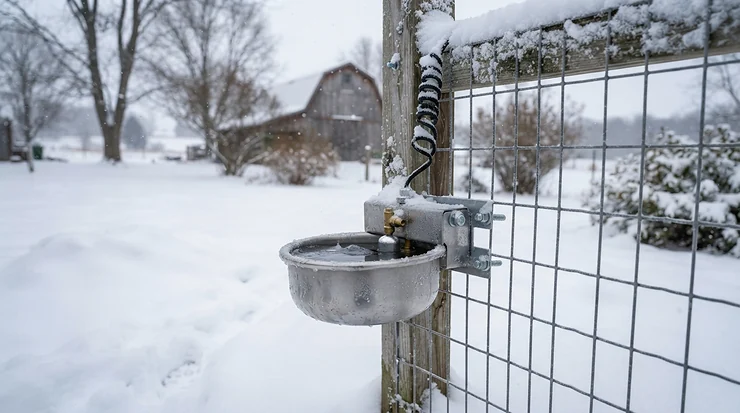
Between 12 and 25 watts, depending on size, is what a farm-supply listing gives for the K&H Thermal-Bowl Outdoor Heated Water Bowl, and a Chewy reviewer still reports ice forming on it somewhere between minus 4°F and minus 14°F. A spec and a cold snap rarely agree, which is why the dog kennel waterer that works in one yard fails in the next: the answer depends on whether the water sits in a fenced run, hangs on crate wire or has to survive a hard freeze. Maker spec sheets, retailer rating breakdowns, kennel-supply Q&A pages and owner reviews drive the six options below, sorted by setup for the 2027 season.
Shoppers who type gravity fed dog feeders for kennels into a search box usually mean the water half of the pair, and that half comes in three families: float-valve units plumbed to a spigot, hand-filled reservoirs and bottles, and heated bowls. Each family solves one problem and creates a different chore.
Start with the spot: run, crate or covered kennel bank
Three settings account for most searches for a dog kennel waterer. A fenced outdoor run with a hose bib nearby suits a spigot-fed float valve. A crate or wire kennel panel needs something that clips to the wire and keeps the floor dry, which is the dog crate waterer job: a bottle or a no-spill bowl. A covered kennel room or garage with no plumbing is where hand-filled gravity reservoirs make sense. Freezing weather then overrides all three, because an unheated bowl, bottle or valve turns to ice no matter how well it was chosen.
Kennel-care writers at Creatures call gravity-fed units the workhorses for kennel banks, covered runs and spots without power, while pointing out that they keep water present without improving it. Hair, dirt and slobber still collect, and slime builds where the reservoir neck meets the base. Material matters as well: Gun Dog Supply’s buyer guide says plastic can work for a dog that does not chew, but a chewer will destroy a plastic automatic waterer.
The picks below favor named brands with a documented mounting method and a rating history on at least one major retailer. Each is tied to the setting it handles best instead of being forced into one overall ranking.
How the options compare on water source, mounting and fit
| Option | How the water arrives | Where it mounts | Best fit |
|---|---|---|---|
| Nelson Automatic Dog Waterer | Spigot-fed float valve | Wall or kennel fence pole | Permanent run with an outdoor faucet |
| K&H Thermal-Bowl Outdoor Heated Water Bowl | Filled by hand, plugged in | Sits on the ground | Run with outdoor power and freezing nights |
| Lixit Faucet Dog Waterer | Spigot-fed, dog-operated lever | Threads onto the faucet | Run beside a hose bib that stays above freezing |
| Petmate Replendish Gravity Waterer | Filled by hand, gravity refill | Sits on a level floor | Covered, shaded kennel space |
| Lixit Wide Mouth Dog Water Bottle | Filled by hand, lick tube | Wire mount on crate or kennel | Crates and kennel panels |
| Petmate Kennel Bowl, Large | Filled by hand through a funnel | Clips to a wire door | Crate doors, filled from outside |
Water source and mounting split the six into two camps. The Nelson Automatic Dog Waterer and the Lixit Faucet Dog Waterer need a faucet at the run, so they are a plumbing decision first and a product decision second. Everything else is hand-filled, which trades automation for freedom to place it anywhere.
The waterers, from permanent run fixtures to crate clip-ons
Each entry below is tied to one setting, with the owner reports that bear on it.
1. Nelson Automatic Dog Waterer (Model 1200) — stainless float valve for runs
Plumbing is the whole idea here. The Nelson Automatic Dog Waterer screws to an outdoor spigot through a reversible valve assembly, and a float refills the stainless bowl as the dog drinks, so the run never depends on someone remembering a refill. Gun Dog Supply’s spec page lists a 304 stainless bowl, mounting plate and hardware, a plastic float, brass fittings, a reservoir of roughly 3.5 quarts and a bracket that fits either a wall or a kennel fence pole. Retailer pages describe the non-siphoning design as USDA-compliant and suited to licensed kennel operators.
Owner feedback leans heavily in its favor. Gun Dog Supply’s page shows a 4.8 average across 169 reviews, with 167 of those reviewers recommending it, and the praise centers on sturdy stainless parts, a removable bowl that cleans easily and a float valve that keeps working. The complaints are specific. The included 12-inch supply hose forces installation close to the spigot, some owners wanted longer bolts or lag bolts for pole mounting, and one long-term owner reported rust in the bottom of several pans over three years, a problem the reviewer says a Facebook group also described.
Two more details shape the decision. The page’s product expert warns that sun exposure grows algae quickly and recommends weekly cleaning, and the page offers no freezing guidance; one reviewer mentions disconnecting the hose for winter.
Pros:
- Stainless bowl, plate and hardware
- Refills itself from a spigot
- Removable bowl that owners describe as easy to clean
Cons:
- Short included hose limits placement
- No cold-weather guidance on the listing
Gun Dog Supply’s listing places it between $150 and $200, a different price tier from every plastic unit that follows.
2. K&H Thermal-Bowl Outdoor Heated Water Bowl — thermostat heat for freezing nights
Cold is the one problem this bowl exists to solve. It is thermostatically controlled, so it switches on and off by itself, and retail pages list a MET safety listing, a 5.5-foot steel-wrapped cord and a draw of 12 to 25 watts depending on size. Sizes run from 32 ounces through 96 ounces to 1.5 gallons, and Tractor Supply also carries a 15-cup stainless version.
Chewy shows 4.7 stars from 1,506 ratings on the 1.5-gallon listing. Reviewers there report water staying liquid through a Long Island cold snap and on a 21°F day. The same page carries the limits: one reviewer saw ice at minus 4°F to minus 14°F, another found the 32-ounce size needed frequent refilling, and one found the bowl warm enough above freezing to evaporate quickly. A farm-supply listing claims unfrozen water even at minus 20°F, so the sources disagree at the extreme end; the bowl’s label and manual are the document to trust for the cold range.
Cords deserve attention. Chewy’s product Q&A says the MET listing comes with a statement against using an extension cord, yet one reviewer needed a separate outdoor cord because the supplied one was too short. A reviewer of the stainless version on Tractor Supply says a dog chewed the cord off within 24 hours, which is one report and not a pattern, though it explains why cord placement matters in a kennel. Retail pages put the bowl between about $25 and $70 depending on size.
Check the cord length against the distance to your outlet before ordering.
3. Lixit Faucet Dog Waterer — a low-cost lever for spigot runs
At roughly $10 to $15 per Upco and Chewy, this is one of the cheaper ways to take refilling off the to-do list. A dog-operated lever threads onto a standard outdoor faucet, and the unit measures about 1.25 inches across and 3.5 inches long. Chewy’s Q&A says it is lead-free and made for all life stages.
Chewy shows 4.4 stars from 97 ratings, with shoppers rating ease of use positive 87 percent of the time, leak-proof design 85 percent and durability 84 percent. Reviewers say dogs pick up the lever quickly, though one owner needed several days and peanut butter on the lever to teach it. Leaks are the recurring complaint. A four-star reviewer reported leaking from the top threads of the hose bib on three different bibs, which stopped only after repeated re-tightening, and a one-star reviewer says it leaks through the valve.
Winter is the hard limit. Chewy’s own answer is blunt about it: “the water inside it will freeze.” Spigots that stay on through a freeze need a different plan, and a heated bowl is the usual one.
4. Petmate Replendish Gravity Waterer — big reservoir for covered kennel space
Retailer ratings for this line disagree with each other, and that is the most useful fact about it. Chewy shows 4.0 stars from about 2,800 reviews for a 2.5-gallon gray model, Walmart shows 3.2 from 67 for the 2.5-gallon blue, and Tractor Supply shows 2.9 from 56 for the 4-gallon blue.
The maker offers half-gallon, one-gallon, 2.5-gallon and four-gallon sizes in BPA-free plastic with Microban treatment, plus an optional charcoal filter in the lid. There is no power or moving part: water drops into the base as the dog drinks and stops once the level covers the opening. The base is listed as dishwasher safe.
A hands-on review from the dog site Fun Times Guide offers the plainest look at daily use. The author refills the 2.5-gallon size about weekly for two 60-pound dogs, finds it awkward to flip when full, doubts the four-gallon could be handled alone and warns against lifting a full unit by the base, which can weaken the seal and cause air bubbles. Outdoor use is called impractical because sunlight grows algae in the clear reservoir. That points this model toward a garage, a covered kennel room or an indoor bank of crates.
Pros:
- Four sizes from half a gallon to four gallons
- No batteries, cord or moving parts
- Optional charcoal filter
Cons:
- Clear plastic grows algae in sunlight
- Heavy and awkward to flip when full
- Ratings split between roughly 3 and 4 stars by store
Retail pages from Petco, Tractor Supply and PetSmart put it between about $15 and $50 depending on size.
5. Lixit Wide Mouth Dog Water Bottle (64 oz) — crate-mounted bottle with a steel tube
Crates are what this bottle was designed around. The maker’s page lists a 64-ounce BPA-free bottle, an extra-large 304 stainless drinking tube and a heavy-duty wire mount for kennels and crates, aimed at large breeds and multi-dog setups. Kennel-supply stores such as Upco and Miller Manufacturing list it between about $15 and $20.
Setup takes one step that surprises first-time users. Some dripping at the start is normal, and the maker says to fill the bottle to the top, tighten the cap and invert it to set the vacuum seal. Cleaning calls for a bottle brush and a rinse before each refill, and the maker advises checking the tube and mounting hardware from time to time and replacing the bottle if either is damaged.
Whether the dog will use it is the open question. One owner reviewing the smaller 44-ounce Lixit crate waterer on Gun Dog Supply reports that the dog refused to touch it and stopped entering the crate except when left alone, so the owner took it out after a couple of weeks. Other reviewers of that model say it does not drip. Introducing the tube before the first overnight stay is cheap insurance.
Pros:
- Large 64-ounce capacity for a crate-mounted bottle
- Stainless drinking tube
- Keeps the crate floor dry
Cons:
- Some dripping until the seal sets
- Dogs have to learn the tube
6. Petmate Kennel Bowl, Large — fills from outside the door
A funnel is the clever part. This 21-ounce BPA-free bowl hooks onto a wire kennel door with a no-spill rim, and the funnel lets water go in from outside without opening the door. Listings give the model number as 29156 and describe it as hand-wash only. A reseller mirror of the Amazon listing shows about 4.1 to 4.2 stars across roughly 2,800 reviews.
Owner reports cover both ends. The owner of a 100-pound German Shepherd says it was the one bowl that stopped spilling after many others failed, and advises mounting it low in a corner. A traveler who flies a dog regularly reports it surviving multiple trips. On the other side, a reviewer says it does not attach to a Petmate Vari Crate because the door wires are spaced wrong for the bolt and funnel at the same time, a Chewy reviewer says a dog chewed the rim off, and another buyer reports that the plastic was brittle and broke within two days. One owner notes that it rocks slightly, so filling it only halfway keeps it steady.
Fit is the pivot. Measure the door wire spacing first, because reviewers report it working on wire kennel doors and failing on at least one plastic crate model. Compare the exact model number before buying, since the line comes in more than one size, and check the current price on Amazon.com.
Outdoor dog waterer frost-resistant safety: heat, cords and valves
Three things decide whether a bowl survives winter: whether anything heats the water, where the cord runs and what the valve is made of. Heated bowls carry the electrical risk, and the safe version has a safety listing, a steel-wrapped cord and a placement the dog cannot reach. The K&H Thermal-Bowl Outdoor Heated Water Bowl lists the first two, and its Chewy Q&A adds the extension-cord warning noted above.
Real kennels expose what spec sheets leave out. Reviewers of a different heated bowl, an Allied Plastic model on a reseller site, describe two separate failures: a small dog flipped one and chewed the heating element, and another owner’s unlevel kennel floor tilted the bowl so far that it held little water, which that owner believed burned out the element. A tilted bowl, an empty bowl and a chewed cord are the three failures worth planning against: set it on level ground, keep it full and route the cord along the outside of the run.
Unheated gear needs its own plan. The Lixit Faucet Dog Waterer freezes when exposed, per Chewy, and Nelson Automatic Dog Waterer owners mention disconnecting the hose for winter. For both, the realistic options are to bring the dog’s water inside the freeze line, swap in a heated bowl for the cold months or run the spigot units only while temperatures stay above freezing.
What ratings and Consumer Reports-style comparisons can and can’t tell you
Consumer Reports’ pet fountain testing, as summarized by Quartz, is a well-known comparison in this space. It covers five motorized fountains scored on noise, ease of assembly and filtration, and it found one compact basin too tight for a large Labradoodle. Those are living-room criteria. None measures how a waterer behaves bolted to run fencing, hanging off crate wire or sitting in a freeze, so automatic dog waterer comparisons that cover kennels come mostly from specialist retailers and owner reviews.
For the best rated automatic dog waterer for outside, the numbers need context. Gun Dog Supply’s page shows 4.8 stars across 169 reviews for the Nelson Automatic Dog Waterer, the highest figure of the six, though it is one specialist retailer’s customers and the unit sits in a much higher price tier. Chewy shows 4.7 across 1,506 ratings for the 1.5-gallon K&H Thermal-Bowl Outdoor Heated Water Bowl and 4.4 across 97 for the Lixit Faucet Dog Waterer. The Petmate Kennel Bowl, Large sits near 4.1 to 4.2 on reseller mirrors of its Amazon page. The Petmate Replendish Gravity Waterer runs from 2.9 to 4.0 depending on size and store.
Ratings from different stores are not directly comparable, and sample sizes range from 56 to well over a thousand. A spread as wide as the Replendish line’s usually means buyers are using one product in very different settings, so the low-star reviews that describe your own setup are worth more than any average.
Keeping dog water for kennel runs fresh between refills
Algae is the biggest problem for any outdoor waterer, according to Gun Dog Supply’s buyer guide, and sun exposure speeds it up. The guide suggests a stainless bucket of four to five gallons as a simple option for runs, which is a useful benchmark for the automatic units: they save refills, not cleaning. The Creatures guide advises a daily look at the drinking surface for floating hair, feed specks, cloudy water or slick walls, with a full teardown on a schedule that checks for scale, cracks and worn seals.
Where each unit grows slime differs. Gravity units collect it at the reservoir neck and base, float valves at the bowl and valve seat, and bottles inside the tube and cap, where a bottle brush is the only real fix. Stainless bowls clean faster than scratched plastic, and the Creatures guide names stainless as its first choice for that reason.
Professional kennels are held to a clear standard. The federal rule for dogs in USDA-regulated facilities, 9 CFR 3.10, calls for safe drinking water at all times unless a veterinarian limits it, and the companion section on sanitation requires routine cleaning and disinfecting of water containers. A backyard run is not covered by that rule, but the same logic applies: water that is always present still has to be clean to be useful.
Freezing, cleaning and capacity: short answers for kennel owners
How often should a kennel waterer be cleaned?
Will an automatic dog waterer freeze outside?
Is a hanging water bottle a good dog crate waterer?
Can a heated dog bowl run on an extension cord?
How big should the reservoir be for several dogs?
Which waterer to buy for your setup
The evidence points in different directions for different yards. A permanent run with a hose bib has the strongest owner record behind the Nelson Automatic Dog Waterer, provided the price tier and weekly cleaning are acceptable. Freezing nights call for the K&H Thermal-Bowl Outdoor Heated Water Bowl, with the cord kept out of reach and the bowl kept level. The Lixit Faucet Dog Waterer is the low-cost spigot option for runs that stay above freezing.
For crates and wire panels, the Lixit Wide Mouth Dog Water Bottle and the Petmate Kennel Bowl, Large cover two habits, the bottle for dogs that learn a tube and the bowl for dogs that need a visible dish. The Petmate Replendish Gravity Waterer belongs indoors or under cover.
Anyone choosing a dog kennel waterer should settle where the water will live and what temperature it must survive before comparing ratings. Measure the wire spacing and the distance to your outlet or faucet first.
Recommended for You
- Outdoor Dog Water: 7 Best Waterers That Actually Work in 2026
- Automatic Outdoor Dog Waterer: 7 Best Picks for 2026 (Ranked)
- Auto Fill Dog Water Bowl: 7 Best Picks That Never Run Dry (2026)
Walk the run with a tape measure first, then match the waterer to the spot you measured.