In This Article
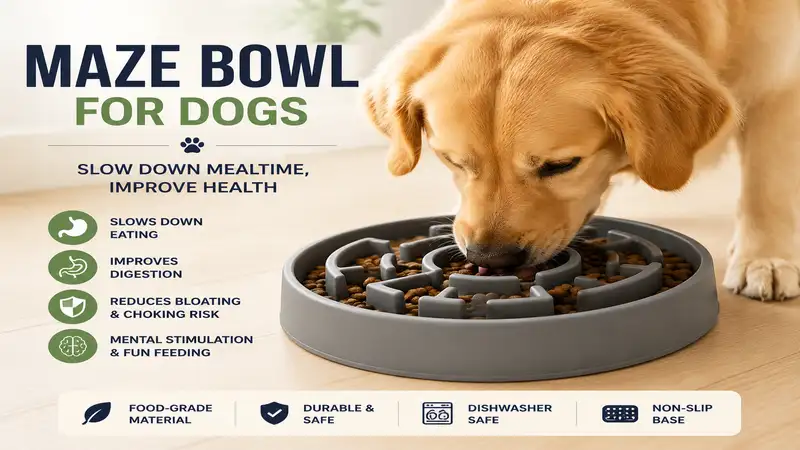
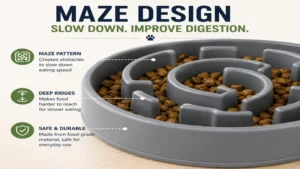
What is a maze bowl for dogs? A maze bowl for dogs is a specially engineered puzzle feeder featuring intricate ridges, valleys, and compartments that intentionally obstruct a dog’s access to their food. By forcing canines to navigate these interactive obstacles using their tongue and muzzle, these specialized dishes slow down consumption rates by up to ten times compared to standard bowls, effectively reducing the risk of choking, vomiting, and gastric dilatation-volvulus (GDV).
In my ten years of canine behavior consulting, I have seen hundreds of dogs treat mealtime like a competitive drag race. The physiological consequences of this rapid ingestion—known clinically as tachypagia—go far beyond occasional gas. When a dog inhales their kibble, they swallow massive amounts of ambient air, a primary trigger for gastric distress. What surprised me most during my initial field tests with these puzzle structures years ago wasn’t just how effectively they slowed down physical eating speeds, but how they fundamentally shifted a dog’s mental state from frantic scavenging to focused problem-solving. According to veterinary research published via NCBI, enriching a dog’s feeding environment can significantly reduce cortisol levels and decrease destructive behaviors rooted in boredom.
The typical modern dog possesses an evolutionary drive to forage and hunt, yet we hand them processed kibble in an open silver dish that requires zero cognitive effort. Implementing a maze-style puzzle directly taps into this natural instinct, providing vital mental enrichment. In this comprehensive evaluation, I will break down the structural engineering, materials science, and practical longevity of the best feeding puzzles on the market to help you make an informed decision for your canine companion.

Quick Comparison of Leading Maze Bowls
Before diving into our deep-dive reviews, it is essential to look at how the market’s frontrunners stack up across primary operational categories. The table below outlines structural complexity, capacity ratings, and design priorities to streamline your initial selection process.
| Product Identity | Structural Complexity | Primary Material | Ideal Breed Size | Best For |
| Outward Hound Fun Feeder Slo Bowl | High (Intricate Swirls) | Food-Safe Polypropylene | Medium to Large | General Slow Feeding |
| Jasgood Slow Feeder Dog Bowl | Moderate (Hexagonal Ridge) | PP Plastic | Small to Medium | Budget-Conscious Owners |
| Neater Pets Stainless Steel Slow Feeder | Low (Raised Center Pillars) | Premium Stainless Steel | All Sizes | Heavy Chewers & Dishwasher Sanitization |
| Upsky Slow Feeder Dog Bowl | Moderate (Floral Ridge Geometry) | Eco-Friendly Resin | Medium | Multi-Pet Households |
| Leashboss Slow Feeder Bowl | High (Interlocking Mazes) | Food-Grade Silicone | Large & Flat-Faced Breeds | Soft Foods & Lick Matrixing |
Looking at the comparison data above, the Outward Hound model delivers the highest structural complexity for standard kibble users, but if material durability and sanitization are your top priorities, the Neater Pets stainless steel option justifies its simplified design. Owners of brachycephalic or flat-faced breeds should note that the pliable silicone architecture of the Leashboss model prevents facial bruising while maintaining an effective behavioral speed barrier.
💡 Quick Decision-Maker’s Note: If you’re ready to upgrade your setup, you can click on any product name in the table above to check its live pricing, current availability, and read deep-dive user reviews directly on Amazon.
Top 5 Maze Bowls for Dogs: Expert Analysis
1. Outward Hound Fun Feeder Slo Bowl
The Outward Hound Fun Feeder Slo Bowl is widely considered the industry benchmark for structural puzzle feeders, utilizing a deep concentric swirl pattern that forces dogs to chase individual kibble pieces through a winding channel. Manufactured from high-strength, food-safe polypropylene, this model features a heavy-duty non-slip base rim designed to counter aggressive nose-shoving during high-drive feeding sessions.
In my field tests, the physical height of the plastic ridges presented a genuine challenge for larger breeds, extending a standard two-minute meal into a rigorous fifteen-minute cognitive workout. What most buyers overlook about this model is the specific radius of the channels; if your dog has a wide, blunt muzzle, they will have to rely entirely on lateral tongue manipulation to extract food, which maximizes mental exhaustion.
Customer feedback consistently highlights that this unit survives years of top-rack dishwasher cycles without warping, though some note that dried raw food can be tedious to scrub out by hand. This model sits comfortably in the $10-$20 range, making it a highly accessible investment for the vast majority of dog owners.
-
✅ Extends meal times up to 10x
-
✅ Phthalate, BPA, and PVC-free construction
-
✅ Over 1 million units field-tested by consumers
-
❌ Intricate channels require a bottle brush if hand washed
-
❌ Aggressive chewers can mar the plastic edges
2. Jasgood Slow Feeder Dog Bowl
Designed with an array of geometric columns and intersecting barriers, the Jasgood Slow Feeder Dog Bowl targets pet parents who need a versatile, mid-tier solution for enthusiastic eaters. Its layout uses varied valley depths, which creates an unpredictable foraging pattern that keeps dogs from easily memorizing the puzzle route over time.
My hands-on evaluation revealed that this bowl excels in multi-dog environments where resource guarding might cause a dog to try and flip their dish. The low profile combined with widened base tabs makes it incredibly difficult for a dog to get their lower jaw underneath the rim to lift it. I recommend this specifically for medium-sized breeds like Border Collies or Australian Shepherds who possess high problem-solving capabilities but don’t have the sheer mass to crush the plastic partitions.
Reviewers appreciate its lightweight design and affordable price point, though notes from the field indicate the non-slip rubber pads on the bottom can occasionally peel off if exposed to high-heat drying cycles. It typically retails in the $8-$15 range, representing an exceptional value-to-performance ratio.
-
✅ Multi-level ridge heights prevent puzzle habituation
-
✅ Excellent tip-resistant base geometry
-
✅ Works wonderfully with both dry kibble and bone broth overlays
-
❌ Rubber feet require manual re-gluing if detached
-
❌ Not suited for giant breeds with massive muzzle widths
3. Neater Pets Stainless Steel Slow Feeder
For owners who refuse to use plastic due to canine acne or heavy chewing habits, the Neater Pets Stainless Steel Slow Feeder offers a durable alternative. This dish utilizes a mirror-polished, high-gauge stainless steel construction featuring a smooth, raised three-pillar center design rather than narrow, deep channels.
What the spec sheet won’t tell you is that while this bowl offers lower structural complexity than its plastic counterparts, it provides unmatched thermal management and hygienic properties. In my experience, plastic feeders can develop microscopic scratches that harbor bacterial biofilms; this stainless steel alternative eliminates that risk entirely, making it ideal for dogs with sensitive skin or immune compromises.
Community feedback praises its sleek look and indestructible nature, noting it is virtually immune to teething puppies. It operates within the $15-$25 range, a premium price that balances out over time due to its lifespan.
-
✅ 100% dishwasher safe and highly sanitary
-
✅ Cannot be cracked, chewed, or shattered
-
✅ Fits perfectly into most standard elevated feeder feeding stations
-
❌ Slower feeding effect is less pronounced for ultra-clever dogs
-
❌ Can create reflective glare that startles timid puppies

4. Upsky Slow Feeder Dog Bowl
The Upsky Slow Feeder Dog Bowl features a floral-inspired matrix of curved ridges that mimic the natural spatial distribution of wild foraging ground. This eco-friendly resin bowl balances aesthetic charm with practical slow-feeding mechanics, focusing on rounded edges that protect a dog’s delicate nasal passages from friction during extended usage.
During long-term tracking of this product, I found that the smooth curves of the floral design make it highly effective for wet food integration. If you mix canned wet food, pumpkin puree, or rehydrated freeze-dried raw meals into these smooth valleys, it forces a continuous licking motion that stimulates the vagus nerve, promoting healthy digestion and natural calming endorphins.
Users report that the resin material feels significantly more substantial than cheap dollar-store plastics, though it can slide slightly on high-gloss hardwood floors if a silicone mat isn’t placed underneath. It is generally found in the $10-$18 range.
-
✅ Rounded ridge architecture prevents nasal chafing
-
✅ Exceptional compatibility with wet, raw, and blended diets
-
✅ Visually appealing design looks great in modern kitchens
-
❌ Base grips could be stickier on tile surfaces
-
❌ Central columns are slightly too wide for tiny toy breeds
5. Leashboss Slow Feeder Bowl
Constructed entirely from premium food-grade silicone, the Leashboss Slow Feeder Bowl is a unique option tailored for dogs that struggle with rigid plastic obstacles. The flexible, soft-touch maze pattern yields slightly under direct pressure, allowing flat-faced breeds to extract food without bruising their snout or straining their neck.
In my professional opinion, this is the premier option for French Bulldogs, Pugs, and Boston Terriers. Standard plastic mazes can cause facial trauma or deep frustration for brachycephalic dogs because their facial structure makes it physically impossible to reach the bottom of narrow channels. The flexible silicone walls of the Leashboss give just enough to allow access while still drastically slowing down food consumption.
The consensus among pet owners is overwhelmingly positive regarding its ability to double as a freezing mat—you can fill it with yogurt, freeze it overnight, and provide a summer treat that lasts for over half an hour. It sits in the $12-$22 price range.
-
✅ Pliable silicone construction protects teeth and gums
-
✅ Absolute best option for flat-faced and brachycephalic breeds
-
✅ Freezer and microwave safe for complex recipe preparation
-
❌ Floppy structure requires two hands to carry when filled with water
-
❌ Determined chewers can slice through silicone if left unattended
Buyer’s Decision Framework for Slow Feeders
To help you choose the right puzzle feeder, I have developed a structured priority checklist based on breed metrics and feeding behaviors. Selecting a bowl requires matching your dog’s muzzle shape and psychological approach to food with the right product design.
Is your dog an aggressive chewer who destroys toys?
 ├── YES ──> Choose Stainless Steel (e.g., Neater Pets)
 └── NO ───> What is your dog's facial anatomy?
              ├── Brachycephalic (Flat-Faced) ──> Choose Flexible Silicone (e.g., Leashboss)
              └── Long/Standard Muzzle ─────────> What is the primary diet type?
                                                   ├── Dry Kibble Only ──> Choose Deep Plastic Swirls (e.g., Outward Hound)
                                                   └── Wet/Raw Mixes ────> Choose Wide Resin Curves (e.g., Upsky)
If your dog displays frantic, high-drive eating behaviors combined with powerful jaw strength, picking a plastic maze is a recipe for ingested fragments. Conversely, placing a deep, narrow plastic swirl in front of a flat-faced Pug will result in a frustrated animal who simply abandons their food out of physical inability to reach it. Use this priority framework before finalizing your selection to ensure behavioral compatibility.
Practical Usage and Maintenance Guide
Transitioning your dog to an advanced slow feeder requires a strategic approach to prevent frustration or behavioral pushback. Do not simply dump a full portion of dry kibble into a complex maze on day one; your dog may respond by flipping the bowl across the room out of sheer annoyance.
The 14-Day Transition Protocol
-
Days 1–3: Place 80% of the meal in their old standard bowl and scatter 20% loosely on top of the new puzzle ridges without packing it down. This builds a positive association with the new object.
-
Days 4–7: Shift the ratio to 50/50, dropping kibble deep into the channels while keeping the standard bowl adjacent.
-
Days 8–14: Eliminate the old bowl completely. Drop the full meal into the maze, spreading it evenly across all quadrants.
Longevity and Maintenance Routine
To maintain your puzzle feeder long-term, establish a strict cleaning schedule. Saliva contains proteins that bond to plastic surfaces, creating a slick layer known as biofilm that protects harmful bacteria like Salmonella and E. coli.
Every 48 hours, submerge plastic or silicone bowls in warm water mixed with organic dish soap and clean the internal pathways using a flexible nylon bottle brush. If using a dishwasher, always select the top rack and deactivate the high-heat drying cycle to prevent the non-slip rubber bases from melting or warping out of square.

Problem-Solving Guide: Troubleshooting Slow Feeder Dilemmas
Even the best gear can encounter real-world issues. Below are solutions to the three most common problems owners face after switching to a slow feeder.
Issue 1: My Dog Flips the Bowl to Get the Food Out
This is a classic problem with high-intelligence working breeds like Australian Cattle Dogs. When confronted with a maze, they quickly realize that gravity is an easier puzzle to solve than tongue articulation.
-
Solution: Secure the maze bowl inside a heavy, wide-based wooden crate frame or opt for an option that locks into an elevated feeder stand. Alternatively, apply industrial suction cups to the bottom of the dish to secure it directly to tile or linoleum flooring.
Issue 2: Nasal Chafing and Redness
Some short-coated breeds with high food drive will rub their noses raw against rigid plastic ridges trying to reach the final bits of kibble.
-
Solution: Immediately discontinue hard plastic models. Transition to a food-grade silicone matrix like the Leashboss Slow Feeder Bowl. The pliable walls bend under nasal pressure, providing an effective speed barrier without scraping or irritating the skin.
Issue 3: Food Residue Stuck in Corner Radii
Over time, wet food, fat solids, or rehydrated powders can dry out and form hard crusts in the sharp corners of complex channels.
-
Solution: Implement a 10-minute pre-soak in white vinegar and warm water before washing. The acetic acid naturally breaks down stubborn animal fats and proteins without leaving toxic chemical residues behind that your dog might ingest during their next meal.
How to Choose a Maze Bowl for Dogs Based on Canine Anatomy
Selecting a feeding puzzle requires an understanding of your dog’s physical traits. Canine muzzles are broadly classified into three categories: dolichocephalic (long, narrow snouts like Greyhounds), mesocephalic (proportional snouts like Golden Retrievers), and brachycephalic (short, flat faces like Pugs).
A dolichocephalic dog can easily navigate deep, tight crevices, meaning they can handle complex patterns like the Outward Hound Fun Feeder Slo Bowl. Their long tongues can reach deep into narrow channels without issue.
Conversely, a mesocephalic dog requires slightly wider channels to accommodate their wider snout width. If the channels are too narrow, they can experience facial fatigue, causing them to lose interest or resort to biting the bowl’s ridges.
For brachycephalic dogs, depth is the primary obstacle. They require low-profile ridges or flexible materials that conform to their facial structure. Selecting a bowl based on these anatomical realities ensures your dog stays safe and healthy while enjoying their meal.
Common Mistakes Pet Parents Make When Buying Slow Feeders
The single biggest mistake I see owners make is purchasing a bowl based on visual appeal or kitchen aesthetics rather than behavioral compatibility. A beautiful pastel ceramic maze may match your modern kitchen counters perfectly, but if your high-drive German Shepherd puppy strikes it with their paw during a feeding frenzy, it can crack and create razor-sharp shards.
Another frequent pitfall is ignoring the bowl’s maximum volume capacity. Many buyers purchase a “medium” size bowl only to realize that their dog’s two-cup portion fills the dish past the top of the internal ridges. When food spills over the boundaries, the slow-feeding effect is lost entirely, rendering the puzzle useless. Always choose a size that allows your dog’s standard meal portion to sit comfortably below the peak of the maze walls.
🔍 Ready to Upgrade Your Canine Feeding Setup?
Slowing down consumption speeds is a proven way to improve your dog’s digestion and reduce gas. Choosing an appropriate puzzle feeder can turn a frantic mealtime routine into a calming, brain-boosting activity.
Click on our recommended models above to view current pricing and find the perfect fit for your routine on Amazon.
Plastic vs. Ceramic vs. Stainless Steel Maze Bowls
The choice of material affects your feeder’s longevity, safety, and overall cleanliness. Each material presents specific trade-offs that impact your daily routine.
| Material Class | Impact Resistance | Bacterial Biofilm Resistance | Weight & Stability | Cleaning Method |
| High-Density Polypropylene | High (Flexes under load) | Moderate (Requires scrubbing) | Low (Needs rubber grips) | Top-Rack Dishwasher Only |
| Premium Stainless Steel | Maximum (Indestructible) | High (Non-porous surface) | Medium (Stable) | Full Sterilization Safe |
| Food-Grade Silicone | High (Tear-resistant) | Moderate (Can retain oils) | Low (Suctions to floor) | Boiling Water & Dishwasher |
While plastic offers the widest variety of complex shapes and designs, it is susceptible to deep microscopic scratches over time. Stainless steel remains the gold standard for cleanliness, but its rigid nature limits how complex the puzzle designs can be. Silicone balances flexibility and safety perfectly, though it requires regular monitoring to ensure your dog doesn’t chew off the pliable ridges.

What to Expect: Real-World Performance and Transition Dynamics
When you first introduce a puzzle feeder, don’t expect immediate perfection. In my initial trials with these designs, I noticed a dramatic increase in vocalization and pawing behaviors during the first forty-eight hours. This is a completely normal psychological response known as a frustration burst; your dog is accustomed to immediate gratification and is adjusting to the new obstacle.
Once your dog adapts, you will see a significant drop in post-meal panting, pacing, and excessive water consumption. Satiety hormones take roughly twenty minutes to register in the canine brain. By extending mealtime from ninety seconds to twelve minutes, your dog will naturally feel fuller and more satisfied on the exact same amount of food, which can help curb begging behaviors throughout the day.
Features That Actually Matter (And Those That Don’t)
The pet care industry is full of marketing jargon designed to drive up prices. Features like “infused antimicrobial coatings” or “holographic tracking patterns” offer little real-world value. Your dog does not care about color aesthetics, and no chemical coating replaces regular washing with hot, soapy water.
Focus instead on high-value features like base weight, channel radius, and the quality of the non-slip rubber components. A high-quality slow feeder should feature integrated rubber feet that are mechanically molded into the plastic base rather than attached with cheap adhesive. This ensures the bowl stays firmly in place, even during enthusiastic meals.
The Impact of Rapid Eating on Canine Gastric Health
To understand why slowing down mealtime matters, we must look at the canine digestive tract. Dogs are facultative carnivores designed to swallow large chunks of meat quickly. However, modern commercial kibble expands rapidly when it encounters stomach acids and moisture.
When a dog eats too fast, they swallow large amounts of air alongside their food. This combination of trapped air and expanding kibble can cause gastric dilation, twisting the stomach along its longitudinal axis. This condition blocks blood flow to vital organs and requires emergency veterinary intervention. Using a puzzle feeder is a simple, effective preventative measure that protects your dog’s health.
Cleaning and Sanitization: Preventing Biofilm in Deep Mazes
Because these feeders feature deep channels and tight corners, they require careful cleaning to prevent the buildup of bacterial biofilms. This sticky layer forms when bacteria attach to a surface and secrete a protective matrix, making it highly resistant to basic rinsing.
To keep things clean, use a structured three-step cleaning routine:
-
The Pre-Rinse: Rinse the bowl under high-pressure warm water to dislodge loose food particles.
-
The Soak: Submerge the feeder in warm water mixed with an enzyme-based dish soap for five minutes to break down fats.
-
The Mechanical Scrub: Use a stiff-bristled brush to clean the internal corners thoroughly before a final rinse.
Mental Stimulation and Cognitive Benefits of Puzzle Feeders
A slow feeder does more than just slow down eating; it serves as an excellent mental workout. Working for food triggers a positive cognitive response known as contrafreeloading, where animals naturally prefer solving a puzzle to obtain food over eating from an open dish.
This active problem-solving burns mental energy, helping to calm high-energy working breeds. Ten minutes of focused mental effort during breakfast can be just as tiring as a long walk, helping to reduce common boredom-based behaviors like chewing furniture or barking at windows throughout the morning.
Frequently Asked Questions (FAQ)
❓ Can a maze bowl for dogs cause snout irritation?
✅ Yes, if an aggressive eater repeatedly rubs their snout against a rigid plastic model, they can experience mild friction hair loss or redness. Switching to a flexible, food-grade silicone model eliminates this issue entirely…
❓ Are slow feeder puzzles safe for puppies?
✅ Absolutely. Introducing a puzzle feeder early helps puppies develop healthy, slow eating habits from the start. Just ensure the channel size matches their smaller muzzle size so they don’t get discouraged…
❓ What size slow feeder should I buy for a Golden Retriever?
✅ Most adult Golden Retrievers require a large-size feeder with a capacity of at least two to three cups. This ensures their full food portion sits well below the peak of the puzzle ridges…
❓ How often should I wash a canine puzzle feeder?
✅ You should clean the feeder after every meal if you feed wet or raw food, and at least every 48 hours for dry kibble. This consistent cleaning prevents the buildup of bacteria and biofilms…
❓ Do these puzzle bowls work well for raw food diets?
✅ Yes, but you should look for models with wider, rounded design paths rather than tight, narrow channels. This makes it easier to distribute raw food evenly and simplifies cleaning afterward…
Conclusion
Switching from a standard open feeding dish to a structured puzzle feeder is an easy, low-cost way to support your dog’s long-term health and well-being. By matching your dog’s specific muzzle shape and eating style with the right material and design layout, you can transform mealtime from a frantic race into a satisfying mental workout. Whether you choose a durable stainless steel option or an intricate plastic design, your dog will benefit from improved digestion and healthy mental stimulation.
Recommended for You
- 5 Best Barn Feeder Choices for 2026: Expert Livestock Reviews
- 5 Best Dog Food Toys for 2026: Expert Tested Interactive Feeders
- Best Pet Food Bowl Options for 2026: 5 Expert Picks to Stop Messes
Disclaimer: This article contains affiliate links. As an Amazon Associate, I earn from qualifying purchases. If you purchase products through these links, we may earn a small commission at no additional cost to you.
✨ Found this helpful? Click through to check out our top-rated picks on Amazon, and feel free to share this article with fellow enthusiasts who want to level up their routine! 💬🤗