
In This Article
Why an Automatic Animal Waterer Is Worth Every Penny
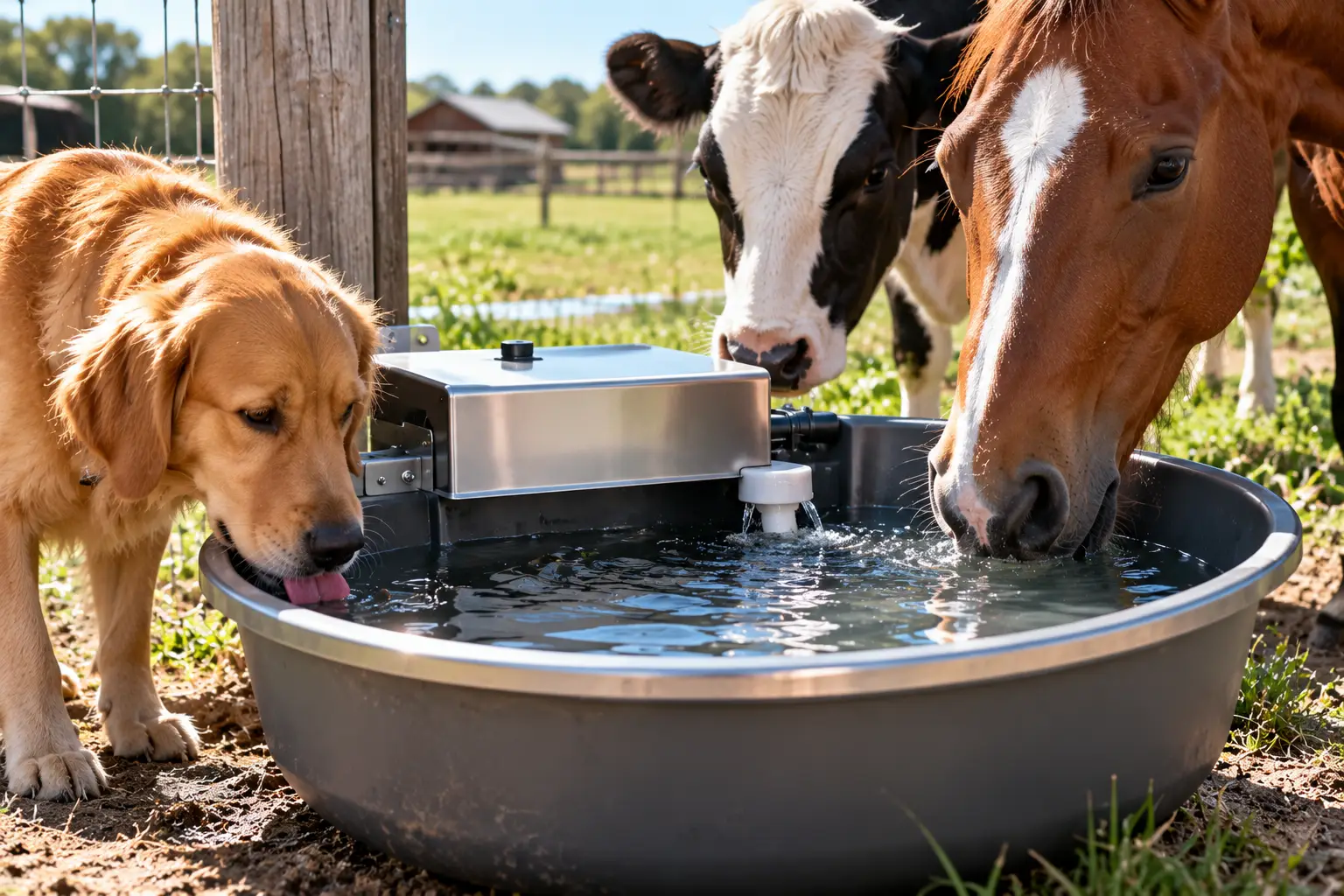
If you’ve ever cracked a skin of ice off a trough at 6 a.m., you already know the problem an automatic animal waterer solves. Hauling buckets isn’t just tiring. It’s the chore that quietly dictates when you can leave the property, how long a weekend trip can last, and whether your animals drink as much as they should. An automatic animal waterer replaces that routine with a float valve or heated fountain that refills itself from your water line, so the bowl stays full whether you’re home or not.
That matters more than convenience. Water is the nutrient livestock consume in the largest quantity, and intake swings hard with temperature. According to the livestock water requirement tables from North Dakota State University Extension, a mature, moderately active 1,100-pound horse drinks roughly 10.8 gallons a day at 68°F, and about 21.7 gallons at 95°F. Miss one refill on a hot afternoon and you’re asking animals to go short exactly when they need water most. 🌡️
This guide compares seven real products you can find on amazon.com, from a budget stainless bowl to a heated, insulated fountain built for northern winters. You won’t find recycled listing copy here. Instead, you’ll get spec-by-spec analysis, honest summaries of what reviews actually say (and where reviews are too thin to trust), installation tips product pages skip, and a clear framework for choosing the right automatic livestock waterer for your animals, climate, and budget. 💧
One note on honesty before we start: we haven’t personally installed every unit below. Every judgment here comes from spec sheets, manufacturer documentation, retailer review data, and university extension research, and we tell you which is which. Let’s make sure your animals never face an empty bowl again.
What Is an Automatic Animal Waterer?
An automatic animal waterer is a drinking bowl, trough, or fountain connected to a pressurized water supply that refills itself as animals drink. A float valve (or, in poultry nipple and cup systems, a small spring valve) opens when the level drops and closes when it’s full, keeping fresh water available without manual refilling.
Most products fall into three design families, and knowing which one you need narrows the field fast.
Float-valve bowls and troughs
The float valve waterer is the workhorse of the category. A buoyant float on a lever arm controls a valve, much like the fill valve inside a toilet tank. Most models run on ordinary garden-hose or pipe pressure and need no electricity at all, which is why they dominate the budget and mid-range tiers.
Heated automatic waterers
A heated automatic waterer adds an insulated body and a thermostatically controlled element so the drinking surface stays open in subzero weather. The trade-off: it needs a frost-protected water line, a concrete pad, and a properly grounded electrical circuit.
Nipple and auto-fill cup systems
Common in poultry setups, these release water when birds peck a valve, while auto-fill cups keep a shallow pool topped up. Many are gravity-fed from a reservoir rather than plumbed into a line, so they’re “automatic” for days rather than indefinitely. A horse in Minnesota and a dozen hens in Georgia need very different solutions, and the lineup below covers both.
Quick Comparison: 7 Automatic Animal Waterer Picks at a Glance
Before the deep dive, here’s the short version. Prices are approximate ranges at the time of writing and change often, so always check the current price on Amazon.
| Product | Design | Capacity | Power needed | Price range | Best for |
|---|---|---|---|---|---|
| Ademon Automatic Animal Drinking Water Bowl | Float bowl, 304 stainless | About 3 L (0.8 gal) | None | Around $30 to $40 | Ademon: goats, sheep, dogs, small pens |
| Achicklead Automatic Water Bowl | Float bowl, plastic | 4 L (about 1 gal) | None | Budget tier, often under $35 | Achicklead: tight budgets, mixed small stock |
| Little Giant DuraMate 4-Gallon Waterer | Float trough, polyethylene | 4 gal | None | Around $70 to $90 | DuraMate: horses, cattle, curious animals |
| Little Giant Galvanized Automatic Stock Waterer | Float bowl, galvanized steel | 76 oz (about 2.4 qt) | None | Around $50 to $75 | Little Giant Galvanized: stalls, single horses, hogs |
| Little Giant Trough-O-Matic (TM830) | Float valve kit | Your tank (up to 245 GPH flow) | None | Around $20 to $40 | Trough-O-Matic: converting existing stock tanks |
| RentACoop 2-Gallon High Rise Waterer | Auto-fill cups + nipples | 2 gal reservoir | None | Around $55 to $70 | RentACoop: backyard flocks |
| Ritchie Omni Fount 2 | Heated, insulated fountain | 2.2 gal | 298 W heater | Around $750 to $850 | Ritchie Omni Fount 2: herds up to 40 head in cold climates |
Looking at the table, the split is less about brand and more about climate and herd size. The five non-electric units cover most warm-weather and barn-sheltered setups for well under $100, while the Ritchie Omni Fount 2 costs roughly ten times more because it solves a different problem: open water at subzero temperatures. If you already own a stock tank, the Little Giant Trough-O-Matic (TM830) is the cheapest upgrade on the list, since you’re automating equipment you’ve already paid for.
💬 One click helps other shoppers make an informed choice too! Tap any highlighted product to check today’s price and availability. 😊
Top 7 Automatic Animal Waterer Picks: Expert Analysis
Each pick below was chosen to cover a different need: budget, species, climate, or existing equipment. Specs come from manufacturer and retailer documentation; review sentiment is summarized only where we could see real customer feedback.
1. Ademon Automatic Animal Drinking Water Bowl — best no-power stainless starter
If you want automation without wiring anything, this 3-liter, 304 stainless steel bowl is the simplest entry point on the list.
It runs entirely on water pressure: an adjustable float valve tops the bowl up and shuts off before overflow, and the kit includes a short hose and adapter for a standard 3/4-inch garden-hose connection. In practice, 304 stainless means no rust and no sun-cracking after a season outdoors. It also scrubs clean with a brush, which matters because small bowls foul quickly with hay and feed. Ademon sells “standard pipe” and “extended pipe” variants, so check which hose length suits your mounting spot.
Based on the specs, this is a goat, sheep, dog, or small-pen bowl rather than a horse trough. At under a gallon, it can be drained by a large animal faster than a typical hose line refills it, which frustrates big drinkers. For animals under roughly 200 pounds, though, the capacity matches intake well.
Retailer review summaries we could check consistently praise the heavy-duty, rust-resistant build and easy cleaning. We couldn’t verify a full breakdown of Amazon reviews, so treat that sentiment as directional; the most common caution is that it offers no freeze protection.
Pros:
- ✅ No electricity needed, runs on water pressure alone
- ✅ 304 stainless resists rust and cracking
- ✅ Complete kit installs in under an hour
Cons:
- ❌ Small bowl struggles with horses and cattle
- ❌ Water and valve freeze in hard winters
Typically around $30 to $40 at the time of writing, which is strong value for a stainless, no-power kit.
2. Achicklead Automatic Water Bowl — cheapest way to stop hauling buckets
This 4-liter plastic float bowl trades stainless durability for a lower price and a slightly bigger reservoir.
It pairs a float-ball valve with a 39.37-inch pipe that fits a 3/4-inch garden-hose thread, plus a drain plug at the bottom. That drain plug is the underrated feature: instead of bailing or tipping a mounted bowl, you pull the plug, rinse, and refill. The extra liter over the Ademon Automatic Animal Drinking Water Bowl also buys a little more buffer between refill cycles.
On paper, this suits buyers testing automation for the first time, temporary paddocks, ducks, poultry, and calm small ruminants. The weak point is the plastic itself. Goats, pigs, and bored dogs chew, and sunlight degrades many plastics over time, so mount it where teeth can’t reach the rim and shade it when possible.
We couldn’t find enough independent, verifiable customer reviews of this specific model to summarize sentiment responsibly. Judge it on its specs, and inspect it closely on arrival.
Pros:
- ✅ Lowest-cost route into automatic watering
- ✅ Drain plug makes weekly cleaning quick
- ✅ Lightweight bowl is easy to relocate
Cons:
- ❌ Plastic is vulnerable to chewing animals
- ❌ Limited verifiable review history so far
Usually priced in the budget tier, often under $35, but check the current price; it’s good value only if your animals won’t chew it.
3. Little Giant DuraMate 4-Gallon Automatic Waterer — hidden float for curious horses
This made-in-USA polyethylene trough holds four times more water than the small bowls and tucks its float out of reach.
The DuraMate is molded from impact-resistant polyethylene, connects to a 3/4-inch garden hose with the included 30-inch hose, and operates between 20 and 50 psi. That pressure window matters: most rural wells and municipal lines sit comfortably inside it, so you rarely need a regulator. Four gallons of standing water means a horse taking long draws won’t hit the bottom before the valve catches up.
The enclosed float is the real selling point for horse owners. Horses play with anything that moves, and an exposed float is an invitation to break it and flood a stall. This makes the DuraMate a smart automatic livestock waterer for horses, cattle, llamas, and mixed paddocks. It isn’t heated, so pair it with a de-icer strategy in cold regions.
Reviews at Tractor Supply describe easy installation and dependable operation. A verified Walmart buyer specifically valued that the float is hidden, noting horses often break visible floats.
Pros:
- ✅ Four-gallon buffer handles large drinkers
- ✅ Enclosed float resists horse tampering
- ✅ Rust-proof polyethylene, made in USA
Cons:
- ❌ No built-in freeze protection
- ❌ Short included hose limits placement
Around $70 to $90 at the time of writing; excellent value for horse owners.
4. Little Giant Galvanized Automatic Stock Waterer — old-school steel built to last
This compact steel bowl (model 88SW and its epoxy-coated sibling) is the classic stall waterer many barns have used for decades.
It holds 76 ounces (about 2.38 quarts), is made of heavy-gauge drawn galvanized steel, and connects to a 1/2-inch pipe, flex hose, or garden hose. The float assembly can be moved to either side of the bowl, which helps when stall layout forces an awkward supply line. There’s no bottom drain, per Tractor Supply’s own Q&A, so cleaning means scrubbing and sponging.
This is a fit for individual horse stalls, hog pens, and llama or alpaca shelters where a mounted steel bowl survives chewing and kicking. The small bowl refills constantly, so water stays fresh, but a thirsty animal may wait a moment between gulps.
At Tractor Supply, it averages 3.9 out of 5 from 86 reviews at the time of writing. Long-time owners report decades of service, often replacing only the float valve assembly, while the most common complaint involves sticking floats; Little Giant’s own troubleshooting points to debris on the valve tip or a worn seal.
Pros:
- ✅ Steel construction shrugs off chewing animals
- ✅ Reversible float suits tricky stall layouts
- ✅ Replacement parts keep it running for years
Cons:
- ❌ No drain makes cleaning slower
- ❌ Floats can stick when debris builds up
Around $50 to $75 at the time of writing; strong long-term value thanks to replaceable parts.
5. Little Giant Trough-O-Matic Float Valve (TM830) — turns any stock tank automatic
Instead of buying a new waterer, this valve converts the stock tank you already own into an automatic one.
The Trough-O-Matic clamps into most plastic and metal stock tanks, troughs, barrels, and pans, flowing up to 245 gallons per hour at 20 to 50 psi. The TM830 uses an aluminum housing with expansion brackets; an anti-siphon version (TM830AS) helps keep trough water from being drawn back into your supply line. That 245 GPH works out to roughly 4 gallons per minute, which keeps pace with a cow drinking hard.
This is the best float valve waterer option for cattle herds, sheep flocks, and anyone with a 50- to 300-gallon tank. The tank provides the buffer, the valve provides the automation, and replacing a worn valve costs far less than replacing a fountain.
Farm-retailer reviewers report running the aluminum version in pasture for years without adjustment and appreciate the all-metal build. The plastic-housing version drew a lukewarm rating at one retailer, though from a single review, which is too small a sample to conclude much.
Pros:
- ✅ Upgrades an existing tank for little money
- ✅ High 245 GPH flow suits whole herds
- ✅ Anti-siphon option protects your water supply
Cons:
- ❌ Exposed float can be bumped by livestock
- ❌ You still need a tank and supply line
Around $20 to $40 at the time of writing; the best dollar-for-dollar upgrade on this list.
6. RentACoop 2-Gallon High Rise Chicken Waterer — two drinking styles for every season
This automatic chicken waterer combines auto-fill cups and horizontal nipples in one tall, mountable reservoir.
It includes two auto-fill cups with removable inserts, two horizontal nipples with dribble dishes, an anti-roost cone, and a mounting kit, all in BPA-free plastic measuring about 5.5 x 5.5 x 17 inches. The cups stay half full, which helps birds learn to drink. The nipples are the cold-weather option, since a closed valve exposes less water to freezing air than an open cup.
On paper, it suits backyard flocks, quail, and ducklings that are still learning. Because it’s gravity-fed from a 2-gallon reservoir, it’s automatic between refills, not indefinitely. The anti-roost cone is a quiet win: hens can’t perch on top and contaminate the water.
Review evidence is mixed and thin. At Tractor Supply, related RentACoop models carry few reviews (one 2-gallon model averages 3.0 from four ratings), while the brand’s own site shows mostly 4- and 5-star ratings for its 5-gallon model; brand-site ratings deserve some skepticism.
Pros:
- ✅ Cups plus nipples ease flock training
- ✅ Anti-roost cone keeps water cleaner
- ✅ Mounts inside or outside the coop
Cons:
- ❌ Reservoir needs manual refilling
- ❌ Limited independent review history
Around $55 to $70 at the time of writing; fair value for small flocks that want cleaner water.
7. Ritchie Omni Fount 2 (Model 16619) — heated and insulated for winter herds
This is the premium heated automatic waterer for operations where frozen water is a daily winter threat.
The Omni Fount 2 uses a 298-watt heater (2.5 amps at 120 volts) under a stainless steel trough, wrapped in polyurethane foam insulation. It holds 2.2 gallons, sets drinking height at 18 inches, and dealers list a herd capacity of 40 horses, 40 beef cattle, or 20 dairy cows, with a 10-year warranty. The small, fast-refilling trough is deliberate: less standing water means less to keep warm, which reduces the electricity needed per gallon served.
This is for serious herds in cold climates, not hobby setups. Installation typically requires a concrete pad, a supply riser below the frost line, and a properly grounded circuit, so budget for an installer. If you water 15 or more head through northern winters, the labor saved breaking ice adds up quickly.
Independent reviews are thin, with only single-digit review counts at the farm retailers we checked. The strongest evidence is the spec sheet and warranty. Amazon availability runs through third-party sellers and varies.
Pros:
- ✅ Heated, insulated trough stays open in winter
- ✅ Serves up to 40 head per unit
- ✅ Long 10-year warranty per dealer listings
Cons:
- ❌ Requires professional-style installation
- ❌ Premium price and ongoing power cost
Around $750 to $850 at the time of writing; worth it only for larger cold-climate herds.
Side-by-Side: Specs That Actually Decide the Purchase
| Product | Material | Water connection | Freeze protection | Review evidence | Best for |
|---|---|---|---|---|---|
| Ademon Automatic Animal Drinking Water Bowl | 304 stainless | 3/4-in garden hose | None | Positive, directional | Ademon: small stock |
| Achicklead Automatic Water Bowl | Plastic | 3/4-in garden hose | None | Too thin to judge | Achicklead: starter budgets |
| Little Giant DuraMate 4-Gallon Waterer | Polyethylene | 3/4-in garden hose, 20 to 50 psi | None | Positive at retailers | DuraMate: horses |
| Little Giant Galvanized Automatic Stock Waterer | Galvanized steel | 1/2-in pipe or hose | None | 3.9/5 from 86 (TSC) | Little Giant Galvanized: stalls |
| Little Giant Trough-O-Matic (TM830) | Aluminum housing | Pipe to tank, 20 to 50 psi | None | Positive, long service | Trough-O-Matic: cattle tanks |
| RentACoop 2-Gallon High Rise Waterer | BPA-free plastic | Gravity reservoir | Nipples resist freezing better | Mixed, thin | RentACoop: poultry |
| Ritchie Omni Fount 2 | Stainless + foam | Frost-free riser, 120 V | Heated, insulated | Thin, strong warranty | Ritchie Omni Fount 2: winter herds |
The table makes one pattern obvious: only one product here truly solves winter, and it costs ten times the others. For most small farms, a better plan is a non-heated unit like the Little Giant DuraMate 4-Gallon Waterer in summer plus a sheltered location or a separate de-icer in winter. Where review evidence is thin, as with the Achicklead Automatic Water Bowl, lean harder on materials and connection specs when you decide.
How to Set Up an Automatic Animal Waterer: Your First 30 Days
A good unit installed badly will leak, stick, or get ignored. Here’s a practical setup routine that product pages rarely spell out. 🛠️
- Measure your water pressure first. A screw-on gauge at the spigot costs little and tells you whether you’re inside the 20 to 50 psi window most float valves, including the Little Giant DuraMate 4-Gallon Waterer, are built for. Above 50 psi, add a pressure regulator; below 20, expect slow refills.
- Mount at the right height. Set the rim near the point of the shoulder or slightly lower for the species using it, and follow the manufacturer’s guidance. Too high and young animals can’t reach; too low and manure ends up in the bowl.
- Seal threads, but don’t crank them. Little Giant’s own instructions call for thread-sealing tape on all pipe connections and warn against over-tightening fittings, which cracks plastic housings.
- Add backflow protection. A hose-bib vacuum breaker or an anti-siphon valve keeps trough water from being pulled back into your household supply.
- Set the float with headroom. Leave an inch or two below the rim so splashing and wind don’t spill water constantly.
- Keep the old bucket for a few days. Animals sometimes hesitate at a new sound or shiny surface. Leave the familiar bucket nearby for the first several days, then remove it once you’ve watched each animal drink.
- Build a cleaning rhythm. Check daily during week one, then scrub weekly. Once a month, inspect the float for water inside and the valve seal for wear.
The most common first-month mistake is pulling the backup bucket too early. The second is running a long hose across sunny ground, which can deliver hot water in summer. Bury or shade the line when you can.
Real-World Scenarios: Matching the Right Waterer to Your Setup
Specs only mean something once they meet a real property. Here are three common profiles and the reasoning behind each match.
The suburban homesteader: 3 goats and 10 hens in Georgia
Budget: around $150. Winters are mild, and the owner works off-site all day. The Ademon Automatic Animal Drinking Water Bowl suits the goats well, since its stainless steel bowl holds up to curious mouths and its volume matches small-ruminant intake. For the hens, the RentACoop 2-Gallon High Rise Waterer keeps water off the coop floor, and the anti-roost cone stops contamination. Total spend lands near the budget, and the daily bucket run disappears.
The horse owner: 2 horses in a Kentucky barn
Budget: around $200. One Little Giant DuraMate 4-Gallon Waterer in the paddock gives a large buffer and a hidden float that horses can’t play with. Inside, the Little Giant Galvanized Automatic Stock Waterer mounts in a stall and survives kicks. Winter freezes are occasional, so a sheltered stall plus heat tape on exposed lines covers most cold snaps.
The cattle operation: 25 beef cows in Montana
Budget: around $1,500. Summer pasture water comes from an existing 300-gallon tank fitted with a Little Giant Trough-O-Matic (TM830), ideally the anti-siphon version. For the winter lot, a Ritchie Omni Fount 2 on a concrete pad with a frost-free riser replaces daily ice-chopping. The pairing spends money only where the climate forces it.
Problem → Solution: Fixing Common Automatic Waterer Headaches
Most automatic waterer failures trace back to five problems, and nearly all of them are cheap to fix.
- The bowl keeps overflowing. Debris on the valve tip or a worn seal is the usual culprit. Little Giant’s troubleshooting for the Little Giant Galvanized Automatic Stock Waterer suggests checking the float for water inside, cleaning the valve tip, and replacing the seal before buying a new valve.
- Refills are painfully slow. Check pressure, then look for a kinked hose or a clogged inlet screen. Long runs of narrow hose also choke flow, especially for a herd drinking from a Little Giant Trough-O-Matic (TM830).
- Green water and algae. Sunlight plus nutrients equals algae. Shade the waterer, scrub weekly, and favor stainless or opaque bowls like the Ademon Automatic Animal Drinking Water Bowl.
- Animals refuse to drink. New sounds and reflections cause hesitation, so keep a familiar bucket nearby briefly. If the unit is heated and refusal is sudden, suspect stray voltage and read our safety section below before anything else.
- The supply line freezes. A float valve controls level, not temperature. Bury lines below your local frost depth, wrap exposed sections in heat tape rated for outdoor use, or move to a heated unit like the Ritchie Omni Fount 2.
Keep a spare seal and float on hand. A part that costs a few dollars can save you from hauling water in a storm.
✨ Don’t miss these top-rated picks!
🔍 Take your daily chores to the next level with this carefully curated lineup. Click any highlighted product to check current pricing and availability. These picks will help you keep fresh water flowing all year, so your animals stay healthy and you get your mornings back! 🐴🐐🐔
How to Choose an Automatic Animal Waterer
To choose an automatic animal waterer, match capacity and flow to your animals, then filter by climate, material, and water connection. These six steps cover the decisions that matter:
- Count heads and species. One goat and twenty cows need different hardware. Small bowls suit small stock; tanks with float valves suit herds.
- Check your winter. If water freezes for weeks at a time, budget for a heated automatic waterer or a sheltered setup from day one.
- Confirm pressure and connection. Most units want 20 to 50 psi and a 3/4-inch garden-hose or 1/2-inch pipe fitting. Mismatches mean adapters and leaks.
- Pick a material for your animals. Steel or stainless resists chewing; polyethylene resists rust and dents; thin plastic suits calm animals only.
- Look for an enclosed or protected float. Horses and goats fiddle with exposed parts, so hidden floats prevent flooded stalls.
- Plan for cleaning. A drain plug or removable bowl turns a 15-minute chore into a two-minute one.
A quick word on the automatic chicken waterer
Poultry play by different rules. Nipples keep water cleanest, cups are easiest to learn, and a reservoir model like the RentACoop 2-Gallon High Rise Waterer needs refilling. Hang it at back height to keep litter out.
Automatic Livestock Waterer Sizing: How Much Water Do Your Animals Need?
Sizing an automatic livestock waterer starts with peak demand, not average demand. Research summarized by Clemson University’s livestock and forages team notes that cow-calf pairs grazing fescue in summer heat used up to 35 gallons per pair per day, and that cattle drink at roughly 1 to 4 gallons per minute.
That drinking speed is the number most buyers ignore. A thirsty cow can empty a small bowl in seconds, so the refill rate must keep up. This is why the Little Giant Trough-O-Matic (TM830), at up to 245 gallons per hour, pairs well with a large tank: the tank absorbs the rush, and the valve restores the level between visits.
Your source matters too. The National Drought Mitigation Center’s ranch planning guide estimates that cows with calves need about 16 gallons per day, and that a well yielding 1 gallon per minute can support just over 100 such head. If your well is weak, a bigger storage tank beats a faster valve.
Rule of thumb: size the trough so several animals can drink at once, and confirm your supply line can refill it within minutes, not hours.
Float Valve Waterer vs Heated Automatic Waterer vs Buckets
All three keep animals watered, but they differ sharply in labor, cost, and winter reliability.
| Factor | Buckets and manual tanks | Float valve waterer | Heated automatic waterer |
|---|---|---|---|
| Daily labor | High: hauling and refilling | Low: checks and weekly cleaning | Low: checks and cleaning |
| Upfront cost | Lowest | Around $20 to $90 | Around $750 and up, plus installation |
| Water freshness | Stale between refills | Constant top-ups | Constant top-ups |
| Winter reliability | Ice-chopping daily | Freezes without help | Stays open in subzero weather |
| Electricity | None | None | Required, grounded circuit |
| Best for | Achicklead Automatic Water Bowl owners still testing | Little Giant DuraMate 4-Gallon Waterer, Ademon Automatic Animal Drinking Water Bowl | Ritchie Omni Fount 2 |
The table shows why most hobby farms land in the middle column: a float valve waterer removes nearly all of the daily labor for under $100. Buckets only win on upfront cost, and they lose that advantage quickly once you value your time. Heated units earn their price strictly in places where ice is a weekly, not occasional, problem.
Long-Term Cost and Maintenance
The sticker price is only part of the bill. Over five years, parts, water efficiency, and electricity shape the true cost of ownership.
| Product | Upfront range | Ongoing costs | Typical wear parts | Five-year value |
|---|---|---|---|---|
| Ademon Automatic Animal Drinking Water Bowl | Around $30 to $40 | Near zero | Float valve | Excellent for small stock |
| Little Giant Galvanized Automatic Stock Waterer | Around $50 to $75 | Near zero | Seal, valve tip, float | Excellent, highly repairable |
| Little Giant Trough-O-Matic (TM830) | Around $20 to $40 | Near zero | Float, valve | Best value if you own a tank |
| Ritchie Omni Fount 2 | Around $750 to $850 | Electricity in winter | Heating element, valve | Strong for large cold-climate herds |
The Little Giant Galvanized Automatic Stock Waterer stands out because cheap seals and valve tips can keep one unit in service for years. For the Ritchie Omni Fount 2, a worst-case estimate helps: if its 298-watt element ran nonstop, that’s about 7.2 kWh a day, but a thermostat cycles the heater, so real use should be considerably lower. Check your local electric rate and expect winter-only costs.
Safety, Regulations, and Standards
Water and electricity share the same trough on heated units, so safety deserves real attention. ⚡
Stray voltage and grounding
Livestock feel small electrical currents that people may never notice. Michigan State University Extension’s stray voltage bulletin lists abnormal behavior around metal objects and a sustained drop in water or feed consumption as warning signs, and recommends contacting your electric utility for an evaluation. Proper grounding and bonding of heated waterers, done by a licensed electrician, is the fix.
Practical safety checklist
- ✅ Put heated waterers on a GFCI-protected, properly grounded circuit
- ✅ Use outdoor-rated, three-prong cords only, never damaged ones
- ✅ Choose heaters and de-icers that are UL or ETL listed
- ✅ Install backflow prevention, which many local plumbing codes require
- ✅ Follow National Electrical Code rules for agricultural buildings
Note that a GFCI may trip more often in wet or snowy conditions; that’s a nuisance, not a reason to remove it. For non-electric units, the main safety concerns are food-safe materials, such as 304 stainless or BPA-free plastic, and stable mounting that won’t injure animals.
Common Mistakes to Avoid When Buying a Self-Filling Water Bowl for Animals
A self-filling water bowl for animals looks simple, which is exactly why buyers skip the details. These are the costly errors.
- ❌ Buying for average days, not hot days. Intake can double in summer heat, so size for peak demand.
- ❌ Ignoring the connection type. A 1/2-inch pipe fitting and a 3/4-inch garden-hose thread are not interchangeable without adapters.
- ❌ Choosing plastic for chewers. Goats and pigs will test any edge they can reach; steel like the Little Giant Galvanized Automatic Stock Waterer survives them.
- ❌ Assuming automatic means freeze-proof. Only heated units, like the Ritchie Omni Fount 2, keep water open in deep cold.
- ❌ Trusting suspicious review hype. Many “tested” roundups online can’t show real testing. Prefer retailer reviews with visible counts and manufacturer documentation.
- ❌ Forgetting spare parts. A replacement seal costs little; a dead valve on a holiday weekend costs much more.
Avoid these six mistakes, and nearly any unit on this list will serve you well for years.
FAQ: Automatic Animal Waterer Questions Buyers Ask
❓ Do automatic animal waterers work without electricity?
❓ Can I hook an automatic animal waterer to a garden hose?
❓ What is the best automatic waterer for horses?
❓ Can goats and sheep share one automatic waterer?
❓ How long does an automatic stock waterer last?
Conclusion: Pick the Automatic Animal Waterer That Fits Your Climate and Herd
The right automatic animal waterer isn’t the most expensive one. It’s the one whose capacity, materials, and freeze protection match your animals and your weather.
For small stock on a budget, the Ademon Automatic Animal Drinking Water Bowl delivers stainless durability without wiring, while the Achicklead Automatic Water Bowl is the low-cost way to test automation. Horse owners will appreciate the hidden float on the Little Giant DuraMate 4-Gallon Waterer, and stall setups benefit from the repairable steel of the Little Giant Galvanized Automatic Stock Waterer. If you already own a stock tank, the Little Giant Trough-O-Matic (TM830) is the smartest upgrade per dollar. Backyard flocks get cleaner water from the RentACoop 2-Gallon High Rise Waterer. And for larger herds facing hard winters, the Ritchie Omni Fount 2 justifies its premium by keeping water open when everything else freezes.
Whichever you choose, install it with care, keep a spare seal on hand, and watch your animals drink before you retire the old bucket. Your mornings, and your animals’ health, will both be better for it. 🐄💧
🛒 Ready to retire the water bucket for good?
✨ Click any highlighted product above to check current pricing and availability on Amazon. A few minutes of setup today means fresh, clean water for your animals every single day, even when you’re away!
Recommended for You
- Equine Automatic Feeder: 7 Best Picks That Actually Work in 2026
- Automatic Pig Feeder with Timer: 7 Best Picks That Save Time (2026)
- Dog Treat Machine Guide 2026: 7 Best Picks That Actually Work
Disclaimer: This post contains affiliate links. As an Amazon Associate, I earn from qualifying purchases made through these links, at no additional cost to you.
✨ Found this article helpful? Share it with someone who needs it! 💬🤗