In This Article
Automatic Water for Cats: Why It Matters More Than You Think
Cats are famously bad at asking for what they need — and water is at the top of that list. Automatic water for cats solves a problem most owners don’t even realize they have: cats evolved from desert-dwelling ancestors, so they carry a naturally low thirst drive and can go most of the day without visiting a still, stagnant bowl. Add a picky attitude toward warm or “flat” tap water, and you’ve got a recipe for chronic low-grade dehydration.
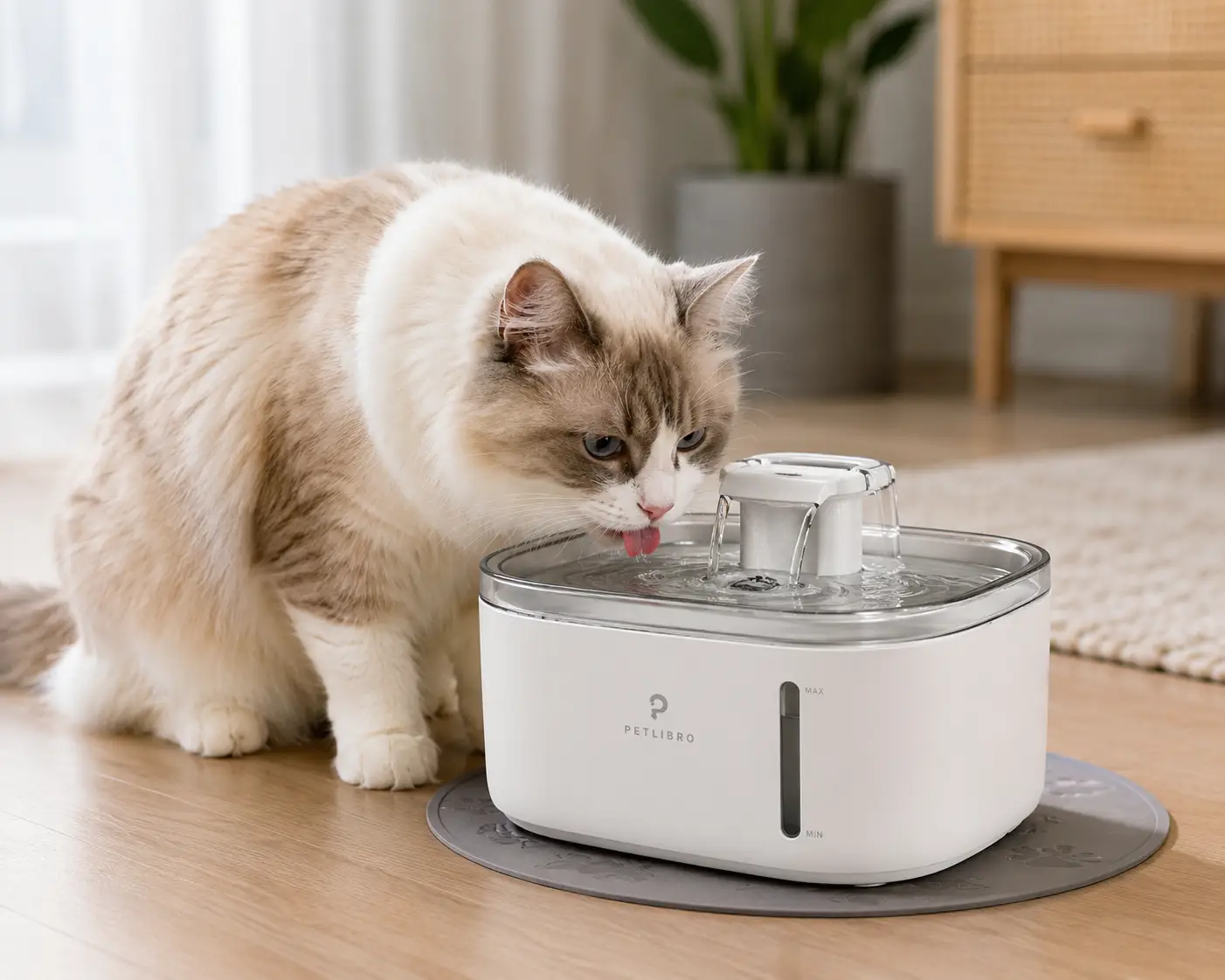
What is automatic water for cats? In short, it’s any electric pump-driven bowl or fountain that keeps water circulating and filtered around the clock, mimicking the moving streams cats instinctively trust more than standing water. Instead of a static bowl that goes stale, warm, and dusty with fur by midday, a fountain keeps the water aerated, cool, and appealing hour after hour.
This matters clinically, not just cosmetically. According to VCA Animal Hospitals, poor water intake in cats is linked to bladder crystals, kidney disease, and urinary tract infections, and a healthy cat generally needs roughly four ounces of water for every five pounds of body weight per day. Most cats fall short of that number without help, which is exactly the gap automatic water for cats is designed to close.
In this guide, we’ve researched seven real, currently available automatic water fountains for cats — from budget-friendly plug-in bowls to AI-powered smart systems — and broken down what actually matters when you’re choosing one. We’ll cover filtration, noise levels, cleaning demands, and honest cost-of-ownership math, plus practical setup tips, common troubleshooting fixes, and a buyer’s framework so you can match a fountain to your specific cat (or cats). This post contains affiliate links, and as an Amazon Associate we may earn from qualifying purchases — more on that at the end.
Quick Comparison: Automatic Water for Cats at a Glance
| Fountain | Capacity | Power | Best For |
|---|---|---|---|
| PETKIT EverSweet Ultra | 5L clean / 1.8L waste | Corded | Multi-cat homes wanting AI monitoring |
| PETLIBRO Dockstream Cordless | 2.5–3L | Battery (cordless) | Cord-free placement anywhere |
| PETKIT EverSweet Max 2 (UVC) | 3L | Battery (cordless) | Hygiene-focused, dishwasher-safe cleaning |
| PETKIT EverSweet Solo SE | ~1.5L | Corded | Single cat, tight budget |
| PETLIBRO Capsule | ~2.9L (101 oz) | Corded | Noise-sensitive households |
| Pioneer Pet Raindrop | 60 oz (1.8L) | Corded | Simple, no-app stainless steel option |
| Cepheus 360 Ceramic | ~2L | Corded | Chin-acne-prone or allergy-sensitive cats |
Looking at the table above, the PETLIBRO Dockstream Cordless is the easiest all-around recommendation because it balances price, quiet operation, and true cord-free flexibility, while the PETKIT EverSweet Ultra justifies its higher price only if you’re actively managing a multi-cat household’s individual hydration habits. Budget shoppers should note that the PETKIT EverSweet Solo SE covers the fundamentals — circulating, filtered water — without paying for smart features many single-cat homes never use.
💬 One click helps other shoppers make an informed choice too! 😊
Top 7 Automatic Water Fountains for Cats: Expert Analysis
We selected these seven models to cover entry-level, mid-range, and high-end price tiers, plus meaningful variety in materials (plastic, stainless steel, ceramic), power source (corded vs. cordless), and smart features (basic vs. app-connected vs. AI camera).
1. PETKIT EverSweet Ultra — AI camera tracks who’s actually drinking
The standout feature here is visibility: in a multi-cat household, you rarely know which cat is drinking enough and which one is quietly avoiding the bowl, and the Ultra was built to close that blind spot. It runs on what PETKIT calls a OneWay Mechanism, meaning fresh water flows directly into the drinking tray from a 5-liter clean reservoir while used water drains into a separate 1.8-liter waste tank instead of recirculating through a filter. In practice, that means there’s no traditional filter to replace, though you do need to periodically dump and rinse the waste tank. The built-in 1080p camera with night vision and facial recognition can identify up to 15 individual pets and log each one’s visits, frequency, and duration, sending an alert if a cat’s pattern changes noticeably.
Who should buy this: multi-cat homes where you genuinely want to know if one cat’s drinking habits are shifting, since a sudden change in water intake is one of the earliest signs of illness in cats. Households with just one cat, or owners who don’t want another app to check, will find the Ultra’s price hard to justify next to simpler models. Reviewers who have used the Ultra consistently point out that the camera is a useful early-warning tool, not a diagnostic device — you still need a veterinarian to interpret what a change actually means.
Pros:
- ✅ AI camera identifies and tracks each cat individually
- ✅ Clean/waste water separation skips traditional filters
- ✅ Large 5L capacity means fewer refills in busy households
Cons:
- ❌ Corded design limits placement flexibility
- ❌ Premium price puts it out of reach for casual buyers
Expect to pay in the $200-$250 range at the time of writing, and always check the current price before buying, since Amazon pricing shifts often. For a serious multi-cat household that wants hydration data alongside fresh water, the value is there; for a single-cat home, it’s overkill.
2. PETLIBRO Dockstream Cordless — best overall cord-free convenience
What sets this fountain apart is genuinely wireless placement: a rechargeable battery means you can put it in a hallway, bedroom, or even outdoors without hunting for an outlet. The 2.5–3L stainless steel tray holds up through daily use, and four-layer filtration removes fur, heavy metals, and odor-causing compounds before water reaches the tray. Manufacturer testing puts the pump noise at roughly 23 decibels, which is quieter than a whisper, and battery life is rated up to 30 days per charge under sensor-activated flow.
The practical upside of “cordless” is bigger than it sounds — no cord means no tripping hazard, no chewed wires for curious kittens, and no awkward positioning near an outlet that your cat doesn’t actually like. Reviewers and owner feedback consistently describe the Dockstream as one of the quietest fountains they’ve tried, and the auto shutoff at low water levels adds a real safety margin against a burnt-out pump. On the maintenance side, PETLIBRO recommends cleaning the pump and swapping the filter every two weeks, and the brand backs the pump with a lifetime replacement warranty as long as you keep up with that schedule.
Pros:
- ✅ True cordless placement anywhere in the home
- ✅ Whisper-quiet 23dB pump rating
- ✅ Low-water and low-battery alerts prevent dry runs
Cons:
- ❌ Filter and battery both need routine attention
- ❌ Not all parts are dishwasher-safe
Prices generally fall in the $50-$70 range depending on the exact configuration, making this a strong mid-range pick. For most single- or two-cat households, this is the fountain that balances convenience, quiet operation, and reasonable upkeep the best.
3. PETKIT EverSweet Max 2 (UVC) — cleanest water, easiest deep clean
The defining feature is the wireless UVC pump, which uses short-wavelength ultraviolet light to reduce bacterial buildup directly at the water source rather than relying on filtration alone. PETKIT states the UVC pump can eliminate a very high percentage of common bacteria like E. coli, and independent testers have measured noise at around 21-25 decibels — quiet enough for a bedroom. The 3-liter capacity, paired with up to 83 days of battery life on a full charge, means this fountain can go weeks between both refills and recharges for a single cat.
What actually matters here for buyers concerned about “cat acne” (feline chin acne, often linked to bacterial buildup on wet surfaces) is the combination of a 304 stainless steel tray with heat-resistant, dishwasher-safe materials rated to 212°F. That’s a meaningful upgrade over fountains where only the pump housing is UVC-treated but the tank itself is standard plastic that still needs manual scrubbing. It’s worth noting, based on comparisons across the EverSweet lineup, that the stainless steel here covers the drinking tray, not the entire water tank — the bulk of stored water still sits in a plastic reservoir, so buyers chasing a fully stainless design should look at the EverSweet 3 Pro instead.
Pros:
- ✅ UVC sterilization actively reduces bacteria at the pump
- ✅ Fully dishwasher-safe for effortless deep cleaning
- ✅ Up to 83 days of cordless battery life
Cons:
- ❌ App interface draws mixed reviews from owners
- ❌ Water tank is plastic, not full stainless steel
Expect a price in the $70-$90 range. For hygiene-focused owners, especially those managing a cat prone to chin acne, this is one of the more genuinely differentiated options on this list.
4. PETKIT EverSweet Solo SE — simplest way to start, lowest cost of entry
This is a straightforward, plug-in fountain that skips app connectivity, batteries, and smart tracking in favor of doing one job reliably: keeping water moving and filtered for a single cat. The roughly 1.5-liter capacity is modest, but for one indoor cat it’s enough to avoid daily refills in most households, and the BPA-free plastic construction keeps the price low without cutting corners on the basics — a carbon filter, a circulating pump, and simple assembly.
Who this is for: first-time fountain buyers who aren’t sure their cat will even take to running water, and owners on a tight budget who want to test the concept before investing in a $70-$200 smart model. Because there’s no stainless steel tray, this isn’t the ideal choice for cats prone to chin acne, and multi-cat households will likely outgrow the tank size quickly. Aggregated owner reviews commonly describe the Solo SE as a reliable “starter” fountain — quiet enough, easy to set up, and good at converting reluctant bowl-drinkers into fountain drinkers, even if some buyers eventually upgrade to a larger, stainless model.
Pros:
- ✅ Lowest price point of any fountain on this list
- ✅ Simple setup with no app or account required
- ✅ Good entry point to test if your cat likes moving water
Cons:
- ❌ Small tank size isn’t ideal for multi-cat homes
- ❌ All-plastic construction, no stainless steel tray
Pricing typically lands under $30, making this the easiest “just try it” purchase on the list. If your cat takes to it, you’ll know within a week whether it’s worth upgrading to a larger model later.
5. PETLIBRO Capsule — quietest option for noise-sensitive cats
The distinguishing feature of the Capsule is its patented valve design paired with noise-insulated tubing, engineered specifically to dampen the mechanical hum that makes some cats nervous around fountains in the first place. With a roughly 101-ounce (2.9L) reservoir and a compact, stacked design similar in footprint to the PETKIT EverSweet Max, water is pumped up and filtered through a tray before cycling back, trapping fur and debris along the way.
For skittish or noise-sensitive cats — a real and common issue, since many cats initially avoid a fountain because of pump vibration or a buzzing sound near their face — the Capsule’s quieter operation can be the difference between a cat that adopts the fountain within days and one that avoids it entirely. Reviewers frequently mention this model in the same breath as far pricier options specifically because of how little sound it produces even in continuous-flow mode. The trade-off is a fairly standard filtration system rather than anything cutting-edge, so it’s a strong pick for peace and quiet, not for hygiene tech.
Pros:
- ✅ Among the quietest fountains available at this price
- ✅ Strong filtration traps fur and debris effectively
- ✅ Compact footprint fits small apartments easily
Cons:
- ❌ No smart or app-based monitoring features
- ❌ Filtration system is functional but not class-leading
Typical pricing sits in the $30-$45 range. If your cat has previously refused to drink from a noisier fountain, this is one of the more sensible next options to try before giving up on the idea altogether.
6. Pioneer Pet Raindrop (Stainless Steel) — most durable, no-app simplicity
This fountain’s stainless steel raindrop-style top creates a bubbling, cascading flow rather than a single stream, giving cats two distinct places to drink from — the falling water and the pooled trough below. At 60 ounces (about 1.8 liters), it’s compact and dishwasher-safe, and the two-piece design (shell plus base) makes weekly cleaning genuinely fast, since there’s no tangle of internal parts to disassemble.
What real owners consistently report is that this is one of the simplest fountains to live with long-term: no app, no battery, no smart features to troubleshoot — just a pump, a filter, and stainless steel that won’t crack, stain, or harbor bacteria the way some plastic fountains can over time. The trade-off is capacity. Independent testing found that three cats drinking around 12 ounces per day each drained the reservoir fast enough to require daily topping off, so this model is genuinely best suited to one- or two-cat households rather than larger multi-cat homes. Its light weight also means it can slosh or tip if a cat paws at it enthusiastically, so a non-slip mat underneath is a smart add-on.
Pros:
- ✅ Durable, dishwasher-safe stainless steel construction
- ✅ Two drinking zones encourage more frequent sipping
- ✅ No app, batteries, or software to manage
Cons:
- ❌ Small 60 oz capacity strains multi-cat households
- ❌ Lightweight build can tip if pawed at forcefully
Expect a price around $55-$65. For owners who specifically want to avoid plastic and app-based gimmicks, this remains one of the most trusted stainless steel picks on the market.
7. Cepheus 360 Ceramic — best for chin acne and allergy-conscious households
The main selling point of a ceramic fountain like this one is the drinking surface itself: unlike plastic, ceramic doesn’t retain odors, doesn’t scratch easily (which matters because bacteria love hiding in tiny plastic scratches), and won’t leach any chemical taste into the water over time. With roughly a 2-liter capacity and a heavier, more stable base than plastic or lightweight stainless models, it’s also naturally more tip-resistant around boisterous cats or curious dogs sharing the same water source.
Feline chin acne — blackheads and inflammation along a cat’s chin, sometimes linked to bacteria on porous or scratched feeding surfaces — is one of the more common reasons owners specifically seek out ceramic or full stainless steel fountains over standard plastic models. Because ceramic is non-porous and easy to sanitize thoroughly, it’s a sensible upgrade for cats already prone to chin irritation, or for owners who simply prefer a natural material over plastic for food and water contact. The trade-off is fragility: ceramic can chip or crack if dropped during cleaning, something stainless steel and plastic models don’t have to worry about.
Pros:
- ✅ Non-porous ceramic resists odor and bacteria buildup
- ✅ Heavier base resists tipping in busy multi-pet homes
- ✅ Good option for cats prone to chin acne
Cons:
- ❌ Ceramic can chip or crack if handled roughly
- ❌ Smaller capacity means more frequent refills
Pricing typically runs in the $40-$60 range depending on color and finish. For allergy-conscious or acne-prone households, the material upgrade alone often justifies choosing this over a comparably priced plastic model.
Full Comparison: All 7 Automatic Water Fountains for Cats
| Fountain | Material | Noise Level | Smart Features | Best For | Price Range |
|---|---|---|---|---|---|
| PETKIT EverSweet Ultra | Stainless tray / plastic body | ~35 dB | AI camera, app | Multi-cat monitoring | $200-$250 |
| PETLIBRO Dockstream Cordless | Stainless steel tray | ~23 dB | Low water/battery alerts | Cordless flexibility | $50-$70 |
| PETKIT EverSweet Max 2 (UVC) | Stainless tray, plastic tank | ~21-25 dB | App, UVC sterilization | Hygiene-focused owners | $70-$90 |
| PETKIT EverSweet Solo SE | BPA-free plastic | Low-moderate | None | Budget, single cat | Under $30 |
| PETLIBRO Capsule | Plastic, stacked design | Very low | None | Noise-sensitive cats | $30-$45 |
| Pioneer Pet Raindrop | 100% stainless steel | Low hum | None | Simplicity, durability | $55-$65 |
| Cepheus 360 Ceramic | Ceramic | Low | None | Chin acne, allergies | $40-$60 |
The pattern across this table is clear: the more a fountain adds in smart features (app connectivity, AI cameras, UVC sterilization), the more it costs — but the core function of encouraging hydration through moving, filtered water is present even in the cheapest option here. Owners chasing pure hygiene should prioritize material (stainless steel or ceramic) over smart features, while owners managing multiple cats’ individual health may find the data from the PETKIT EverSweet Ultra worth the premium. If budget is the deciding factor, the PETKIT EverSweet Solo SE and PETLIBRO Capsule both deliver the essential benefit — circulating, filtered water — at a fraction of the cost.
✨ Don’t miss these exclusive deals! {.cta-h4}
🔍 Take your cat’s hydration routine to the next level with this carefully curated lineup. Click a highlighted item to check current pricing and availability. These picks will help you get healthier, happier drinking habits your whole household will notice!
How to Set Up and Maintain Your Automatic Cat Water Fountain
Getting a fountain right on the first try matters, because cats that get spooked by a bad setup often avoid the whole idea of moving water for months.
Start by placing the fountain away from the litter box and food bowl — cats instinctively avoid drinking near where they eliminate or eat in the wild, and that preference carries over indoors. Run it empty for a few minutes first (per most manufacturer instructions) to make sure the pump primes correctly before adding water, then soak any included filter for a few minutes so it absorbs water and starts filtering effectively from day one. For the first week, leave your cat’s old bowl out alongside the new fountain rather than removing it cold-turkey; most cats transition on their own timeline, and forcing the switch can backfire.
On the maintenance side, most fountains — corded or cordless — need the pump and reservoir wiped down weekly, with a full filter change every two to four weeks depending on the brand and how many cats share the fountain. Skipping filter changes is the single most common reason fountains start smelling or growing a slimy biofilm, which in turn is a common reason cats stop drinking from them. A simple bottle brush handles most spouts and crevices, and a diluted vinegar rinse (followed by a thorough water rinse) is generally enough to clear mineral buildup without harsh chemicals near your cat’s water supply.
Real-World Scenarios: Which Automatic Water Fountain Fits Your Household
Every household’s hydration needs look a little different, so here’s how three common situations map to the fountains above.
The budget-conscious single-cat owner: If you have one indoor cat and want to test whether a fountain even helps before spending much, the PETKIT EverSweet Solo SE is the logical starting point. It’s inexpensive, simple to set up, and gives you a real answer within a week or two about whether your cat responds to moving water.
The multi-cat household juggling five to seven visits a day per cat: Larger capacity and easier cleaning start to matter more than price. The PETLIBRO Dockstream Cordless or PETKIT EverSweet Max 2 (UVC) both hold enough water to avoid daily refills for two or three cats, and their stainless steel trays hold up to heavier daily use than all-plastic models.
The owner managing a senior cat with early kidney concerns: When a veterinarian has flagged hydration as a health priority — common with aging cats and early-stage kidney disease — visibility becomes valuable, not just convenience. The PETKIT EverSweet Ultra‘s individual tracking can help you and your vet spot a drinking pattern change early, though it should always supplement, not replace, regular veterinary bloodwork.
Common Automatic Cat Water Fountain Problems — Solved
Problem: My cat won’t go near the fountain. Some cats need weeks, not days, to trust a new water source. Keep the old bowl available during the transition, and try lowering the flow setting — a gentler stream is less intimidating than a strong jet for a nervous drinker.
Problem: The fountain is making a rattling or grinding noise. This is almost always trapped air in the pump or mineral buildup on the impeller. Unplug it, disassemble the pump per the manual, and rinse thoroughly; a vinegar soak clears most mineral scaling within 15-20 minutes.
Problem: Water levels drop faster than expected. Before assuming a leak, check whether you’re in a multi-cat or multi-pet household — combined daily intake adds up fast on a small-capacity fountain. If it’s genuinely a leak, check that the seal between the reservoir and base is seated correctly; a misaligned gasket is the most common culprit.
Problem: The water smells or looks cloudy despite regular refills. This points to an overdue filter change or a pump that isn’t circulating strongly enough to keep bacteria from settling. The Cornell Feline Health Center links chronically low water intake to urinary tract issues and kidney disease, which is exactly why keeping the water source genuinely fresh — not just topped off — matters.
Problem: My cat drinks from the fountain but still seems under-hydrated. A fountain helps, but it isn’t a cure-all. Talk to your veterinarian about adding wet food to the diet, since moisture-rich food contributes significantly more daily water intake than a fountain alone ever can.
How to Choose Automatic Water for Cats
- Start with your cat count. A single cat can comfortably use a 1.5-2L fountain; two or more cats generally need 2.5L or larger to avoid daily refills.
- Prioritize material if hygiene is a concern. Stainless steel and ceramic resist bacteria and odor far better than plastic over the fountain’s lifespan.
- Weigh noise sensitivity honestly. If your cat has ever avoided a running faucet or noisy appliance, lean toward the quietest models rather than the most feature-rich ones.
- Decide if cordless placement actually matters to you. Battery-powered fountains offer flexibility but add a charging routine; corded models are simpler but tied to an outlet.
- Factor in filter costs over a year, not just the sticker price. A cheap fountain with expensive replacement filters can cost more annually than a pricier model with a longer filter lifespan.
- Consider whether you actually want smart tracking. App-based monitoring and AI cameras genuinely help in multi-cat homes managing a health concern, but they’re an unnecessary expense for a healthy single cat.
- Check dishwasher compatibility. If a fountain’s parts aren’t dishwasher-safe, factor in the extra weekly hand-cleaning time before you buy.
Common Mistakes to Avoid When Buying Automatic Water for Cats
The most frequent mistake is buying based on smart features alone without checking basic capacity — a gorgeous app-connected fountain that holds barely a liter will still mean daily refills in a two-cat home. A close second is skipping the noise consideration entirely; as PetMD explains, cats generally need around four ounces of water per five pounds of body weight daily, and a cat that’s scared off by pump noise won’t hit that number no matter how advanced the fountain is. Buyers also commonly underestimate ongoing filter costs, assuming the upfront price is the whole story, when a $30 fountain requiring monthly $10 filter changes can cost more over a year than a $70 fountain with two-month filter intervals.
Another avoidable error is placing the fountain right next to food or litter without testing your cat’s reaction first — cats are naturally wired to keep those zones separate, and a poorly placed fountain often gets ignored regardless of how good the hardware is. Finally, some owners assume a fountain alone will resolve a hydration-related health concern; it’s a genuinely useful tool, but it works best alongside dietary changes (like wet food) and veterinary guidance, not as a standalone fix.
Automatic Water Fountains vs. Traditional Water Bowls
A static bowl is simple and requires no electricity, no filters, and no upkeep beyond a daily rinse — that simplicity is real and shouldn’t be dismissed. But it also goes stagnant within hours, collects dust and fur on the surface, and it doesn’t offer the moving water that many cats instinctively prefer over standing water, a preference veterinary hydration guidance points to repeatedly. A fountain directly addresses that instinct: continuous circulation keeps water aerated and cooler, which multiple owner reviews across the products above consistently cite as the reason a previously reluctant drinker started using the water source regularly.
The honest trade-off is maintenance. A bowl needs a rinse; a fountain needs a real cleaning routine, periodic filter changes, and — for cordless models — recharging. For cats with no hydration concerns and owners who reliably clean bowls daily, a traditional bowl can work fine. But for cats already showing signs of low water intake, older cats, or homes with multiple cats where individual habits are hard to track, the added upkeep of a fountain is a reasonable trade for meaningfully better hydration outcomes.
| Factor | Traditional Bowl | Automatic Fountain |
|---|---|---|
| Setup | Immediate | 5-10 minutes |
| Ongoing cost | None | Filters, electricity, occasional pump replacement |
| Water freshness | Degrades within hours | Continuously circulated and filtered |
| Encourages drinking | Cat-dependent | Generally higher due to movement |
| Cleaning demand | Daily rinse | Weekly deep clean + filter swaps |
Reading the table above, the case for a fountain gets stronger the more your cat already shows signs of being a light drinker, while a diligent owner with a healthy, well-hydrated cat may not see a dramatic difference either way.
💬 Ready to upgrade your cat’s hydration setup? {.cta-h4}
🐾 Compare the fountains above side by side and pick the one that matches your cat count, noise tolerance, and budget — then check current pricing before it changes!
What to Expect: Everyday Performance
Once a fountain is running, most owners report a noticeable behavior shift within the first one to two weeks: cats that previously visited the water bowl once or twice a day start returning more frequently, often drawn by the sound and motion of flowing water. Noise-wise, the quieter models on this list (23-25 dB) are genuinely unobtrusive even in a bedroom, while cheaper unbranded fountains can run noticeably louder and may need to be placed in a more distant room.
Expect a short adjustment period — a few days to two weeks — before your cat fully adopts the fountain, and don’t be surprised if some cats prefer drinking from the falling stream while others prefer the still pool at the base. This is exactly why models like the Pioneer Pet Raindrop, which offer two distinct drinking zones, tend to accommodate a wider range of individual preferences than single-stream designs.
Long-Term Cost and Maintenance
The sticker price is only part of the real cost of ownership. Filters typically run $10-$20 for a multi-pack and need replacing every two to four weeks, which works out to roughly $60-$150 per year depending on the model and how many cats share it. Electricity cost for a corded fountain is minimal — typically just a few dollars a year given the low wattage of these pumps — while cordless models add the (free) cost of your own time spent recharging every few weeks.
Pump longevity varies by brand and use, but most manufacturers back their pumps with a one- to two-year warranty, and some, like PETLIBRO’s Dockstream line, offer a lifetime pump replacement guarantee as long as you keep up with the recommended cleaning schedule. Skipping maintenance is the fastest way to shorten a pump’s lifespan — mineral buildup and trapped fur are the leading causes of premature pump failure across nearly every brand reviewed for this article.
Features That Actually Matter (and Ones That Don’t)
Filtration quality, capacity relative to your cat count, and noise level are the three features that most directly affect whether your cat actually uses the fountain — get those right and everything else is a bonus. Stainless steel or ceramic construction matters more than marketing copy suggests, particularly for cats prone to chin acne, since porous or scratched plastic surfaces are genuinely more hospitable to bacteria over time.
On the other hand, app connectivity and AI cameras are genuinely valuable in specific situations (multi-cat households tracking individual health) but are often oversold as universally necessary. A single healthy cat doesn’t need facial recognition to stay hydrated — a well-placed, appropriately sized, quiet fountain does the job just as effectively, at a fraction of the cost.
Safety, Regulations, and Standards
In the US, pet water fountains that plug into standard outlets are generally expected to meet basic electrical safety standards, and reputable brands list UL or ETL certification for their power adapters — it’s worth confirming this on the product listing before buying, especially for budget or lesser-known brands. Materials that contact food and water, including plastics, should be labeled BPA-free, which every product featured in this guide meets according to manufacturer specifications.
Beyond the hardware itself, the underlying health case for hydration is well documented. A peer-reviewed study on feline water intake found that cats’ concentrated urine raises their risk of dehydration and related kidney problems, and that urinary issues were the single most common reason cat owners brought their cats to the veterinarian in 2018. That’s the clinical backdrop that makes automatic water for cats worth taking seriously, not just a nice-to-have gadget.
Frequently Asked Questions About Automatic Water for Cats
❓ Do cats actually drink more from automatic water fountains?
❓ How often should I clean an automatic cat water fountain?
❓ Is automatic water for cats safe to leave running while I'm away?
❓ What size automatic water fountain do I need for two cats?
❓ Can automatic water fountains help with feline kidney or urinary issues?
Conclusion: Choosing the Right Automatic Water for Your Cat
The right automatic water fountain for your cat comes down to three honest questions: how many cats will share it, how sensitive is your cat to noise, and how much ongoing maintenance are you realistically willing to keep up with. Budget-conscious, single-cat households do perfectly well with something as simple as the PETKIT EverSweet Solo SE, while multi-cat homes juggling different personalities and drinking habits will get more lasting value from the capacity and stainless steel durability of the PETLIBRO Dockstream Cordless or the hygiene-forward PETKIT EverSweet Max 2 (UVC).
For households where hydration is a genuine health priority — an aging cat, a history of urinary issues, or simply peace of mind in a multi-cat home — the PETKIT EverSweet Ultra‘s individual tracking earns its higher price tag. And for owners who just want something dependable, low-tech, and built to last, the stainless steel Pioneer Pet Raindrop or the ceramic Cepheus 360 both deliver real, meaningful upgrades over a plain bowl without a single line of app code involved.
Whichever fountain you choose, the underlying goal is the same: give your cat a reason to drink more water, more often, without you having to think about it every day. That’s a small daily habit with a genuinely meaningful long-term payoff for feline health.
✨ Don’t miss these exclusive deals! {.cta-h4}
🔍 Take your cat’s hydration routine to the next level with this carefully curated lineup. Click a highlighted item to check current pricing and availability. These picks will help you get a healthier, happier cat the whole family will enjoy!
Recommended for You
- 7 Best Horse Pellet Feeders in 2026: Top Picks Compared
- Automatic Horse Feeder With Timer: 7 Best Picks for 2026
- Automatic Hog Feeders: 7 Best Options to Save Time in 2026
Disclaimer: This post contains affiliate links. As an Amazon Associate, I earn from qualifying purchases made through these links, at no additional cost to you.
✨ Found this article helpful? Share it with someone who needs it! 💬🤗