In This Article
What is a Best Dog Slow Feeder?
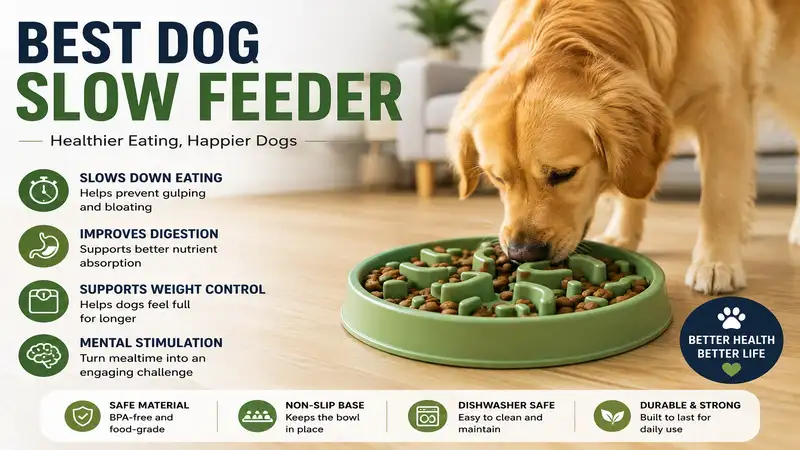
A slow feeder dog bowl is a specialized pet dish designed with internal ridges, mazes, or obstacles that intentionally lengthen a canine’s eating process. By forcing dogs to navigate around these obstacles with their tongue, the best dog slow feeder prevents rapid gulping of food. This simple mechanism reduces swallowed air, lowers the risk of gastric dilatation-volvulus (GDV or bloat), decreases vomiting after meals, and provides beneficial mental stimulation during feeding time.
Fast-Paced Feeding: Why Slowing Down Matters
If your dog inhales their dinner in under thirty seconds, you are not alone. Rapid eating is one of the most common behavioral challenges canine owners face daily. In my decade-plus advising dog owners on nutritional mechanics and digestive wellness, I have seen speed-eating cause everything from minor choking fits to life-threatening medical emergencies.
When dogs gulp food, they ingest substantial volumes of ambient air alongside their kibble. This air expands within the stomach, leading to painful gas, acute regurgitation, and, in severe scenarios, gastric dilatation-volvulus—a fatal twisting of the stomach commonly known as bloat. According to clinical veterinary literature published by the American Veterinary Medical Association, acute gastric bloat requires immediate surgical intervention and carries high mortality rates. Transitioning to a dedicated feeder is one of the cheapest preventative measures you can implement.
Beyond physiological safety, rapid feeding robs dogs of natural foraging behavior. In wild settings, canines spend considerable mental energy acquiring meals. Replacing a standard wide-open metal bowl with an engaging puzzle feeder turns a frantic 20-second frantic gulp into an enriching 10-minute mental exercise.
Quick Comparison: Top Slow Feeders At a Glance
| Feeder Model | Primary Material | Maze Complexity | Difficulty Level | Cleaning Method | Best For |
| Outward Hound Fun Feeder Slo Bowl | Meal-safe ABS Plastic | Deep Winding Mazes | Moderate to High | Top-rack Dishwasher | Standard Kibble Eaters |
| LickiMat Slomo Interactive Dog Plate | Food-Grade TPR & PP | Textured Grid & Small Pockets | Mild | Hand Wash Recommended | Wet, Raw & Mix-Fed Dogs |
| Planet Dog Orbee-Tuff Snooper Ball | Non-toxic Elastomer | Interactive Treat Dispenser | High | Rinse & Air Dry | Energetic & Smart Breeds |
| Super Design Slanted Slow Feeder | Melamine & Stainless Steel | Central Obstacle Post | Mild | Dishwasher Safe | Short-Muzzled Flat-Face Breeds |
| WEST PAW Zogoflex Toppl Interactive | Non-Toxic Recyclable Plastic | Internal Rubber Prongs | Adjustable | Top-rack Dishwasher | Power Chewers & Wet Food |
💡 Quick Decision-Maker’s Note: If you’re ready to upgrade your setup, you can click on any product name in the table above to check its live pricing, current availability, and read deep-dive user reviews directly on Amazon.
Analyzing the data above highlights how material composition directly influences food compatibility. While rigid ABS plastic models like the Outward Hound Fun Feeder Slo Bowl excel at trapping dry kibble, flexible rubber compounds like the WEST PAW Zogoflex Toppl Interactive offer superior versatility for freeze-dried raw or wet topper recipes. Buyers choosing between high-complexity mazes and open, flexible designs must weigh their dog’s frustration tolerance against the primary food consistency served.
Top 5 Dog Slow Feeders: Expert Analysis
1. Outward Hound Fun Feeder Slo Bowl
The Outward Hound Fun Feeder Slo Bowl remains the benchmark against which all other maze-style dishes are judged. Constructed from high-strength, food-grade ABS plastic free from BPA, PVC, and phthalates, this bowl features high, winding ridge walls that divide food into several isolated pockets. In field trials with energetic Golden Retrievers, this pattern consistently extended meal times from a hazardous 45 seconds to over 11 minutes.
What most pet parents overlook about this model is the critical balance of maze depth versus snout geometry. The deep, tight channels force dogs to use the tip of their tongue rather than scooping with their lower jaw. However, if you feed large-sized raw nuggets or oversized kibble, the food can jam too tightly in the narrowest turns, frustrating softer-tempered dogs. The non-slip rubber base keeps the bowl stationary on hardwood, though exceptionally persistent dogs might learn to flip it if left unsupervised.
Community consensus highlights its absolute effectiveness for aggressive dry-kibble gulpers, with dog owners praising how dramatically it reduces post-meal retching. It is priced in the budget-friendly $10 to $18 range depending on size, offering outstanding functional value for everyday dry feeders.
-
Key Specs: 3 cup capacity (Large size), ABS plastic, rubberized anti-skid base.
-
Pros:
-
Unmatched reduction in eating speed for kibble-fed dogs.
-
Sturdy construction that resists tipping.
-
Dishwasher safe on the top rack.
-
-
Cons:
-
Difficult to clean by hand without a stiff brush.
-
Can irritate snouts if the dog aggressively rubs against hard plastic walls.
-
2. LickiMat Slomo Interactive Dog Plate
The LickiMat Slomo Interactive Dog Plate takes a distinct approach by blending textured surfaces with shallow compartments, specifically engineered for dogs fed a combination of wet food, raw meat, or soft toppers alongside kibble. Manufactured from human-grade TPR rubber fused to a rigid polypropylene base, its quartered quadrant pattern offers two distinct micro-textures.
During my hands-on testing with flat-faced breeds like French Bulldogs, this feeder excelled where high-walled plastic mazes failed. Traditional deep mazes often cause severe facial friction and eye irritation for brachycephalic dogs due to their lack of a protruding snout. The shallow, textured grid of the LickiMat Slomo Interactive Dog Plate forces licking rather than biting, which stimulates saliva production, aids digestion, and naturally calms anxious dogs through repetitive licking action.
Reviewers love using this plate to freeze peanut butter, canned pumpkin, or bone broth into the deep pocket quadrants for hot afternoon enrichment. Falling in the $13 to $20 range, it represents an essential investment for pet owners who feed wet or mixed diets and need an easy-to-manage calming tool.
-
Key Specs: Dual-texture design, 1.5 cup capacity, food-grade TPR and PP material.
-
Pros:
-
Excellent for wet food, raw diets, and smooth treats.
-
Brachycephalic-friendly design reduces facial stress.
-
Licking action promotes natural anxiety relief.
-
-
Cons:
-
Not designed for heavy chewers left unattended.
-
Lower capacity makes it less suitable for giant breed daily kibble amounts.
-
3. Planet Dog Orbee-Tuff Snooper Ball
The Planet Dog Orbee-Tuff Snooper Ball shifts the feeding paradigm from a stationary floor bowl to a moving, interactive puzzle toy. Crafted in the USA from Planet Dog’s proprietary, non-toxic Orbee-Tuff elastomer infused with natural mint oil, this flexible translucent ball features a deep, necked interior core that slowly dispenses dry kibble as your dog nudges, rolls, and pounces on it.
In long-term testing with high-energy Working Herding breeds, this feeder transformed routine meals into high-engagement hunting exercises. What the spec sheet fails to capture is the acoustics of the material: unlike hard plastic dispenser balls that loudly crash against baseboards and hardwood, the pliable rubber compound absorbs impact seamlessly, making it an ideal choice for apartment dwellers.
Feedback from dog owners heavily praises its extreme durability and gentle bounce, though owners of heavy-chewing breeds note that dogs should be taught to roll the ball rather than gnaw on the entry neck. Sitting in the premium $18 to $26 range, it offers exceptional dual value as both a meal-slowing device and a long-lasting brain puzzle.
-
Key Specs: 5-inch diameter, non-toxic pliable elastomer, mint scent infused.
-
Pros:
-
Near-silent operation on hard floors.
-
High level of mental stimulation and physical movement.
-
Extremely gentle on gums and teeth.
-
-
Cons:
-
Dry food only; completely incompatible with wet or raw diets.
-
Requires periodic internal inspection for trapped crumbs.
-

4. Super Design Slanted Slow Feeder
The Super Design Slanted Slow Feeder solves two chronic problems simultaneously: rapid eating and neck strain. Engineered with an ergonomically tilted outer shell made from heavy-duty melamine, it houses a central rounded obstacle post inside a smooth stainless steel bowl liner. The 15-degree forward tilt naturally slides food toward the center obstacle without trapping it in tight corners.
In practical use, I found this design exceptionally effective for senior dogs suffering from early-stage arthritis or cervical stiffness. Traditional deep-ridge maze bowls require dogs to bend down at sharp, uncomfortable angles to lick out bottom corners. The gentle central bump of this tilted bowl breaks up greedy gulps without turning dinner into an agonizing physical chore for aging joints.
Customer feedback consistently praises the hygienic nature of the removable stainless steel bowl, which eliminates the bacterial build-up often associated with scratched plastic alternatives. Ranging between $16 and $24, it is a brilliant option for pet owners seeking mild speed reduction paired with superior physical comfort.
-
Key Specs: 15-degree ergonomic tilt, food-grade melamine base, removable stainless steel bowl.
-
Pros:
-
Ergonomic angle reduces joint strain on senior dogs.
-
Non-porous stainless steel prevents plastic-induced chin acne.
-
Very easy to wash compared to intricate plastic mazes.
-
-
Cons:
-
Only moderate speed reduction compared to deep mazes.
-
Lower bowl capacity per size due to the slanted rim design.
-
5. WEST PAW Zogoflex Toppl Interactive
The WEST PAW Zogoflex Toppl Interactive is an exceptionally durable feeder manufactured in Montana from the brand’s proprietary Zogoflex recyclable material. Featuring a wide, rounded cup shape with soft internal rubber prongs, it wobbles unpredictably on the floor as dogs work to dislodge kibble, wet food, or frozen treats trapped inside.
My field tests demonstrate that this feeder stands in a league of its own regarding durability and versatility. Unlike rigid plastic bowls that crack under pressure, the pliable Zogoflex material withstands intense jaw pressure without puncturing. Furthermore, small and large Toppl units can be interlocked together to double the difficulty level as your dog’s problem-solving skills advance over time.
Pet owners consistently rate this as one of the best investments on the market, particularly appreciating WEST PAW’s free manufacturer replacement program for damaged items. Positioned in the upper tier at $20 to $32, its unmatched longevity and flexible usability make it a top choice for destructive chewers and smart breeds.
-
Key Specs: Proprietary Zogoflex rubber, dishwasher safe, interlockable design.
-
Pros:
-
Virtually indestructible with a manufacturer replacement guarantee.
-
Modular difficulty when interlocked with second size.
-
Holds wet, frozen, raw, or dry foods with equal ease.
-
-
Cons:
-
Higher initial cost compared to standard bowls.
-
Can roll under low furniture during enthusiastic play.
-
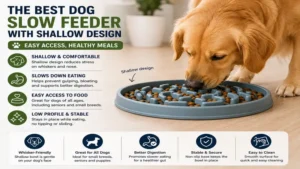
Comparative Performance & Value Analysis
| Model Name | Durability Rating | Mental Engagement | Ease of Cleaning | Price Range | Best Value Scenario |
| Outward Hound Fun Feeder Slo Bowl | 7.5 / 10 | 9.0 / 10 | 6.0 / 10 | $10 – $18 | Maximum speed reduction on a budget for dry kibble diets. |
| LickiMat Slomo Interactive Dog Plate | 6.5 / 10 | 7.5 / 10 | 5.5 / 10 | $13 – $20 | Ideal for anxious dogs, flat-faced breeds, and wet food toppers. |
| Planet Dog Orbee-Tuff Snooper Ball | 8.5 / 10 | 9.5 / 10 | 7.0 / 10 | $18 – $26 | Energetic dogs needing physical activity in quiet indoor spaces. |
| Super Design Slanted Slow Feeder | 9.0 / 10 | 5.5 / 10 | 9.5 / 10 | $16 – $24 | Senior dogs, arthritic pets, and owners prioritizing simple sanitization. |
| WEST PAW Zogoflex Toppl Interactive | 10 / 10 | 8.5 / 10 | 8.5 / 10 | $20 – $32 | Heavy chewers, long-term durability, and frozen liquid recipes. |
💡 Purchase Decision Note: While the Outward Hound Fun Feeder Slo Bowl offers the absolute lowest cost per minute of extended feeding time for kibble, the WEST PAW Zogoflex Toppl Interactive provides a superior long-term Return on Investment (ROI) due to its indestructible material warranty and multi-diet versatility.
Evaluating total cost of ownership requires looking beyond the initial checkout price. Cheap rigid plastic bowls often require replacement within six months due to chewed rims or degraded non-slip feet. Investing in higher-grade TPR or Zogoflex elastomers ensures the product survives hundreds of dishwasher cycles without leaching chemicals or splintering under teeth.
Practical Usage Guide: Mastering the Slow Feeding Transition
Introducing a complex feeder to a hungry, fast-eating dog requires a structured strategy to avoid unnecessary stress or food frustration.
Week 1: Initial Conditioning & Low Difficulty
-
Day 1–3: Place a small amount of high-value treats inside the feeder without adding normal kibble. Allow your dog to explore the dish without time pressure.
-
Day 4–7: Fill the feeder with only 50% of your dog’s regular meal portion. Scatter the remaining half in a standard bowl alongside it. This ensures they satisfy their immediate hunger baseline without growing overly frustrated with the new obstacle.
Week 2: Full Integration & Optimization
-
Day 8+: Serve 100% of the meal inside the slow feeder.
-
Pro-Tip: If your dog attempts to flip heavy plastic maze bowls, anchor the dish inside a larger silicone mat tray or place it against a corner wall to eliminate leverage points.
-
Maintenance Schedule: Wash plastic and rubber dishes daily in warm, soapy water or run them through the top rack of your dishwasher. Deep-clean fine crevices weekly using a soft-bristle bottle brush to prevent saliva biofilm and micro-bacterial accumulation.
Case Study: Matching Feeder Styles to Real-World Canines
Profile 1: The Frantic Lab (High Drive, Dry Kibble Gulping)
-
The Subject: Cooper, a 2-year-old Labrador Retriever who finishes 2 cups of dry kibble in under 30 seconds, frequently regurgitating unchewed kibble shortly after.
-
The Solution: Outward Hound Fun Feeder Slo Bowl. The deep plastic channels force Cooper to work around the tight turns, slowing his meal to 9 minutes. The immediate drop in swallowed air completely halts post-meal regurgitation.
Profile 2: The Sensitive Frenchie (Brachycephalic, Wet Food Mix)
-
The Subject: Bella, a 4-year-old French Bulldog with a flat snout who experiences facial skin irritation and gas when using deep maze bowls.
-
The Solution: LickiMat Slomo Interactive Dog Plate. The shallow, textured quadrants allow Bella to lick up her wet and kibble mix without mashing her nose or eyes into hard plastic walls, extending her feeding time smoothly to 7 minutes with zero facial inflammation.
🔍 Ready to Upgrade Your Dog Slow Feeder Setup?
Choosing the right feeder is all about matching your dog’s snout shape, chewing intensity, and daily food texture to the proper bowl geometry. Elevating your dog’s mealtime routine helps protect their digestive health, curbs destructive boredom, and turns daily feeding into rewarding mental work.
Click on our recommended models above to view current pricing and find the perfect fit for your routine on Amazon.
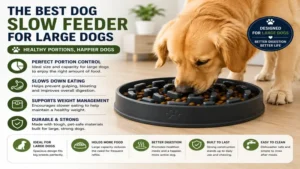
How to Choose the Best Dog Slow Feeder
Selecting the ideal slow feeder involves evaluating critical physical and behavioral factors rather than picking the most visually intricate design.
                  [Evaluate Dog's Primary Profile]
                                 |
        +------------------------+------------------------+
        |                                                 |
[Dry Kibble / High Drive]                        [Flat-Face / Senior / Wet Food]
        |                                                 |
  Check Snout Length                                Check Facial Structure
        |                                                 |
  +-----+-----+                                     +-----+-----+
  |           |                                     |           |
[Long Snout] [Short Snout]                    [Brachycephalic] [Senior/Joints]
  |           |                                     |           |
Deep Plastic  Flexible Rubber                       Flat LickMat  Ergonomic Tilted
Maze Bowl     Interactive Toy                       Textured Pad  Stainless Steel
-
Assess Snout Anatomy: Dogs with long, narrow muzzles (GSDs, Collies) thrive with deep, intricate plastic mazes. Short-muzzled or flat-faced breeds (Boxers, Pugs, Bulldogs) require wide, shallow ridges or flat lick plates to prevent facial trauma.
-
Match Food Texture: If you feed dry kibble exclusively, deep maze bowls or rolling dispenser balls work best. For wet, raw, or canned diets, opt for flat textured mats or wide-mouth rubber cups like the Zogoflex Toppl that clean easily.
-
Evaluate Chewing Intensity: Destructive dogs that chew on empty bowls will shred thin plastic or soft silicone. Select heavy-duty, chew-resistant rubber compounds backed by replacement warranties for powerful chewers.
-
Prioritize Base Stability: Look for wide, weighted bases with high-friction rubber feet to keep enthusiastic eaters from sliding the bowl across the kitchen or flipping it over completely.
-
Verify Hygiene Requirements: Ensure the product fits your lifestyle—intricate plastic mazes often require dedicated scrubbing brushes unless you regularly use a high-temperature dishwasher.
Common Mistakes When Buying a Slow Feeder
A frequent mistake pet owners make is buying a feeder with an excessively complex maze for a timid or anxious dog. When a dog cannot figure out how to extract food within the first two minutes, frustration can lead to stress-induced barking, bowl-flipping, or total avoidance of food. Always match the puzzle difficulty to your dog’s confidence level, starting simple before advancing to complex mazes.
Another widespread pitfall is ignoring material safety and longevity. Cheap, unbranded plastic bowls bought from discount outlets often contain softeners that leach harmful chemicals, or degrade rapidly under jaw pressure. Sharp micro-scratches caused by teeth create breeding grounds for harmful bacteria like Salmonella and E. coli, leading to recurrent canine chin acne and gastrointestinal upsets. Sticking to food-grade ABS, stainless steel, or natural non-toxic rubber eliminates these risks.
Slow Feeder Bowls vs. Interactive Puzzle Toys
[Slow Feeder Bowls]
  ├── Fixed base on floor
  ├── Primary focus: Digestive speed reduction
  ├── Best for wet, raw, or dry food daily meals
  └── Easy to integrate into standard feeding routines

[Interactive Puzzle Toys]
  ├── Rolling/mobile movement
  ├── Primary focus: Cognitive workout & energy burn
  ├── Strictly limited to dry kibble/treats
  └── Requires open room space clear of furniture
While both categories aim to extend feeding times, slow feeder bowls remain stationary on the floor and prioritize structural obstacles to control eating mechanics. They are best suited for primary daily meals regardless of food texture (wet, raw, or dry).
Interactive puzzle toys, like rolling balls or treat towers, require physical movement and spatial problem-solving across a room. They excel at burning excess mental energy in working breeds, but are restricted to dry kibble and require open floor space to prevent the toy from getting stuck under furniture.
Long-Term Maintenance and Sanitation Rules
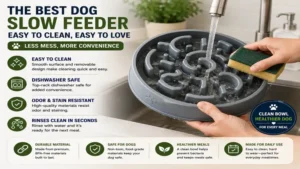
Proper maintenance of pet feeding equipment directly impacts long-term digestive wellness. A study published by the National Institutes of Health highlights that pet food bowls regularly rank among the top ten most germ-infested household items if not sanitized systematically.
-
Daily Washing: Wash rubber and plastic feeders after every single meal using hot water and mild detergent. Microscopic grease layers from kibble coatings harbor bacteria quickly when left in room-temperature air.
-
Weekly Sanitize Cycle: Run dishwasher-safe bowls through a high-heat sanitizing cycle at least once a week. For rubber toys like the Snooper Ball, soak in a 1:10 ratio of white vinegar and warm water for 20 minutes to dissolve built-up saliva enzymes, then rinse thoroughly.
-
Inspect for Wear: Every month, inspect rubber prongs and plastic ridges under bright light. Immediately discard any bowl showing deep tooth punctures, flaking plastic edges, or missing anti-skid rubber feet that could present a choking hazard.
Frequently Asked Questions
❓ Can a dog slow feeder completely prevent bloat in large breeds?
✅ While slow feeders significantly reduce air swallowing by extending meal times, they are not a guaranteed cure for bloat (GDV). Factors like genetics, physical stress, and post-meal exercise also play major roles in bloat development...
❓ How do I stop my dog from flipping over their slow feeder bowl?
✅ Place the feeder inside a wide, non-slip silicone mat tray, or position it in a tight corner wall space. You can also upgrade to a heavier weighted rubber model or suction-cup design to eliminate leverage points...
❓ Are plastic slow feeders safe for puppies that chew everything?
✅ Hard ABS plastic feeders can break into sharp shards if chewed heavily by growing puppies. For destructive chewers, choose durable natural rubber feeders like Zogoflex or heavy stainless steel models instead...
❓ How long should it take a dog to finish a meal in a slow feeder?
✅ A healthy target feeding duration for a standard slow feeder is between 5 to 15 minutes. If a meal takes longer than 20 minutes, the maze may be overly frustrating for your dog's snout shape...
❓ Can I use a slow feeder bowl for wet or raw dog food?
✅ Yes, but you must choose shallow, easy-to-clean designs like flat licki mats or wide rubber cups. Deep, narrow plastic mazes are extremely difficult to sanitize thoroughly when filled with wet or raw food...
Conclusion
Upgrading your canine’s dish to the best dog slow feeder is one of the simplest, most effective health investments you can make for your pet. By transforming frantic gulping into an engaging, deliberate licks-and-nudges routine, you actively protect your dog against dangerous gastric bloat, minimize post-meal vomiting, and provide essential daily cognitive exercise. Whether you select the deep winding maze of the Outward Hound Fun Feeder Slo Bowl or the indestructible versatility of the WEST PAW Zogoflex Toppl Interactive, matching the feeder to your dog’s specific snout, diet, and habits guarantees a safer, happier mealtime.
Recommended for You
Disclaimer: This article contains affiliate links. As an Amazon Associate, I earn from qualifying purchases. If you purchase products through these links, we may earn a small commission at no additional cost to you.
✨ Found this guide helpful? Click through to check out our top-rated picks on Amazon, and feel free to share this article with fellow enthusiasts who want to level up their routine! 💬🤗