
In This Article
Dog Feeder Metal: Why the Material Matters More Than You Think
Every dog owner eventually has the same moment: you pick up the old plastic bowl, run your thumb across the inside, and feel a maze of tiny scratches. Those grooves are where food film, saliva, and bacteria settle in — and no amount of quick rinsing really reaches them. That’s usually when people start searching for a dog feeder metal setup, and honestly, it’s one of the smartest small upgrades you can make for your dog’s daily routine.
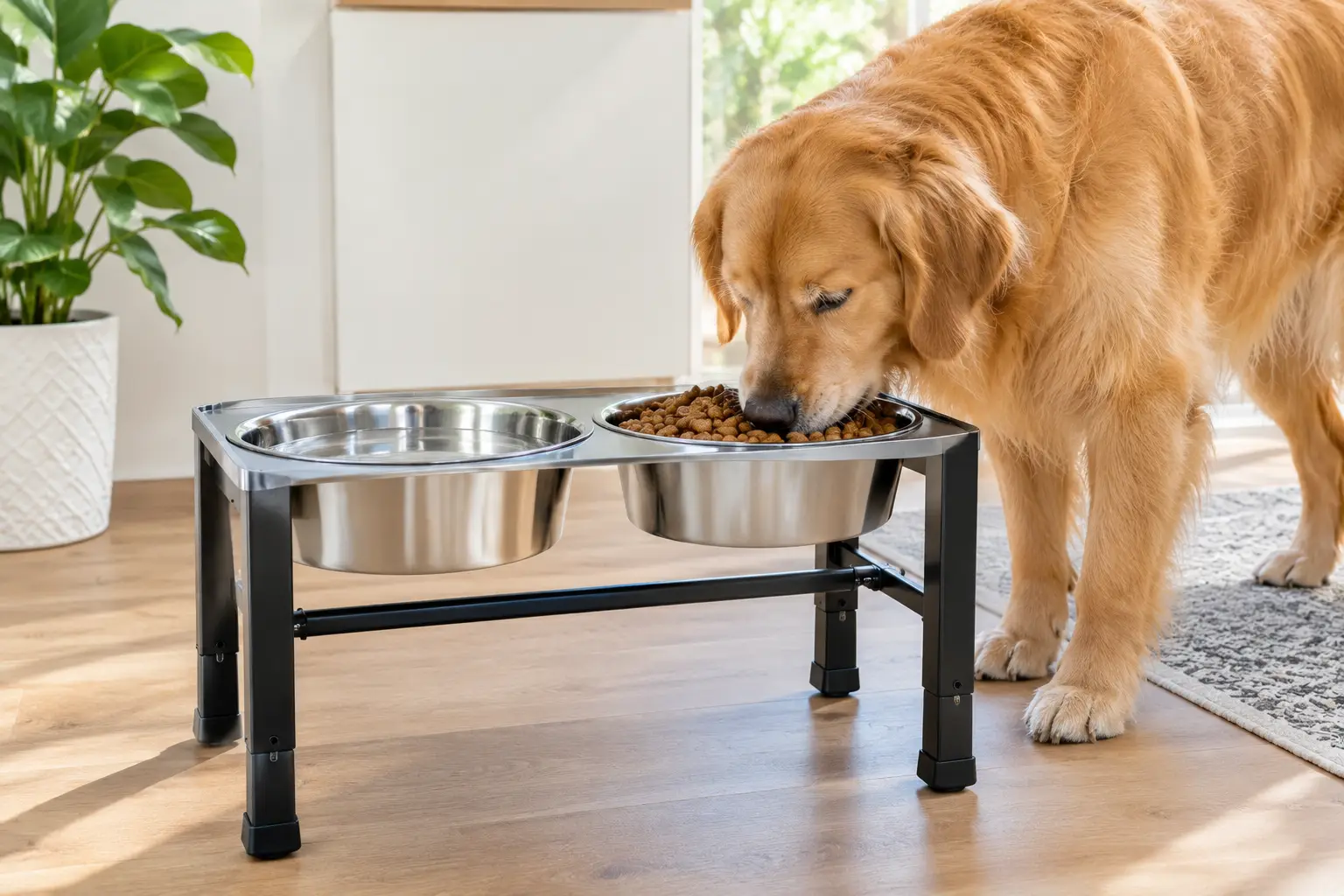
A dog feeder metal option — whether it’s a heavy stainless bowl, a wrought iron dog feeder stand, or an elevated metal dog bowl stand with removable dishes — does three things plastic struggles with. It resists chewing and scratching, it survives the dishwasher for years, and it doesn’t absorb odors. Stainless steel in particular is the same family of alloy used in commercial kitchens, and that’s not a coincidence.
But “metal” covers a lot of ground in 2026. Some products are all-steel bowls built like camping gear. Others pair stainless dishes with an iron or plastic frame. A few are automatic feeders where only the bowl is metal. And here’s what most buyers overlook: the frame and the bowl are two separate decisions, with different strengths and different failure points.
This guide breaks down seven real products sold on amazon.com, from budget raised stands under $25 to premium bowls and app-controlled feeders. You’ll get honest analysis based on spec sheets and aggregated customer sentiment, real-world scenarios matched to specific dogs, a maintenance routine, and — importantly — the bloat-safety research every large-breed owner should read before raising a bowl. No fabricated “I tested this” stories here; just clear reasoning so you can choose with confidence.
What Is a Dog Feeder Metal?
A dog feeder metal is any feeding bowl, raised stand, or feeding station where the food-contact surface or support frame is made of metal — most commonly food-grade stainless steel bowls, sometimes paired with a wrought iron or steel stand. It’s chosen for durability, hygiene, and chew resistance over plastic.
In practice, the “metal” you’ll meet falls into three groups. First, 18/8 or 304 stainless steel — the grade numbers refer to roughly 18% chromium and 8% nickel, which is what gives the steel its corrosion resistance (the chemistry of stainless steel is worth a two-minute skim if you’re curious why it doesn’t rust like ordinary steel). Second, powder-coated steel or stainless, where a baked-on colored finish covers the outside; it looks great but can chip if the product is cheap. Third, wrought iron or steel frames, which hold the bowls and add weight and stability but need a protective finish to avoid rust.
What does this mean for you? A stainless steel dog feeder is the safest default for the bowl itself, while the stand material is mostly about stability, looks, and how messy your dog is. Keep those two questions separate, and the rest of this guide gets much easier.
Quick Comparison: 7 Best Dog Feeder Metal Picks at a Glance
| Product | Type | Metal Parts | Price Range | Best For |
|---|---|---|---|---|
| Platinum Pets Double Diner | Raised double diner | Wrought iron stand + powder-coated stainless bowls | $40–$90 | Style-conscious homes |
| Ciconira Metal Elevated Dog Bowls | Adjustable tilted stand | Metal stand + two 1.3L stainless bowls | $30–$50 | Fast eaters, growing dogs |
| YETI Boomer 8 | Single heavy bowl | 18/8 stainless, double-wall | Around $50 | Bowl-pushers, outdoor dogs |
| Neater Feeder Deluxe | Mess-proof raised feeder | Stainless bowls (plastic frame) | $40–$65 | Messy drinkers |
| Fluff Trough | Wide raised trough | Stainless steel insert | $45–$70 | Flat-faced breeds |
| PETLIBRO Granary WiFi Stainless Steel 5L | Automatic feeder | Stainless bowl (plastic body) | $60–$100 | Busy schedules |
| Niubya Elevated Dog Bowls | Budget adjustable stand | Two stainless bowls | Under $25 | First-time buyers |
Looking at the table, the split is clear: the Platinum Pets Double Diner and the Ciconira Metal Elevated Dog Bowls are the only true “metal frame plus metal bowl” picks, while the Neater Feeder Deluxe, Fluff Trough, and PETLIBRO Granary WiFi Stainless Steel 5L use metal where it matters most — the food-contact surface. If your dog chews furniture, lean toward the all-metal options; if your dog floods the floor at every drink, the Neater Feeder Deluxe solves a problem no amount of steel can.
💬 One click helps other shoppers make an informed choice too! 😊
Top 7 Dog Feeder Metal Picks for 2026: Expert Analysis
1. Platinum Pets Double Diner — best-looking all-metal raised setup
The Platinum Pets Double Diner is the pick for owners who want a feeding station that looks like furniture rather than pet gear. Its stand is hand-forged wrought iron finished in a flat black coat, holding two stainless steel bowls that are powder coated on the outside in a wide range of colors.
What does that mean in practice? The iron frame gives the setup real heft, so it won’t skate across tile, and the rubber feet protect hardwood. The powder coating is what makes these bowls stand out — the brand says the coating is dishwasher safe, rust resistant, and chip resistant, while the inside stays bare stainless where food actually touches.
Based on the specs, this is best for small-to-medium dogs and cats in homes where the feeding area is visible — a kitchen corner or open-plan living space. It’s not adjustable, though, so measure your dog first.
Customer sentiment we could verify is mostly about appearance and color choice; we couldn’t confirm a large, consistent body of long-term durability reviews on the current models, so treat the chip-resistance claim as the manufacturer’s rather than proven.
Pros:
- ✅ Wrought iron stand feels solid and stable
- ✅ Huge range of bowl colors to match decor
- ✅ Bare stainless interior where food touches
Cons:
- ❌ Fixed height with no adjustment options
- ❌ Coated exterior can show wear if scrubbed harshly
Price usually lands between $40 and $90 depending on size and bowl count — fair value if looks matter as much as function.
2. Ciconira Metal Elevated Dog Bowls — tilted bowls that slow fast eaters
The Ciconira Metal Elevated Dog Bowls pack the most features per dollar into a metal dog feeder stand. You get a metal frame with an 8° bowl tilt, two 1.3L stainless steel bowls, a slow feeder insert, and a spillproof mat, adjustable across four heights.
Here’s what each feature means for your dog. The tilt pushes kibble toward the front edge of the bowl, so dogs don’t have to chase the last pieces around the bottom — useful for shorter-snouted dogs. The 1.3L bowls hold more than four cups each, which covers most medium and large dogs. The four-height adjustment means the stand can grow with a puppy instead of being replaced in a year.
Honest analysis: the slow feeder is the real reason to pick this one. Fast eating is a recognized risk factor for bloat, so a dog that inhales dinner gets a genuine benefit here. Just remember the slow feeder insert is typically plastic, not metal.
Aggregated reviews for this exact metal version are thinner than for the big-name brands; roundups from US pet sites list it among top elevated feeders, but we couldn’t verify enough individual feedback to summarize durability trends reliably.
Pros:
- ✅ Four heights adapt from puppy to adult
- ✅ Included slow feeder discourages gulping
- ✅ Spillproof mat protects floors out of the box
Cons:
- ❌ Slow feeder insert is plastic, not steel
- ❌ Fewer verified long-term reviews than major brands
Expect to pay in the $30–$50 range — strong value for an adjustable, all-in-one kit.
3. YETI Boomer 8 — heaviest, toughest single bowl here
The YETI Boomer 8 is what happens when a cooler company builds a dog bowl: overbuilt, heavy, and nearly indestructible. It’s made of 18/8 kitchen-grade stainless steel with double-wall (non-insulated) construction, holds 8 cups (64 oz), measures about 8 inches across by 3.5 inches tall, and weighs roughly 1.9 pounds empty.
Why does that weight matter? Most stainless bowls weigh a few ounces, which is why enthusiastic eaters shove them across the kitchen. At nearly two pounds plus a BearFoot non-slip ring on the bottom, this bowl simply stays put. The DuraCoat exterior color is designed not to fade, peel, or crack, and the whole bowl is dishwasher safe.
Who’s it for? Bowl-pushers, puppies that flip dishes, and outdoor dogs — it travels well to cabins, boats, and campsites. At 8 cups, it’s oversized as a food bowl for small dogs; many owners use it as a water bowl instead.
Reviews consistently praise its stability, durability, and how long it keeps water cool. The most common complaint is the price for “just a bowl,” and a minority of buyers report cosmetic scratching or sticker residue that wouldn’t come off.
Pros:
- ✅ Almost two pounds, so it won’t slide
- ✅ 18/8 stainless survives dents and rough play
- ✅ Dishwasher safe with a durable color coat
Cons:
- ❌ Expensive compared with basic steel bowls
- ❌ Too large as a food bowl for small breeds
Usually priced around $50 — expensive upfront, but likely the last water bowl you’ll buy.
4. Neater Feeder Deluxe — the best fix for sloppy drinkers
The Neater Feeder Deluxe isn’t an all-metal product — its frame is plastic — but it earns a spot because its stainless steel bowls sit inside a design that solves the messiest feeding problem there is. The bowls sit above a lower reservoir that catches spilled water and dropped kibble, and the large-dog version (for dogs 40+ pounds) offers two height settings.
In practice, this means the splash zone stays inside the feeder rather than on your floor. Both stainless bowls are top-rack dishwasher safe, and the listing notes US manufacturing for the frame.
Based on comparing the design with standard raised stands, this is the best choice for dogs with big jowls, beards, or a habit of “drinking” like they’re bobbing for apples — Labs, Boxers, Newfoundlands, doodles. If your dog chews plastic, though, an all-metal frame is the safer bet.
Multiple US pet review roundups in 2026 name it their top pick for messy eaters. The trade-off buyers mention is that the reservoir itself needs regular emptying and cleaning, or it becomes the new dirty spot.
Pros:
- ✅ Catch reservoir keeps water off the floor
- ✅ Stainless bowls are dishwasher safe
- ✅ Two height options for large dogs
Cons:
- ❌ Plastic frame isn’t ideal for chewers
- ❌ Reservoir adds one more part to clean
Prices usually fall between $40 and $65 — worth it if you’re mopping daily.
5. Fluff Trough — built around flat-faced breeds
The Fluff Trough rethinks the bowl shape entirely. Instead of a deep round dish, it’s a wide, low, open-front trough with a stainless steel insert, designed so brachycephalic (flat-faced) breeds like Pugs, French Bulldogs, and Bulldogs can reach food without jamming their faces into the bowl.
Here’s why that matters. A deep bowl forces a short-snouted dog to tilt and push its whole face in, which often leads to frustration, spilled kibble, and swallowed air. A shallow, wide trough lets the dog eat with a more natural head position. Accessories extend its usefulness: risers add height, a “binge blocker” insert slows fast eaters, and a separate stainless water insert is available.
Honest opinion: if you own a flat-faced breed, this is the most purpose-built option in this guide. For long-snouted dogs, a standard elevated metal dog bowl stand does the same job for less money.
Aggregated owner feedback (largely from UK and international buyers, since the brand sells widely there) is strongly positive about posture, slower eating with the binge blocker, and sturdiness; the recurring complaint is price.
Pros:
- ✅ Wide, shallow shape suits short snouts
- ✅ Stainless insert lifts out for easy cleaning
- ✅ Add-ons like risers and binge blocker available
Cons:
- ❌ Pricey compared with regular raised stands
- ❌ Accessories add to the total cost
Expect a range of roughly $45–$70 — a smart buy specifically for flat-faced dogs.
6. PETLIBRO Granary WiFi Stainless Steel 5L — automatic feeding with a steel bowl
The PETLIBRO Granary WiFi Stainless Steel 5L is the pick for owners who want metal hygiene plus automation. The body is plastic, but the food-grade stainless steel bowl is what your dog actually eats from, and the 5L hopper stores days of dry kibble.
Feature by feature: app control lets you schedule up to 10 meals a day and adjust portions remotely; it works on both 2.4GHz and 5GHz Wi-Fi; a voice recorder lets you call your dog to meals; and dual power (adapter plus backup batteries) keeps meals coming during an outage. A desiccant bag and sealed lid help keep kibble fresh.
What does this mean in real life? Consistent, portion-controlled meals even on long workdays — a genuine help for dogs on weight-management plans. The catch: it only handles dry kibble, and the main base isn’t washable, so cleaning is limited to removable parts.
Reviews summarized by major US retailers highlight reliability and ease of use. Common frustrations center on Wi-Fi setup and kibble size compatibility, so check that your food fits the dispenser’s range.
Pros:
- ✅ Schedules up to 10 meals daily via app
- ✅ Stainless steel bowl resists chin acne buildup
- ✅ Battery backup covers power outages
Cons:
- ❌ Dry kibble only, no wet food
- ❌ Plastic body is not chew-proof
Typically priced between $60 and $100 — best value for owners with unpredictable schedules.
7. Niubya Elevated Dog Bowls — budget adjustable stand that just works
The Niubya Elevated Dog Bowls prove you don’t need to spend much to get stainless bowls at the right height. The stand adjusts to five heights — 3.15, 8.66, 9.84, 11.02, and 12.2 inches — and ships with two stainless steel bowls.
That range is genuinely useful. The lowest setting works for a small dog or puppy; the top setting suits many medium-to-large dogs. If you’re unsure what height your dog needs, a cheap adjustable stand lets you experiment before investing in something premium.
Based on comparing the specs, this is the right starter for first-time buyers, rentals, or a second feeding station at a relative’s house. Check the listing for frame material — it’s a lightweight stand rather than heavy iron, so a determined chewer or a very large dog may outmuscle it.
US review roundups describe it as one of the best budget picks under $20–$25, praising value and adjustability. We couldn’t verify a consistent pattern in long-term durability feedback, so treat it as a practical, affordable option rather than a lifetime product.
Pros:
- ✅ Five heights from 3.15 to 12.2 inches
- ✅ Two stainless bowls included
- ✅ Very affordable entry into raised feeding
Cons:
- ❌ Lighter frame than iron or heavy steel
- ❌ Long-term durability is less proven
Usually under $25 — hard to beat for value.
Head-to-Head: Comparing the Top 7
| Product | Height Adjustable | Capacity | Dishwasher-Safe Metal Parts | Standout Feature | Best For |
|---|---|---|---|---|---|
| Platinum Pets Double Diner | No | Varies by size | Yes (bowls) | Wrought iron + colors | Decor-focused homes |
| Ciconira Metal Elevated Dog Bowls | Yes (4 heights) | 1.3L per bowl | Yes (bowls) | 8° tilt + slow feeder | Fast eaters |
| YETI Boomer 8 | N/A (floor bowl) | 8 cups / 64 oz | Yes | 1.9 lb non-slip | Bowl-pushers |
| Neater Feeder Deluxe | Yes (2 heights) | Large-dog bowls | Yes (top rack) | Spill reservoir | Messy drinkers |
| Fluff Trough | With risers | Wide trough | Yes (insert) | Open-front shape | Flat-faced breeds |
| PETLIBRO Granary WiFi Stainless Steel 5L | No | 5L hopper | Bowl only | App scheduling | Busy owners |
| Niubya Elevated Dog Bowls | Yes (5 heights) | Two bowls | Yes (bowls) | Lowest price | First-time buyers |
Reading across the rows, adjustability is the dividing line: the Niubya Elevated Dog Bowls and Ciconira Metal Elevated Dog Bowls let you fine-tune height, while the Platinum Pets Double Diner forces you to get sizing right on day one. The YETI Boomer 8 is the only floor-level option — which, as you’ll see in the safety section, can actually be an advantage for deep-chested breeds.
✨ Don’t miss these top-rated metal feeders!
🔍 Take your dog’s mealtime to the next level with this carefully curated lineup. Click a highlighted product to check current pricing and availability — these picks help you build a cleaner, quieter, longer-lasting feeding station your whole family will appreciate! 🐾
Getting Started: Your First 30 Days With a Metal Dog Feeder
A new metal dog feeder isn’t complicated, but a little setup avoids the most common early annoyances.
🧽 Day 1: Wash before first use. New stainless bowls often have manufacturing oils or label adhesive. Wash with hot soapy water; for stubborn sticker residue, a drop of cooking oil or a citrus-based remover works better than scrubbing pads, which can scuff the finish.
📏 Days 1–3: Dial in the height. For an adjustable stand, start at a height roughly level with the bottom of your dog’s chest when standing. Watch your dog eat: the neck should angle down slightly, not stretch up or crane sharply down. Adjust one notch at a time.
🔇 Week 1: Manage the noise. Steel clanks. Some dogs, especially anxious ones, startle at the sound of tags hitting metal or bowls rattling in a frame. A silicone mat underneath, or a bowl with a rubber base ring, quiets things fast. Give a nervous dog a few days of meals with you nearby.
🧼 Weeks 1–4: Build the cleaning habit. The FDA’s safe pet food handling guidance recommends washing pet food bowls and scoops with soap and hot water after each use. Stainless makes that easy — it’s the main advantage you paid for. Don’t forget the frame: wipe the stand weekly, since drips collect around the bowl rings.
👀 Day 30: Inspect. Check powder-coated or painted surfaces for chips, iron frames for rust spots at joints, and rubber feet for wear. Catching a chip early lets you touch it up or contact the seller while you’re still inside the return or warranty window.
Common first-month mistakes: using steel wool (it scratches and can leave particles that rust), soaking iron stands in water, and filling oversized bowls to the top, which encourages overeating.
Which Metal Dog Feeder Fits Your Dog? Three Real-World Scenarios
Specs only go so far. Here’s how the picks match up for three common households.
🐶 Scenario 1: The Apartment Frenchie
Profile: a 25-pound French Bulldog in a city apartment, eating twice a day, owner budget around $50–$70.
Best match: the Fluff Trough. A flat-faced dog struggles with deep bowls, and the wide, shallow trough lets him eat without smashing his face into steel. Add the binge blocker if he gulps. Because floor space is tight, a single compact trough beats a wide double diner. Pair it with an inexpensive stainless water bowl.
🐕 Scenario 2: The Busy Commuter With a Lab
Profile: a 70-pound Labrador, owner away 10 hours on workdays, budget up to about $150 total.
Best match: the PETLIBRO Granary WiFi Stainless Steel 5L for split meals while the owner is out, plus the YETI Boomer 8 as a heavy, unspillable water bowl. Labs are known for enthusiastic eating and weight gain, so portioned smaller meals help. And because Labs are a larger, deep-chested breed, keeping food at floor level is a reasonable default unless a vet recommends otherwise.
🦮 Scenario 3: The Senior Dog With Stiff Joints
Profile: a 12-year-old, 45-pound mixed breed with arthritis, budget $30–$50.
Best match: the Ciconira Metal Elevated Dog Bowls. A senior with neck or joint stiffness may find raised bowls more comfortable, and the four heights let you fine-tune for comfort. The tilt helps a tired dog reach the last bites without pushing the bowl around. Ask your vet first — raised feeding isn’t automatically right for every older dog.
The pattern across all three: start from the dog’s body and routine, then pick the metal format. Nobody needs the “best” feeder — they need the right one.
Problem → Solution: Fixing Common Metal Feeder Annoyances
Even great metal feeders come with quirks. Here are the five most frequent ones and how to fix them.
❌ Problem 1: The bowl slides across the floor. ✅ Solution: Go heavier or add grip. The YETI Boomer 8‘s weight and non-slip ring solve this outright. For lighter bowls, a silicone feeding mat with raised edges works, as does a stand with rubber feet like the Platinum Pets Double Diner.
❌ Problem 2: Water everywhere after every drink. ✅ Solution: Choose a catch system. The Neater Feeder Deluxe‘s reservoir is designed exactly for this. A cheaper alternative is a raised stand on a waterproof lipped mat.
❌ Problem 3: Rust spots on a “stainless” bowl. ✅ Solution: Real stainless rarely rusts through, but surface spots can appear from iron particles (often from steel wool or hard water). Clean with a baking soda paste and a soft cloth. If rust keeps returning or pitting appears, the steel grade may be low — replace it with a known 18/8 or 304 bowl.
❌ Problem 4: The dog eats too fast. ✅ Solution: Add a slow feeder insert — the Ciconira Metal Elevated Dog Bowls includes one, and the Fluff Trough offers a binge blocker. Splitting the daily ration into two or three meals, which the PETLIBRO Granary WiFi Stainless Steel 5L automates, also helps.
❌ Problem 5: Chipped powder coating. ✅ Solution: Chips on the outside of a bowl are mostly cosmetic, but chips on any food-contact surface mean the bowl should be retired. Avoid abrasive pads and harsh dishwasher detergents on coated pieces, and stick to the top rack.
How to Choose a Dog Feeder Metal
Here’s a step-by-step way to choose a dog feeder metal setup that actually fits your dog:
- Confirm the bowl grade. Look for 18/8 or 304 food-grade stainless steel on any surface that touches food. Vague terms like “metal bowl” without a grade deserve skepticism.
- Decide floor-level vs raised. This is a health question, not a style one. For large and giant deep-chested breeds, research links raised bowls to higher bloat risk (more below), so floor-level is the cautious default.
- Measure your dog. For a raised stand, the bowl rim should sit roughly at the bottom of the chest. Measure standing height from floor to chest before buying a fixed-height diner.
- Match capacity to meal size. A bowl should hold one meal comfortably with room to spare — not three meals. Oversized bowls invite overfilling.
- Pick the frame for your dog’s habits. Chewers need metal frames; messy drinkers benefit from catch reservoirs; bowl-pushers need weight or non-slip bases.
- Check cleanability. Bowls should lift out and be dishwasher safe. Fewer seams and crevices mean less hidden grime.
- Factor in your schedule. If meals often slip because of work, an automatic feeder with a stainless bowl may matter more than the frame material.
One more point worth weighing: the evidence on raised feeders comes mainly from a large Purdue University cohort study, Glickman et al. in the Journal of the American Veterinary Medical Association, which is why step 2 sits so high on this list.
Stainless Steel Dog Feeder vs Plastic and Ceramic
When people compare a stainless steel dog feeder with other materials, the conversation usually stops at “metal is tougher.” The real differences run deeper.
Plastic is cheap, light, and comes in every color. The problem is what happens over time: teeth and scrubbing create micro-scratches that harbor bacteria, and some dogs develop chin irritation that owners often associate with plastic bowls. Plastic also absorbs smells and can be chewed into sharp fragments.
Ceramic is heavy, attractive, and non-porous when the glaze is intact. Its weakness is fragility: one drop on tile and it chips or cracks, and a cracked glaze exposes porous material underneath. Quality varies a lot by maker.
Stainless steel sits in the sweet spot. It’s non-porous, essentially unbreakable in normal use, dishwasher safe, and resistant to corrosion. Its downsides are noise, light weight (in cheap versions), and the fact that “stainless” quality varies by grade.
| Material | Durability | Hygiene | Weight/Stability | Typical Cost | Best For |
|---|---|---|---|---|---|
| Stainless steel | Excellent | Excellent | Light to heavy | Low–high | YETI Boomer 8 fans, most dogs |
| Plastic | Fair | Declines with scratches | Light | Low | Short-term or travel use |
| Ceramic | Good until dropped | Very good if unchipped | Heavy | Moderate | Calm dogs, decor-focused homes |
| Wrought iron frame + steel bowls | Excellent | Excellent | Heavy | Moderate | Platinum Pets Double Diner buyers |
The table shows why stainless wins for most households: it’s the only material that scores high on durability and hygiene at every price point. Ceramic is a reasonable alternative for calm dogs, but if you have kids, hard floors, or an energetic dog, one accidental drop can turn a nice bowl into a hazard.
Elevated Metal Dog Bowl Stand: Safety, Bloat, and Standards
This is the section most product listings skip — and it may be the most important part of choosing an elevated metal dog bowl stand.
The bloat question
Gastric dilatation-volvulus (GDV), commonly called bloat, is a life-threatening emergency in which the stomach fills with gas and can twist. It mostly affects large and giant deep-chested breeds like Great Danes, Weimaraners, Standard Poodles, and Irish Setters.
For years, raised bowls were recommended to prevent bloat. Then the Purdue study (Glickman et al., 2000) followed a cohort of large and giant breed dogs and found that eating from a raised bowl was associated with a higher risk of GDV — roughly doubling it in that study. A later evidence review in Veterinary Evidence concluded that the research is limited and partly conflicting, but that no study has found raised feeders reduce bloat risk, so floor feeding is the safest default for at-risk dogs.
What this means for you: if you have a large or giant deep-chested breed, a floor-level stainless bowl like the YETI Boomer 8 is the cautious choice unless your vet advises otherwise. Elevated feeders still have real uses — for dogs with neck injuries, arthritis, or conditions like megaesophagus — but those are veterinary decisions.
Materials and standards
Unlike electrical products, dog bowls in the US don’t carry a mandatory safety certification like UL listing. That puts more responsibility on you. Look for clearly stated grades (18/8 or 304), “food-safe” and “BPA-free” claims on any plastic components, and sellers who list materials plainly. Automatic feeders like the PETLIBRO Granary WiFi Stainless Steel 5L are electronic devices, so check that the power adapter is suited for US outlets and keep cords out of chewing range.
Features That Actually Matter (and Ones That Don’t)
Marketing language around metal dog feeders is crowded. Here’s how to separate signal from noise.
✅ Features that matter
- Stated steel grade. “18/8” or “304” tells you something concrete. “Premium metal” tells you nothing.
- Removable bowls. If the bowl doesn’t lift out, cleaning the frame becomes a chore and gunk builds up underneath.
- Weight or non-slip base. This decides whether the feeder stays in place. The YETI Boomer 8 shows how much difference weight alone makes.
- Correct height (or adjustability). A wrong height defeats the purpose of a raised feeder. Adjustable stands like the Niubya Elevated Dog Bowls remove the guesswork.
- Rounded bowl interior. Fewer corners mean easier cleaning and less trapped food.
❌ Features that matter less than you’d think
- “Anti-bacterial” claims. Stainless is easy to clean, but it isn’t self-sanitizing. Washing still does the work.
- Extreme tilt angles. A mild tilt helps some dogs; a dramatic tilt mostly helps product photos.
- Decorative cutouts and paw-print stencils. They look cute but can trap food and water.
- Huge capacity. Bigger isn’t better if it encourages free-feeding or oversized portions.
- Double-wall “cooling” claims. Double-wall bowls are tougher and quieter, but a non-insulated design like the YETI Boomer 8 won’t act like a cooler for long periods; any cooling effect is modest.
The quick takeaway: pay for grade, stability, and cleanability. Skip the add-ons that exist mainly to differentiate one listing from another.
Long-Term Cost and Maintenance
A metal dog feeder looks expensive next to a $5 plastic bowl — until you count replacements.
Plastic bowls often get replaced every year or two once they’re scratched, chewed, or smelly. Ceramic lasts until it’s dropped. A good stainless steel dog feeder can last essentially the dog’s lifetime, and often the next dog’s too.
| Product | Upfront Range | Likely Lifespan | Ongoing Costs | Value Verdict |
|---|---|---|---|---|
| Niubya Elevated Dog Bowls | Under $25 | Several years (frame may wear first) | None | Best entry value |
| Ciconira Metal Elevated Dog Bowls | $30–$50 | Many years | Occasional mat replacement | Strong mid-range value |
| YETI Boomer 8 | Around $50 | Lifetime (backed by a multi-year warranty) | None | Lowest cost per year |
| PETLIBRO Granary WiFi Stainless Steel 5L | $60–$100 | Several years (electronics) | Desiccant bags, batteries | Pays off in convenience |
The pattern is striking: the cheapest upfront option isn’t necessarily the cheapest over a decade. Spread across 10 years, the YETI Boomer 8 costs only a few dollars per year, while the PETLIBRO Granary WiFi Stainless Steel 5L carries small ongoing costs and the shorter lifespan typical of electronics.
Maintenance schedule
- Daily: wash bowls with hot soapy water or run them through the dishwasher (top rack for coated pieces).
- Weekly: wipe the stand, check rubber feet, and empty any reservoir (essential with the Neater Feeder Deluxe).
- Monthly: inspect coatings for chips, iron frames for rust, and automatic feeder hoppers for kibble dust.
- Every two weeks (automatic feeders): replace the desiccant bag, as retailer guidance for the Granary line recommends.
Common Mistakes to Avoid When Buying a Metal Dog Feeder
Even smart shoppers fall into a few predictable traps.
1. Assuming “metal” means “all metal.” Many listings say “stainless steel feeder” when only the bowls are steel. If your dog chews, read the frame material carefully. The Neater Feeder Deluxe and PETLIBRO Granary WiFi Stainless Steel 5L are excellent products, but their bodies are plastic.
2. Raising the bowl because “it’s healthier.” As covered above, the evidence doesn’t support raised feeding as bloat prevention, and for large deep-chested breeds it may raise risk. Choose height based on your dog’s body and your vet’s advice.
3. Buying by bowl size instead of meal size. A 64-oz bowl for a 15-pound dog is a water bowl, not a food bowl.
4. Ignoring weight. Thin, lightweight steel bowls are cheap for a reason. They dent, clang, and travel across the floor.
5. Skipping the height measurement. Fixed-height diners like the Platinum Pets Double Diner come in sizes; ordering the wrong one is the most common reason people return raised feeders.
6. Trusting unverified coatings. Bright painted finishes on bargain bowls can chip into food. Prefer bare stainless interiors with any color on the outside only.
7. Forgetting the second bowl. Water deserves the same quality as food. A heavy stainless water bowl is often the single best upgrade you can make.
FAQs
❓ Is a metal dog feeder safe for puppies?
❓ Do stainless steel dog bowls rust?
❓ Can I put a wrought iron dog feeder in the dishwasher?
❓ What size metal dog bowl should I buy for a large dog?
❓ Are automatic feeders with stainless bowls worth the price?
Conclusion
Choosing a dog feeder metal setup comes down to a few honest questions: what touches the food, how your dog eats, and whether raising the bowl is truly right for your dog’s body.
For most homes, the winning formula is a food-grade stainless bowl paired with the right stand — or no stand at all. If you want a heavy, near-indestructible floor bowl, the YETI Boomer 8 is hard to beat. For an all-metal raised look, the Platinum Pets Double Diner brings style. Growing dogs and fast eaters do well with the Ciconira Metal Elevated Dog Bowls, while first-time buyers can test raised feeding cheaply with the Niubya Elevated Dog Bowls. Messy drinkers are better served by the Neater Feeder Deluxe, flat-faced breeds by the Fluff Trough, and busy owners by the PETLIBRO Granary WiFi Stainless Steel 5L.
Remember the one point that matters most for big dogs: if you share your home with a large or giant deep-chested breed, talk to your vet before raising the bowl. The best metal dog feeder is the one that fits your dog’s health as well as your kitchen — and once you’ve switched to stainless, you’ll likely never go back to plastic.
🛒 Ready to upgrade your dog’s mealtime?
🔍 Pick the feeder that fits your dog’s size, eating style, and your daily routine. Click any highlighted product above to check the current price and availability — and give your best friend a bowl built to last for years! 🐕✨
Recommended for You
- Flat Face Dog Bowl: 7 Best Picks That Actually Help in 2026
- Foldable Water Bowl: 7 Best Picks Worth Packing in 2026
- Animal Feeders: 7 Best Picks That Actually Work in 2026
Disclaimer: This post contains affiliate links. As an Amazon Associate, I earn from qualifying purchases made through these links, at no additional cost to you.
✨ Found this article helpful? Share it with someone who needs it! 💬🤗