In This Article
Why the Best Raised Dog Bowls Are About Fit, Not Just Height
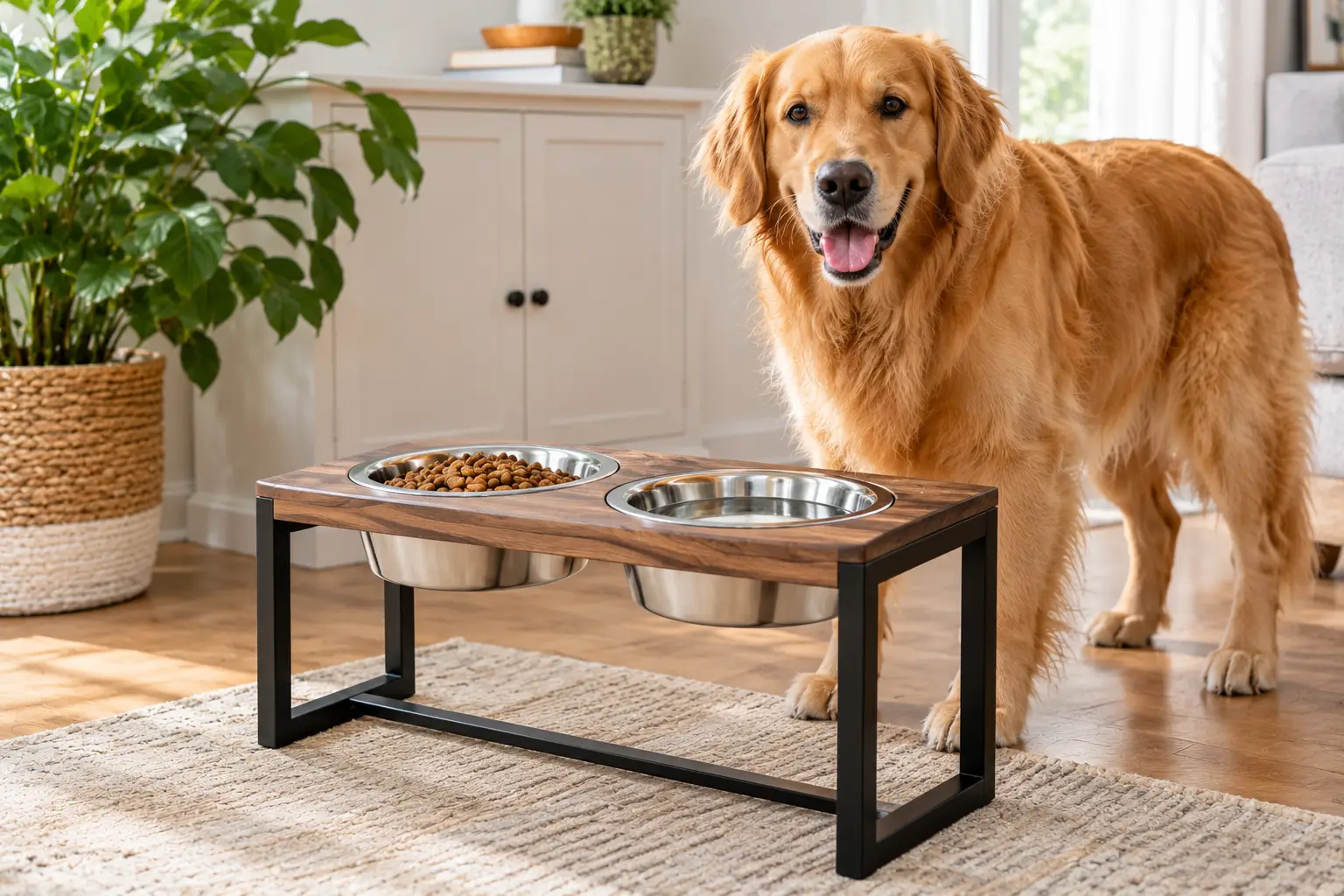
Watch a senior Lab lower its head to a floor bowl and you’ll see it: the front legs splay, the neck stretches, and the whole body tips forward like a folding chair. For a dog with stiff elbows or a sore neck, every meal can involve a small, repeated strain. That’s exactly why the best raised dog bowls have become such a popular upgrade in American homes.
But here’s the twist most product roundups skip. Elevation isn’t automatically “healthier.” A raised bowl at the wrong height can be just as awkward as a floor bowl, and for some deep-chested large and giant breeds, one major veterinary study linked raised feeders with a higher risk of bloat. So the real question isn’t “should I buy an elevated feeder?” It’s “which dog benefits, at what height, and with which design?”
This guide answers that honestly. We compared spec sheets, manufacturer dimensions, and aggregated customer feedback from U.S. retailers for seven real products you can find on amazon.com, from a budget adjustable stand to a premium made-in-USA feeding system. You’ll get practical height-measuring steps, a plain-English summary of the bloat research, maintenance tips, and buyer profiles that match the right bowl to the right dog.
Whether you’re shopping for a creaky-jointed senior, a messy-drinking Golden, or a growing puppy who’ll double in size by spring, you’ll leave knowing which of the best raised dog bowls fits your situation — and which ones you should skip.
Quick note before we dive in: if your dog is a deep-chested large or giant breed (Great Dane, Weimaraner, Standard Poodle, Irish Setter, German Shepherd), read our bloat section before buying anything. It could change your decision entirely.
What Are Raised Dog Bowls?
Raised dog bowls (also called elevated dog bowls or an elevated dog feeder) are food and water dishes held off the floor by a stand, so your dog eats with a more neutral neck and front-leg posture. They’re most useful for senior, arthritic, or tall dogs, and for owners who want to contain spills.
Most designs fall into four camps: fixed-height plastic stands, adjustable metal or wood frames, all-in-one feeding stations with mats or splash walls, and storage-combo feeders that hide a kibble bin underneath. Bowls are usually removable stainless steel, which matters more than any stand feature (more on that later).
The health context matters, too. Bloat — formally called gastric dilatation-volvulus (GDV) — is a life-threatening emergency where the stomach fills with gas and can twist. Raised feeders were once marketed as a bloat preventive. As you’ll see below, the best available evidence doesn’t support that claim, which is why choosing the right height (or choosing a floor bowl) is part of buying responsibly.
Quick Comparison: Best Raised Dog Bowls at a Glance
| Product | Feeding Height | Bowl Material | Standout Feature | Price Range | Best for |
|---|---|---|---|---|---|
| Neater Feeder Deluxe (Large) | 8″ (11″ with leg extensions) | Stainless steel | Splash walls + drain tray | $40–$70 | Neater Feeder Deluxe: messy drinkers |
| WeatherTech Double High Pet Feeding System | 3″–14″ (sold by height) | Stainless steel or BPA-free plastic | NSF-certified, made in USA | $70–$130 | WeatherTech Double High Pet Feeding System: buy-once owners |
| Pet Zone Designer Diner | 2.75″, 8″, or 12″ | Stainless steel | Three-height adjustable legs | $15–$30 | Pet Zone Designer Diner: tight budgets |
| Niubya Elevated Dog Bowls | 3.15″–12.2″ (5 settings) | Stainless steel | Five height settings | $20–$35 | Niubya Elevated Dog Bowls: growing puppies |
| IRIS USA Elevated Feeder with Airtight Storage (Large) | Fixed (storage-bin height) | Stainless steel | Holds up to 47 lb of kibble | $35–$60 | IRIS USA Elevated Feeder with Airtight Storage: small spaces |
| Petmate Easy Reach Diner (Large) | 14.5″ overall | Stainless steel | 12-cup bowls, anti-rattle inserts | $40–$80 | Petmate Easy Reach Diner: tall dogs |
| Neater Feeder Express (Medium/Large) | ~5.5″ to bowl top | Stainless steel | Low-profile mess control | $25–$40 | Neater Feeder Express: cautious large-breed owners |
Prices are approximate ranges at the time of writing and vary by size, color, and seller. Check the current price on Amazon.
Reading across the table, the biggest split isn’t price — it’s adjustability versus mess control. The Pet Zone Designer Diner and Niubya Elevated Dog Bowls win if your dog is still growing or you’re unsure of the right height, while the Neater Feeder Deluxe and Neater Feeder Express earn their keep by trapping water splashes. The WeatherTech Double High Pet Feeding System costs the most but lets you buy the exact height you measured instead of settling for presets.
💬 One click helps other shoppers make an informed choice too! Tap any highlighted product to compare current prices and sizes. 😊
Top 7 Best Raised Dog Bowls for 2026: Expert Analysis
Each pick below was chosen from manufacturer specs and aggregated U.S. retailer feedback, not from hands-on testing. Where review data was thin, we say so and lean on the spec sheet instead.
1. Neater Feeder Deluxe — the mess-proof benchmark
The Neater Feeder Deluxe exists for one reason: keeping water and kibble off your floor, and it does that better than anything else on this list.
The Large version is built for dogs over 40 pounds with a shoulder height above 14 inches. Its bowls sit inside a tall splash wall, and spilled water drains through slots into a hidden lower reservoir instead of pooling on hardwood. The food bowl holds 7 cups and the water bowl 9 cups, so a 70-pound retriever won’t drain it by mid-afternoon. Feeding height is 8 inches at the bowl rim, or 11 inches with the optional leg extensions — and that 3-inch jump matters, because it lets you match a Lab and a lanky Shepherd with the same base unit. The frame is also made in the USA.
On paper, this is the pick for “water monsters” — dogs that dunk their whole muzzle and shake. It’s less ideal if your priority is fine height control, because you only get two positions.
Aggregated customer feedback on major U.S. retail sites consistently praises the spill containment and the sturdy, non-tip base. A recurring complaint is that some buyers expected leg extensions to be included with the base version, so check the listing title before ordering.
Pros:
- ✅ Drain-through tray genuinely traps splashed water
- ✅ Oversized 7-cup and 9-cup bowls reduce refills
- ✅ Leg extensions add 3 inches for taller dogs
Cons:
- ❌ Only two height settings across its life
- ❌ Lower reservoir needs regular emptying and scrubbing
Typically around $40–$70 depending on size and whether extensions are bundled — strong value if spills are your main headache.
2. WeatherTech Double High Pet Feeding System — premium, made-in-USA precision
If you’d rather measure once and buy the exact height your dog needs, the WeatherTech Double High Pet Feeding System is the most precise option here.
Rather than one adjustable stand, WeatherTech sells fixed stands in specific heights — 3, 4, 6, 8, 10, 12, and 14 inches. That sounds less flexible, but practically it means no wobbly joints, no screw-in legs to loosen, and a stand that sits exactly where you want it. The system includes a mat with a raised outer lip that catches drips, and the stand locks the bowls in place. The bowls are certified by NSF to be free of harmful substances such as lead, and the components are dishwasher safe. Everything is designed and manufactured in the USA.
Based on comparing the specs, this is the “buy-it-for-life” choice for adult dogs whose size won’t change. For a puppy, it’s the wrong tool — you’d outgrow the stand.
Retailer listings we checked show generally favorable ratings, praising the build quality and easy cleaning, though review volume varies a lot by height and color variant, so individual listings may have few reviews.
Pros:
- ✅ Exact heights from 3 to 14 inches
- ✅ NSF-certified bowls and dishwasher-safe parts
- ✅ Spill mat with raised lip included
Cons:
- ❌ Fixed height — not suited to growing puppies
- ❌ Priciest pick on this list by a wide margin
Expect roughly $70–$130 for stainless versions (plastic-bowl versions cost less) — worth it if precision and materials matter more than price.
3. Pet Zone Designer Diner — best budget adjustable stand
The Pet Zone Designer Diner proves you don’t need to spend much to get adjustable height.
Its legs set to 2.75, 8, or 12 inches, which covers a toy breed, a medium mutt, and a large dog with a single purchase. The two stainless steel bowls are deep, each holding about 6.5–7 cups. When you’re not using it — say, for travel or storage — the legs come off and tuck underneath the platform. The espresso wood-grain finish also looks more like furniture than pet gear.
Here’s what to weigh: the three heights are widely spaced. A 10-inch dog falls awkwardly between 8 and 12. And at the top setting, a lightweight frame is asked to stabilize a heavy dog’s push.
Aggregated reviews on U.S. retail sites mirror that trade-off. Buyers frequently praise the adjustability, the deep bowls, and easy cleaning, while a smaller but consistent group reports that the stand wobbles under large, enthusiastic eaters.
Pros:
- ✅ Three heights for under $30
- ✅ Deep, dishwasher-safe stainless bowls
- ✅ Legs tuck away for storage
Cons:
- ❌ Big gaps between height settings
- ❌ Can wobble with large, pushy eaters
Usually in the $15–$30 range — the best value for small and medium dogs, with a stability caveat for big ones.
4. Niubya Elevated Dog Bowls — finest height control for growing dogs
Where the Pet Zone Designer Diner gives you three heights, the Niubya Elevated Dog Bowls give you five, making it the most adjustable budget option we found.
According to the manufacturer listing, the stand sets to 3.15, 8.66, 9.84, 11.02, and 12.2 inches, with two stainless steel bowls included. Those tight increments in the 8–12-inch range are the real story: that’s exactly where most medium and large dogs land, and roughly an inch between settings lets you fine-tune instead of compromising. For a puppy, it means you can raise the bowls in steps as the dog grows.
This is a smart pick for a Golden or Lab puppy, or for a household that might change dogs over the years. The trade-off is brand pedigree — Niubya is a newer, Amazon-centric brand without the long track record of Petmate or Neater Pets.
We couldn’t verify a large, consistent body of independent customer reviews for this model beyond Amazon’s own listing, so judge it primarily on its specs and check recent reviews before buying.
Pros:
- ✅ Five height settings, tightly spaced
- ✅ Removable stainless steel bowls
- ✅ Grows with a puppy from small to large
Cons:
- ❌ Less established brand track record
- ❌ Independent long-term durability data is limited
Generally around $20–$35 — excellent value per height setting if you check recent buyer feedback first.
5. IRIS USA Elevated Feeder with Airtight Storage — feeder and food bin in one
The IRIS USA Elevated Feeder with Airtight Storage solves a problem the other picks ignore: where do you keep the giant bag of kibble?
The Large model is basically an airtight storage container with bowls set into the lid. IRIS says it holds up to 47 pounds, or about 64 cups, of dry food. Seals and snap-lock latches keep food fresh and keep pests (and clever dogs) out. In practice, that means one footprint for storage and feeding instead of two — a big deal in apartments and small kitchens.
The catch is that height is set by the container, not by your dog. It suits medium-to-large dogs whose ideal height happens to match; it’s not adjustable at all.
IRIS’s own site summarizes customer reviews as praising the space-saving design, airtight freshness, and convenient height. Among the critical comments, one buyer reported paying return shipping on a defective unit, and a few owners noted their dog took a while to adjust to the new setup.
Pros:
- ✅ Stores up to 47 lb of kibble
- ✅ Airtight latches keep food fresh and pest-free
- ✅ Saves floor space in small homes
Cons:
- ❌ No height adjustment whatsoever
- ❌ Bulkier to move than a simple stand
Typically about $35–$60 — terrific value if it replaces a separate food bin.
6. Petmate Easy Reach Diner — built for genuinely tall dogs
The Petmate Easy Reach Diner is one of the tallest one-piece diners you’ll find from a mainstream brand.
The Large version stands 14.5 inches tall overall and measures about 28.3 by 13.6 inches, with removable stainless steel bowls holding 12 cups each. Rubber inserts reduce bowl rattle (a small detail that matters for noise-sensitive dogs and light sleepers), bone-shaped cutouts act as carrying handles, and raised rims help contain spills. Petmate lists it as made in the USA.
Based on the specs, this is for tall dogs whose shoulders sit well above 20 inches. But be careful: for giant deep-chested breeds, the bloat research specifically flagged bowls more than a foot off the ground. Talk to your vet first if your dog falls in that group.
Aggregated customer feedback, as summarized by Wayfair, highlights the size and height as ideal for large breeds and notes that it helps prevent spills.
Pros:
- ✅ Huge 12-cup bowls for big appetites
- ✅ Anti-rattle rubber inserts keep mealtime quiet
- ✅ Carry handles make cleaning easy
Cons:
- ❌ Long footprint needs real floor space
- ❌ Height is fixed and very tall
Expect around $40–$80 — fair value for tall dogs that dwarf standard stands.
7. Neater Feeder Express — low-profile mess control
The Neater Feeder Express is the “raised, but only a little” option — and that’s exactly why it made this list.
The Medium/Large version keeps the bowl tops at roughly 5.5 inches, much lower than most elevated feeders. You still get Neater’s signature mess containment, just in a simpler, more compact frame. Note that it’s not compatible with any leg extensions, so what you buy is what you get.
Why include a barely raised feeder in a guide to the best raised dog bowls? Because for many large dogs, the right answer is “slightly off the floor and very tidy.” Reviewers at AOL’s pet coverage specifically suggested it for owners who want to avoid tall feeders over bloat concerns — honest, practical reasoning we agree with.
Customer feedback on the Express generally centers on its spill control and its compact size; the main frustration in reviews is the lack of height options.
Pros:
- ✅ Low height suits cautious large-breed owners
- ✅ Keeps Neater’s spill-catching design
- ✅ Compact footprint for smaller kitchens
Cons:
- ❌ Not compatible with leg extensions
- ❌ Too low for seniors needing real elevation
Usually around $25–$40 — a smart, inexpensive middle ground.
The Bloat Question: What the Research Actually Says
This is the section most “best of” lists bury, so let’s put it front and center.
In 2000, a Purdue University team led by epidemiologist Larry Glickman published a prospective study of large and giant breed dogs in the Journal of the American Veterinary Medical Association. Among other risk factors — older age, a first-degree relative with bloat, and fast eating — feeding from a raised bowl was associated with roughly double the risk of GDV (about a 110% increase). Purdue’s own Animal Disease Diagnostic Laboratory summary lists raised bowls, large once-daily meals, and fast eating among the identified risk factors.
Does that mean raised bowls cause bloat? Not necessarily. The study found an association, not a proven cause-and-effect relationship. And a later internet-based survey published in 2012 didn’t find the same effect. A critically appraised evidence review in Veterinary Evidence concluded that the two studies conflict, that no study has shown raised feeders reduce bloat risk, and that floor feeding is the safest default for at-risk dogs in the absence of better evidence. It also noted that the risky height seemed to depend on dog size — large breeds with bowls up to a foot high, giant breeds with bowls above a foot.
🩺 What this means for you:
- Small and medium dogs, or dogs of any size without a deep chest: bloat risk is low, so comfort and mess control can drive your choice.
- Senior, arthritic, or mobility-limited dogs: elevation is a genuine comfort aid — discuss height with your vet.
- Deep-chested large or giant breeds without mobility issues: stick with floor feeding or a low-profile option like the Neater Feeder Express, and ask your vet about other GDV prevention steps.
Never treat a raised bowl as bloat protection. Signs like unproductive retching, a swollen belly, and restlessness are an emergency — call your vet immediately.
How to Choose the Best Raised Dog Bowls
Picking well comes down to seven steps, in this order:
- Decide whether your dog should be elevated at all. Check the bloat section above. A comfortable floor bowl beats a risky raised one.
- Measure your dog’s height. Feeding height should roughly line up with the lower chest, not the chin. (Full method in the next section.)
- Pick adjustable or fixed. Puppies and multi-dog homes need adjustability; adult dogs can go fixed for better stability.
- Insist on stainless steel bowls. They resist scratches where bacteria hide and survive the dishwasher.
- Match capacity to appetite. A 90-pound dog needs 7-cup bowls or larger; a Beagle doesn’t.
- Prioritize stability over style. Non-skid feet and a wide base matter more than wood grain.
- Plan for spills. Splash walls, mats, or drain trays save floors, especially for heavy drinkers.
Following those steps in order prevents the most common mistake: picking a beautiful stand first and discovering it’s the wrong height or wobbles under a big dog.
How to Measure Your Dog for the Right Raised Bowl Height
This is the most practical thing you’ll do before buying — and Amazon listings almost never explain it properly.
📏 Step-by-step measuring
- Stand your dog squarely on a flat floor, front legs straight under the shoulders. Treats help.
- Measure from the floor to the top of the shoulder blades (the withers). Use a rigid tape measure, not a sewing tape.
- Apply a rule of thumb many manufacturers use: subtract about 6 inches for large dogs and about 3 inches for small dogs. That gives a starting bowl-top height.
- Cross-check with the elbow. For many dogs, the bowl rim landing somewhere around the lower chest to elbow height lets them eat with a neutral neck.
- Watch the first meal. Your dog’s neck should angle gently downward — not craned up, not dropping steeply.
🐕 A worked example
Say your Golden Retriever measures 23 inches at the shoulder. Subtracting 6 inches gives about 17 inches — but if your dog is deep-chested and has no joint issues, the bloat evidence suggests staying much lower. A healthy 23-inch Golden with no mobility problems might do well with a low-profile 5–8-inch feeder like the Neater Feeder Deluxe without extensions. A 12-year-old Golden with elbow arthritis, by contrast, might benefit from the full 11-inch setting, with your vet’s input.
⚠️ First-30-days tips
- Introduce the new feeder beside the old bowl for a few days.
- Recheck height after a month — puppies especially change fast.
- Tighten screws on adjustable stands every couple of weeks at first.
Which Raised Bowl Fits Your Dog? Three Real-World Scenarios
Specs are abstract, so here’s how they translate for three common households.
Scenario 1: The arthritic senior in a small apartment
Meet a 10-year-old, 55-pound mixed breed with stiff elbows, living in a one-bedroom city apartment. Budget is moderate (around $50), and floor space is precious. The IRIS USA Elevated Feeder with Airtight Storage fits beautifully here: it lifts the bowls for comfort and replaces a separate kibble bin, freeing up a corner. If the fixed height turns out to be wrong, the Niubya Elevated Dog Bowls are an inexpensive adjustable backup.
Scenario 2: The Lab puppy who’ll triple in size
An 11-week-old Labrador will go from shin-high to 70 pounds in about a year. Buying a fixed-height feeder now is buying twice. The Niubya Elevated Dog Bowls or Pet Zone Designer Diner let you start low and step up. Because Labs aren’t typically ranked among the very highest-risk deep-chested breeds but are still large, keep heights modest and check with your vet at the adult-size visit.
Scenario 3: The splash-happy Newfoundland household
Giant breed, heavy drinker, hardwood floors, and an owner who’s tired of mopping. Here the bloat research is important: giant breeds showed elevated risk with bowls over a foot high. The Neater Feeder Express gives mess control while keeping the bowls low, and the Neater Feeder Deluxe at its base 8-inch height is the next step up if your vet approves.
✨ Ready to match the right bowl to your dog?
🔍 Take the guesswork out of mealtime with the picks in this guide. Click any highlighted product to check current pricing, sizes, and availability — and give your dog a dinner setup that’s comfortable, clean, and right for their body!
Common Raised Bowl Problems and How to Fix Them
Even the best raised dog bowls can create small headaches. Here are five frequent ones, with fixes.
Problem 1: The stand slides across the floor. Fix: Put a rubber-backed mat underneath, or choose a design with built-in grip, like the mat-based WeatherTech Double High Pet Feeding System.
Problem 2: The stand wobbles under a big dog. Fix: Lower an adjustable stand one setting; leverage increases with height. If it still wobbles, move to a wider-based model such as the Neater Feeder Deluxe.
Problem 3: Water everywhere. Fix: Splash-wall designs (Neater Feeder Deluxe, Neater Feeder Express) beat open stands. Fill water bowls only about two-thirds full.
Problem 4: Your dog eats even faster now. Fix: Swap in a stainless slow-feeder insert if it fits your stand’s bowl ring, or scatter kibble in a separate puzzle feeder. Fast eating is itself a bloat risk factor.
Problem 5: The bowls rattle and spook a nervous dog. Fix: Look for rubber gaskets like those in the Petmate Easy Reach Diner, or add silicone bowl rings to stands without them.
Raised Dog Bowls for Large Dogs vs Small Dogs
Raised dog bowls for large dogs and for small dogs solve different problems, and buyers often mix them up.
For large dogs, the main benefit is posture: a tall dog bending to the floor has to drop its head a long way. But large dogs are also where the bloat caution concentrates, so height selection is a medical decision as much as a comfort one. Raised dog bowls for large dogs should also be heavier and wider, because a 90-pound dog pushing into a bowl generates real force. That’s why sturdy designs like the Petmate Easy Reach Diner and the Neater Feeder Deluxe fare better in large-dog reviews than lightweight stands.
For small dogs, elevation is usually modest — a few inches — and the bloat concern is far lower. Here, raising the bowl is mostly about keeping food away from floor debris, helping flat-faced breeds see their food, and making it easier for older small dogs with neck pain. The Pet Zone Designer Diner at 2.75 inches or a 3–4-inch WeatherTech Double High Pet Feeding System fits this group well.
The takeaway: large-dog buyers should think “stability and caution,” while small-dog buyers can think “comfort and cleanliness.”
Adjustable Elevated Dog Bowls vs Fixed-Height Stands
Adjustable elevated dog bowls are flexible: you can start low with a puppy, adapt to a second dog, or lower the bowl if your vet recommends it. That makes them excellent insurance against measuring wrong. The weakness is mechanical — every joint, peg, or screw is a potential source of wobble, especially at the top setting.
Fixed-height stands flip the trade-off. They’re stiffer and usually more durable, but you have to measure correctly upfront.
| Feature | Adjustable stands | Fixed stands | Floor bowls | Best for |
|---|---|---|---|---|
| Height flexibility | High | None | None | Niubya Elevated Dog Bowls: puppies |
| Stability | Moderate | High | Highest | WeatherTech Double High Pet Feeding System: adult dogs |
| Bloat-conscious choice | Possible (set low) | Depends on height | Safest default | Neater Feeder Express: at-risk breeds |
| Joint comfort | Good | Good if measured right | Poor for seniors | Neater Feeder Deluxe: seniors |
| Typical cost | Low | Low to high | Lowest | Pet Zone Designer Diner: budgets |
The table shows there’s no universal winner. Adjustable designs reduce the risk of buying the wrong height, fixed designs reduce wobble, and plain floor bowls remain the most conservative choice for at-risk breeds. If you’re unsure, an adjustable stand set conservatively low is the most forgiving starting point.
Features That Actually Matter (and Ones That Don’t)
Marketing copy on elevated feeders is full of claims. Here’s an honest sort.
✅ Features that matter
- Stainless steel bowls. Plastic scratches, and scratches harbor bacteria. Stainless is easy to sanitize and durable.
- Correct height range. A stand that can’t reach your dog’s ideal height is useless regardless of looks.
- Non-skid base. Rubber feet or a grippy mat prevent the “feeder chase” across tile.
- Removable bowls. If you can’t run bowls through the dishwasher, you’ll clean them less often.
- Splash control for heavy drinkers. Walls, trays, or lipped mats save floors and baseboards.
❌ Features that matter less than you think
- “Aids digestion” claims. Many listings say this; the evidence for digestive benefits in healthy dogs is weak.
- “Prevents bloat” claims. As covered above, no study has shown this. Treat it as a red flag.
- Tilted bowls for large dogs. Popular for cats and flat-faced breeds, but rarely necessary for most dogs.
- Decorative finishes. Nice, but a bamboo stand that warps from water splashes looks worse than plain plastic within a year.
Cutting through those claims usually narrows any shortlist to two or three sensible choices.
Long-Term Cost and Maintenance
A raised feeder is a small purchase, but total cost of ownership varies more than you’d guess.
| Product | Typical Price Range | Replacement Parts | Lifespan Outlook | Best for |
|---|---|---|---|---|
| Pet Zone Designer Diner | $15–$30 | Bowls replaceable | Moderate | Pet Zone Designer Diner: short-term budget use |
| Niubya Elevated Dog Bowls | $20–$35 | Limited info | Unverified long-term | Niubya Elevated Dog Bowls: puppy years |
| Neater Feeder Deluxe | $40–$70 | Leg extensions, bowls sold separately | Long | Neater Feeder Deluxe: multi-year use |
| WeatherTech Double High Pet Feeding System | $70–$130 | Bowls, mats sold separately | Very long | WeatherTech Double High Pet Feeding System: buy-once owners |
The cheapest stand isn’t always cheapest over five years. If a $20 stand wobbles and gets replaced twice, you’ve spent as much as a mid-range Neater Feeder Deluxe — without its spill control. Conversely, the WeatherTech Double High Pet Feeding System only pays off if your dog is fully grown; buying it for a puppy means buying a second stand later.
🧽 Maintenance schedule
- Daily: The FDA recommends that you wash pet food bowls with soap and hot water after each use. Refresh water at least daily.
- Weekly: Wipe the stand, empty and scrub any drain reservoir (the Neater Feeder Deluxe tray especially), and wash mats.
- Monthly: Check screws, legs, and rubber feet; replace cracked feet before they scratch floors.
- Yearly: Inspect stainless bowls for pitting and replace if the surface roughens.
Elevated Dog Feeder Setup for Senior Dogs
Seniors are the group most likely to genuinely benefit from an elevated dog feeder, so set it up with care.
Start with height: older dogs with arthritis in the elbows, shoulders, or neck often appreciate bowls closer to chest height. Watch whether your dog has to lower its head steeply or lean on one front leg — both suggest the bowl is still too low. If your dog is a deep-chested large breed, though, bring the bloat discussion to your vet before going tall.
Stability matters even more for seniors, because a wobbling stand can startle a dog with balance issues. Wide-based designs like the Neater Feeder Deluxe or a fixed-height WeatherTech Double High Pet Feeding System are more forgiving than lightweight frames.
Footing is the overlooked piece. Seniors often struggle on slick floors, and a raised bowl encourages them to stand squarely for the whole meal. A rubber-backed mat under the feeder helps them grip — and protects your floor.
Finally, think about water access. Many seniors drink less when water is inconvenient. Placing a second raised water bowl near their favorite resting spot can encourage hydration, especially for dogs with kidney concerns your vet is monitoring.
Common Mistakes to Avoid When Buying Raised Dog Bowls
Most bad purchases come from a handful of predictable errors:
- Buying by breed instead of measuring. Two Labs can differ by several inches at the shoulder.
- Going as tall as possible. Higher isn’t better; the bloat data specifically flagged bowl height relative to dog size.
- Ignoring bowl capacity. Small bowls in a big stand mean constant refills and an empty water bowl at noon.
- Choosing plastic bowls to save money. They scratch, stain, and may trigger chin irritation in some dogs.
- Skipping the stability check. Read reviews specifically for “wobble” mentions if you have a large dog.
- Assuming “elevated” means “healthier.” It’s a comfort tool for the right dog, not a medical treatment.
Avoid those six and nearly any pick in this guide will serve you well.
FAQs
❓ Are raised dog bowls good for large dogs?
❓ What height should a raised dog bowl be?
❓ Do vets recommend elevated dog bowls?
❓ Are adjustable elevated dog bowls worth it?
❓ Is stainless steel better than ceramic for raised bowls?
Conclusion: Choosing the Best Raised Dog Bowls for Your Dog
The best raised dog bowls aren’t the tallest or the prettiest — they’re the ones that fit your dog’s body, health, and habits. For most households, the Neater Feeder Deluxe is the strongest all-rounder, pairing generous bowls with unmatched spill control. If you want precision and premium materials, the WeatherTech Double High Pet Feeding System lets you buy your dog’s exact height. On a budget, the Pet Zone Designer Diner and Niubya Elevated Dog Bowls offer adjustability for growing pups. Small-space owners should look hard at the IRIS USA Elevated Feeder with Airtight Storage, tall dogs at the Petmate Easy Reach Diner, and cautious large-breed owners at the low-profile Neater Feeder Express.
Above all, remember the honest caveat: elevation is a comfort tool, not bloat prevention. Measure carefully, choose stainless steel, prioritize stability, and if your dog is deep-chested, talk to your vet before going tall. Do that, and mealtime becomes easier on your dog’s joints — and on your floors.
🐾 Give your dog a better mealtime today!
✨ You’ve done the research — now pick the bowl that fits. Click any highlighted product above to check current pricing, sizes, and availability on Amazon, and set your dog up for comfortable, cleaner meals for years to come!
Recommended for You
- Dog Feeder Metal: 7 Best Picks That Actually Last (2026 Guide)
- French Bulldog Food Bowl: 7 Best Picks That Actually Work (2026)
- Flat Face Dog Bowl: 7 Best Picks That Actually Help in 2026
Disclaimer: This post contains affiliate links. As an Amazon Associate, I earn from qualifying purchases made through these links, at no additional cost to you.
✨ Found this article helpful? Share it with someone who needs it! 💬🤗